
Leo XIV’s first encyclical, Magnifica Humanitas, arrived with immense fanfare from the sycophantic “Catholic” media, as well as global and globalist attention.
Presented as a social encyclical for the age of artificial intelligence (AI), it seeks to apply Catholic social doctrine to the digital revolution in an attempt to mimic how Leo XIII applied it to the Industrial Revolution in Rerum Novarum in 1891.
But we are dealing with the Synodal Church. Per usual, the document turns out to be a long (244 paragraphs) secular, humanist glorification of man and the temporal order. In other words, it is yet another love letter to the Synodal false religion.
Leo cannot get beyond the 10th paragraph before launching into a synodalese-littered passage that spells out what the reader can expect henceforth: “Rebuilding today means recognizing that, precisely from the plurality of voices and visions which, even though they sometimes remind us of the confusion caused by the diversity of spoken languages, a bright possibility emerges. Indeed, this is the possibility of building together, of transforming diversity into a resource and of making listening and dialogue the common ground upon which to cultivate justice and fraternity.”
In the same paragraph, Leo states, “pluralism does not dissipate into disorder, but instead, through the practice of synodality, it becomes the space in which humanity rediscovers its solid foundations.” We are thus dealing with the Synodal Church from the word go, and not the Catholic Church. In paragraph 25, Leo confirms this when he tells us that “the truth is a gift to be shared, not a possession to be monopolized,” before repeating his heresy that the Church “does not claim to possess a monopoly on truth.”
Borrowing Masonic talking points
The document is vast in scope. It addresses artificial intelligence, globalization, digital surveillance, war, labor, ecology, economic inequality, human rights, migration, and the concentration of technological power. It repeatedly invokes the themes of “human dignity,” “fraternity,” “dialogue,” and “the common good.” Its tone is unmistakably “pastoral” and globalist, presenting the Church as a moral guide for humanity in a rapidly changing technological age, but not much as the Ark of Salvation taking souls to eternity. Throughout, Prevost is unashamedly telling us that AI, and a whole catalogue of other atrocities, could be an offense against the godlike dignity of man, but never that it can be an offense against God.
To be fair, there are some Catholic elements within the encyclical. Leo XIV explicitly condemns abortion and euthanasia as “gravely wrong” (55). He insists on the right to life “from conception to its natural end” (55). He denounces the reduction of man to a machine or economic instrument (51). He condemns technocratic domination and warns against dehumanizing systems driven purely by profit or efficiency. These are welcome in an age intoxicated by transhumanism and digital utopianism.
But never lose sight of the fact that this is how the modernists operate: take whatever agenda they want to push or promote and sprinkle it with some Catholic truth. His mention of these subjects hardly saves the document from what is: a synodal artifact that glorifies man and for the most part sounds like it was born in New York at the U.N. Headquarters, not Rome.
The concern is not what the encyclical says that is occasionally in continuity with perennial Catholic teaching, but the broader theological and ideological framework into which those truths are placed. Magnifica Humanitas continues — and in several places intensifies — the post-conciliar trajectory of anthropocentrism, religious liberalism, and global managerialism that has displaced the older Catholic understanding of Christendom, kingship, and the social reign of Christ.
The dignity of man: dogma of the conciliar religion
The document overwhelmingly focusses on “human dignity” detached from the supernatural order. The phrase appears constantly, but the encyclical rarely speaks with clarity about that which pertains to our eternal destination, such as sin, conversion, judgment, salvation; or the necessity of the Catholic Faith for society. Humanity is described in exalted terms as a communion of persons called into relationship and self-gift (48–50), and the encyclical never rises above being a theological charter for global humanitarianism.
The Dispatch
A particularly revealing moment is the assertion that the Church’s dialogue with the world “is not a tactical choice” but a constitutive expression of her mission because the Gospel transforms society “from within” (34). This language is pure Gaudium et Spes. The Church is portrayed not as a divine society confronting error, but rather as a companion journeying alongside modern civilization. It is easy to recognize here the continuation of the conciliar “opening to the world” that has so often resulted not in the conversion of the world, but in the Catholics “converting” to the world by losing their faith.
The encyclical’s praise of the Second Vatican Council is especially annoying. Gaudium et Spes is celebrated for replacing abstract principles with engagement in “concrete reality” and “historical situations” (34). Even more concerning is the glowing reaffirmation of Dignitatis Humanae, where religious liberty is presented as a “fundamental right grounded in human dignity” that must be legally protected in pluralistic societies (34). The pre-conciliar magisterium repeatedly condemned the proposition that all religions possess equal civil rights in the public order. Popes such as Gregory XVI, Pius IX, and Leo XIII taught that error has no rights and that Catholic states have duties toward the true religion. Yet Magnifica Humanitas simply assumes the conciliar doctrine of religious liberty as unquestionable orthodoxy. The encyclical even praises “pluralistic and peaceful societies” founded upon this principle (34). This yet again represents a profound departure in political theology by the Synodal Church.
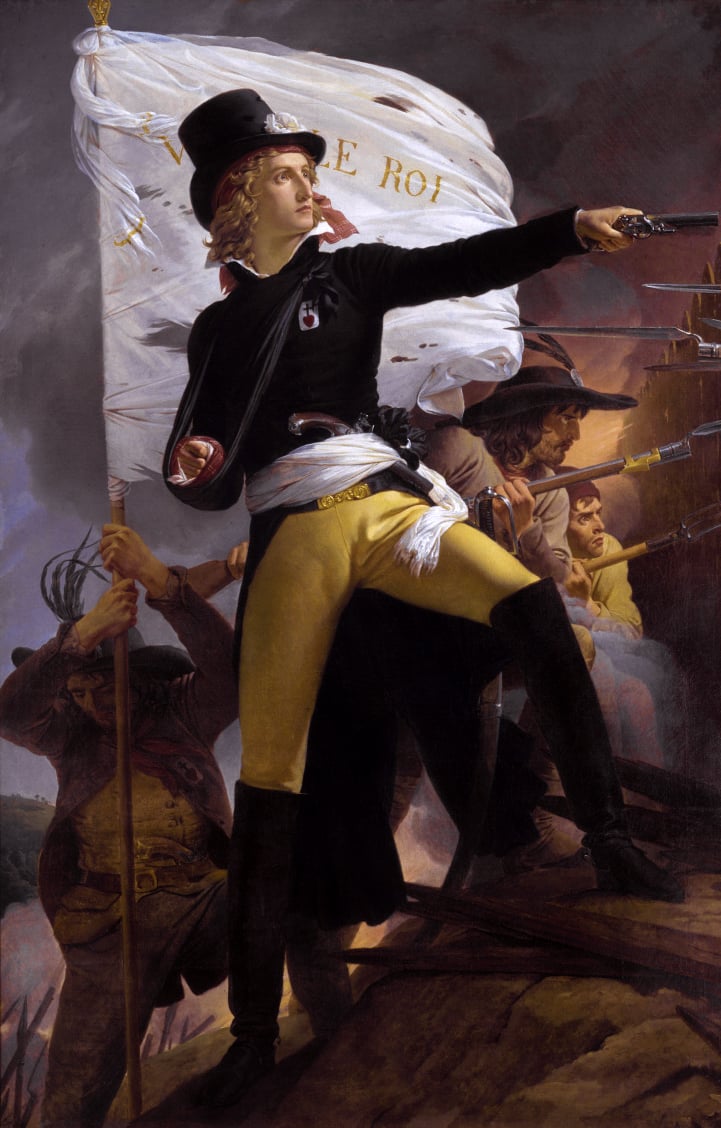
Equally concerning is the encyclical’s embrace of the modern human-rights framework. The document calls the United Nations Declaration of Human Rights “one of the highest expressions of the human conscience of our time” (54). A statement that would have made earlier popes, who viewed the liberal rights tradition with deep suspicion because of its roots in the French Revolution and Enlightenment individualism, reach for their Holy Water and Crucifixes.
Certainly, the encyclical attempts to baptize the language of rights within a Christian framework, grounding rights in human dignity rather than pure secular autonomy. But the effect is still unmistakable: Catholic social teaching is presented through the categories of modern liberal democracy rather than through the classical language of Christendom, natural hierarchy, and the social kingship of Christ.
The repeated exaltation of democracy follows the same pattern. Echoing John Paul II, the encyclical praises democracy because it enables participation and prevents power from being monopolized (39). Missing almost entirely is the older Catholic caution about liberal democracy’s tendency toward relativism, mass manipulation, and secularization. Instead, democracy is treated as largely normative, provided it serves the “common good.”
Endorsing the modern age
Another major concern is the document’s globalist Big-Brother-should-be-watching political vision. Throughout the encyclical there are repeated calls for stronger international institutions and transnational cooperation. Leo speaks favorably of “more effective international institutions” to safeguard the “global common good” (64). Technological infrastructure, data, algorithms, and digital platforms are all presented as subjects requiring international governance and regulation (67).
It is clear that the Synodal Vatican has become excessively aligned with the managerial worldview of global technocratic elites. Sadly, the Church that once proclaimed Christ the King over nations, is now occupied by men who can only muster the language of international bureaucracy, multilateral governance, and universal regulatory frameworks.
More troubling is the encyclical’s rhetoric surrounding economic redistribution and property. The communist heretic Francis is approvingly quoted as saying solidarity means “to restore to the poor what belongs to them” (66).
Those who are well-versed in the Thomistic and Leonine tradition will notice how little emphasis is placed on organic social order, as well as intermediate authority and stable hierarchy, compared with the enormous stress placed upon equality, inclusion, and participation. The encyclical repeatedly condemns exclusion, disparities, and inequality, but says very little about the moral and spiritual causes of civilizational decline.
Man first, God second
Most startling of all, however, is the encyclical’s underlying anthropology. The central crisis of modernity is ultimately not technological but theological: man’s rebellion against God. Yet Magnifica Humanitas (intentionally) ignores this crucial diagnosis and consistently frames the modern problem in sociological and structural terms — inequality, exclusion, concentration of power, technocracy, environmental crisis, and digital marginalization.
As with every postconciliar document, Magnifica Humanitas is once again a textbook example of horizontalism. Christ is present, certainly, but usually only as an excuse to promote Masonic ideals such as fraternity, solidarity, and dialogue rather than as the triumphant King demanding the submission of nations. The supernatural mission of the Church is absorbed into a humanitarian mission for global ethical governance.
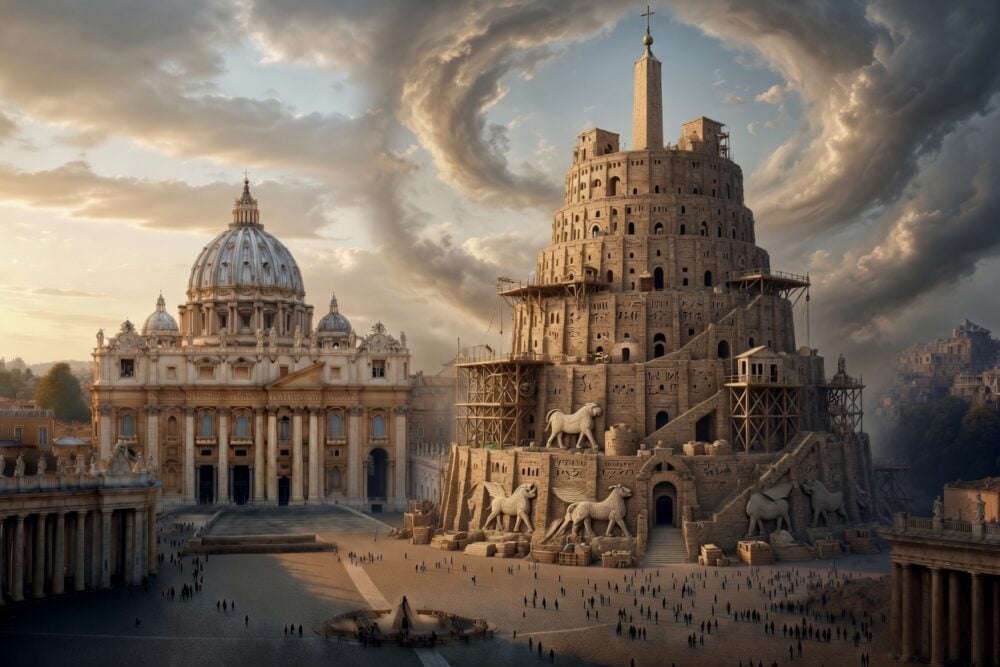
Ironically, Leo warns against constructing a “new Tower of Babel,” while all along he has been enthusiastically participating in precisely such a project: a universal moral consensus built not upon the explicit reign of Christ the King, but upon human dignity, international cooperation, pluralism, and technocratic regulation.
In the end, Magnifica Humanitas contains some truths, which you could have extracted from any secular source on the subject anyway, but ultimately it only manages to celebrate liberal humanitarianism and the false religion of the Second Vatican Council.