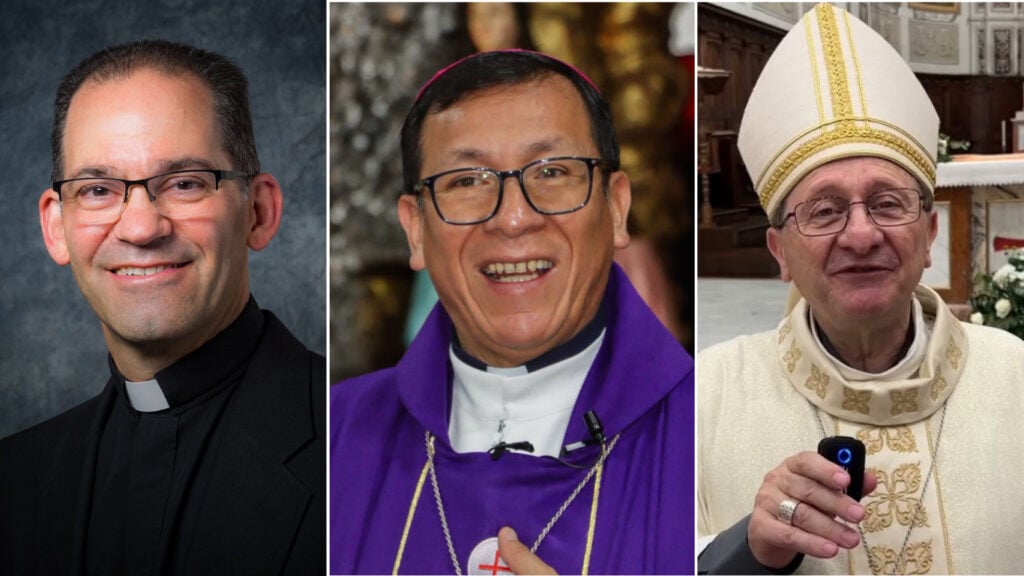
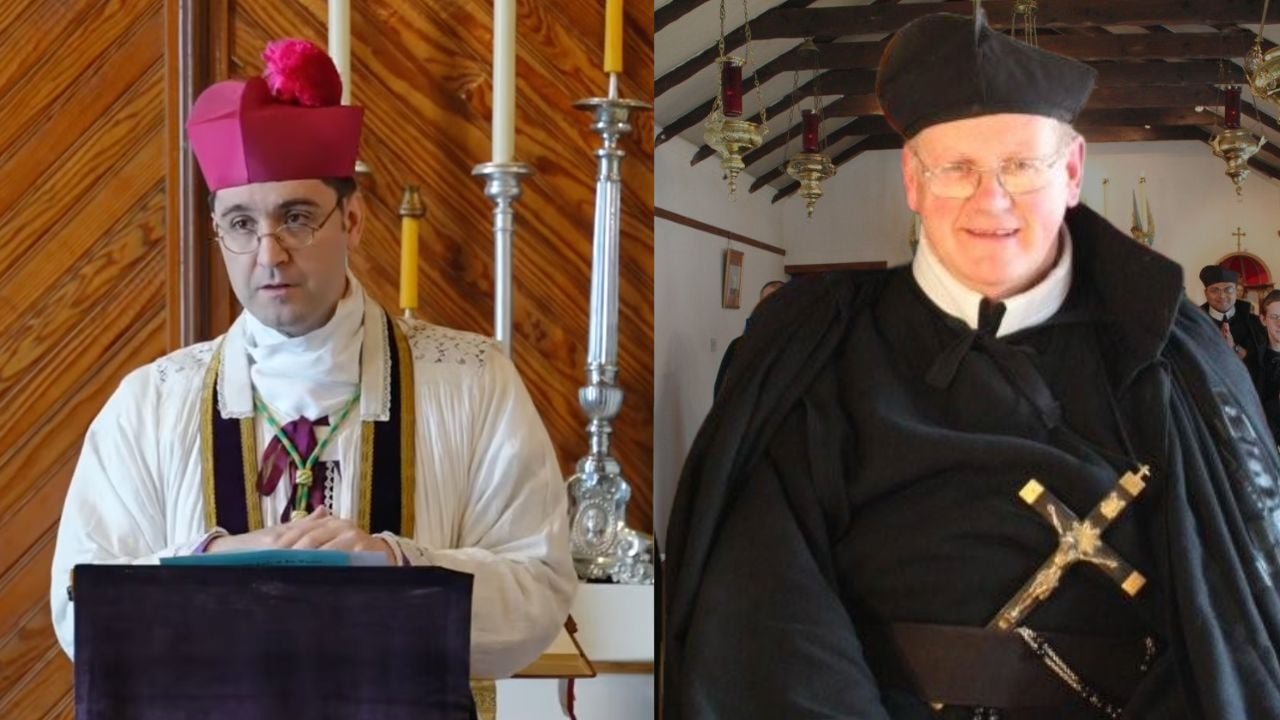
Following the announcement that Bishop Pierre Roy would be consecrating Fr. Michael Mary Sim to the episcopate, Integrity Magazine reached out to both clerics for comment.
In separate statements provided to Integrity, Bishop Roy and Fr. Michael Mary offered further context and considerations behind the consecration, set to take place on July 25, as well as their understanding of the broader crisis in the Church.
We also reached out to the Diocese of Aberdeen, where Fr. Michael Mary’s order (the Sons of the Most Holy Redeemer) is located. The Diocese did not provide a comment, but the diocesan bishop, Hugh Gilbert OSB, later issued a public statement describing the consecration as “unlawful and a grave act of disobedience, separating those taking part from communion with the Catholic Church.”
All three statements are appended to this article.
Bishop Roy emphasized that this consecration should not be viewed through the same lens as the upcoming Society of St Pius X consecrations on July 1, arguing that the two ceremonies proceed from fundamentally different principles.
The Bishop holds that the Holy See has been vacant since the death of Pope Pius XII, explained: “We consecrate Bishops in the absence of a true Sovereign Pontiff.”
“One truly struggles, to say the least,” he added, “to understand how the state of necessity, in the case of the SSPX, can be invoked against the Sovereign Pontiff.”
The bishop, who is based in Canada, also restated his understanding that the consecration would be “conferring a real episcopal power to our Bishops to actually teach, govern and sanctify the priests who gather around them,” contrasting his position further with that held by the SSPX.
The Society has indeed said that their consecrations “do not proceed from any desire to claim a power of jurisdiction or to establish a parallel authority within the Church.”
Certain “sedevacantist” groups, such as Bishop Donald Sanborn’s Roman Catholic Institute and the Institute Mater Boni Consilii, also deny that bishops consecrated without a Roman mandate under the current circumstances enjoy jurisdiction.
Bishop Roy further maintained that such bishops should serve the needs of Catholics generally, rather than a single apostolate or religious society, describing the episcopacy as a service to the Church as a whole.
In his statement, Fr Michael Mary, 72, revealed that within a fortnight in March, five bishops had expressed a desire to consecrate him, or indicated that he should be consecrated.
“Certainly I had never considered that I should become a bishop,” he said.
The founder of the Sons — also known as the Transalpine Redemptorists — explained that the convergence of these requests led him to conclude that he should accept what he now regards as a “vocation.” He pointed to the practical, sacramental needs of his congregation, as well as the need for bishops to defend the Catholic Faith during the present crisis.
“With the grace of the episcopate, with the power that comes from this sacrament, I pray that I will champion for Our Lord and Our Lady,” he said.
The announcement comes less than two months after the Transalpine Redemptorists issued a document titled The Dogma to Steer By, stating that the post-conciliar claimants to the papacy “cannot be legitimate successors of Peter.” Prior to May 2026, the Sons had been in good standing with the Conciliar/Synodal Church, having disassociated from the SSPX in 2008.
The May document also expressed their embrace of Bishop Roy’s call for an “Imperfect General Council” to resolve the crisis in the Church.
The idea of an “Imperfect General Council,” with its accompanying possibility of an election of a pope, has been controversial since it was raised in January this year, and has been firmly opposed by some “sedevacantists,” including Bishop Sanborn.
The Dispatch
Below is the official public statement issued by Bishop Hugh Gilbert OSB in response to the news of the consecration:
Today news has reached the Diocese of Aberdeen that the Superior General of the Sons of the Most Holy Redeemer, V. Rev. Fr Michael Mary, F. Ss.R, intends to be consecrated as a bishop on 25th July on the island of Papa Stronsay in Orkney. This ordination would be celebrated without a papal mandate, by a group of bishops who deny that Our Holy Father Pope Leo XIV is actually the pope.
Since this consecration is due to take place within the geographical boundaries of the Diocese of Aberdeen, I am obliged to make clear to the faithful of the Diocese that any such episcopal ordination would be unlawful and a grave act of disobedience, separating those taking part from communion with the Catholic Church. No member of the faithful should attend. This action is not “for the good of the Catholic Church” as is falsely claimed.
This development is greatly to be regretted and we can only pray that those concerned have a change of heart.
+Hugh Gilbert OSB
Below are the statements that His Excellency Bishop Roy and Fr. Michael Mary provided to Integrity in full:
Bishop Pierre Roy
The announcement of the consecration of Fr Michael Mary comes in the context of the upcoming consecrations of the SSPX Bishops, although the two consecrations are unrelated.
It is the occasion to underline a few differences between our perspective and that of the SSPX.
We consecrate Bishops in the absence of a true Sovereign Pontiff. As such, these consecrations are easily justified by the state of necessity of the Church. One truly struggles, to say the least, to understand how the state of necessity, in the case of the SSPX, can be invoked against the Sovereign Pontiff. Can it, actually? No, it can never be.
The SSPX bishops are consecrated as purely “sacramental Bishops.” As such, these Bishops are called to travel the earth and accomplish the sacramental acts that are commanded to them by the priests in charge of their community, the Bishops being thus under the authority of priests. One again struggles to understand how such a situation is compatible with the divine constitution of the Church. Although acknowledging the dire situation of the Church at present, we understand our Bishops as invested with a real power to teach, govern and sanctify the priests and laymen who gather around them, without however any territorial consideration at present, given the absence of a Sovereign Pontiff. This power, we believe, is conferred with the implicit will of the Holy See, which is rendered certain by the grave necessity the Church is in. Again, a completely different perspective.
The SSPX Bishops, in my experience, are consecrated exclusively for the good of the SSPX apostolate. One needs to be a member of the SSPX or an affiliated community to benefit from their pastoral care. This explains why, except in the case of Bishop Licinio Rangel, the SSPX has never and will not likely consecrate Bishops except for their community. We see on the contrary our Bishops as being at the service of the Church as a whole. That is, if one can be shown to be a member of the Catholic Church, he is completely entitled to receive the pastoral care of our Bishops, independently of any association other than the Catholic communion between all the members of the Church. This is why we do not hesitate to even give a Bishop to another Catholic community when it is proven to be necessary.
These are the differences that come to mind at the moment. To give a resume of them in a nutshell, the SSPX consecrates their Bishops in the perspective that the Novus Ordo is the Church, while we consecrate them in the perspective that it is not the Church.
We pray that the SSPX comes to the understanding that the only thing that can justify their action is the vacancy of the See of Peter. 1
Fr. Michael Mary Sim
Between March 4th and March 16th, from three independent sources, five bishops told me either that they wanted to consecrate me a bishop or that I should be consecrated a bishop. Certainly I had never considered that I should become a bishop. These independent sources, coming together within a short period of 13 days, left me stunned. None of the three sources had been in contact with each other. When I considered that we have no Pope, I concluded that Our Lord’s Will is expressed through the bishops — and even more so when they independently say the same thing, and nearly all at once. Since then I have decided that I cannot ignore what I believe is a vocation and path that I must accept. I am grateful for the time that I have had to come to this point of acceptance.
As a bishop I must serve whoever seeks ministry from me. I will be resident in New Zealand but would come to Papa Stronsay as I usually do twice a year. I acknowledge that it is important for our Congregation to have a bishop for the administration of the sacrament of Holy Orders. When vocations come to us, it is necessary that we have the means of ordaining them to the Minor Orders, the Subdiaconate, Diaconate and Sacred Priesthood. No doubt, once this is integrated into our Congregation, we would always have a bishop for this purpose. But also, there is a need for a bishop for the Sacrament of Confirmation.
Deeper than this, there is the need to preach and to defend the Faith which is the role of the bishop who must wear a mitre. The Church places the mitre on the head of the bishop calling him a ‘champion’ and praying that he ‘may seem terrible to the opponents of truth.’ I am therefore obliged to be ‘terrible to the opponents of truth.’ Alone, I would not be sufficiently ‘terrible.’ But with the grace of the episcopate, with the power that comes from this sacrament, I pray that I will champion for Our Lord and Our Lady, and that in their mercy, they will not be offended by my presence or my efforts.
- This statement was slightly updated on June 28, 2026. ↩︎