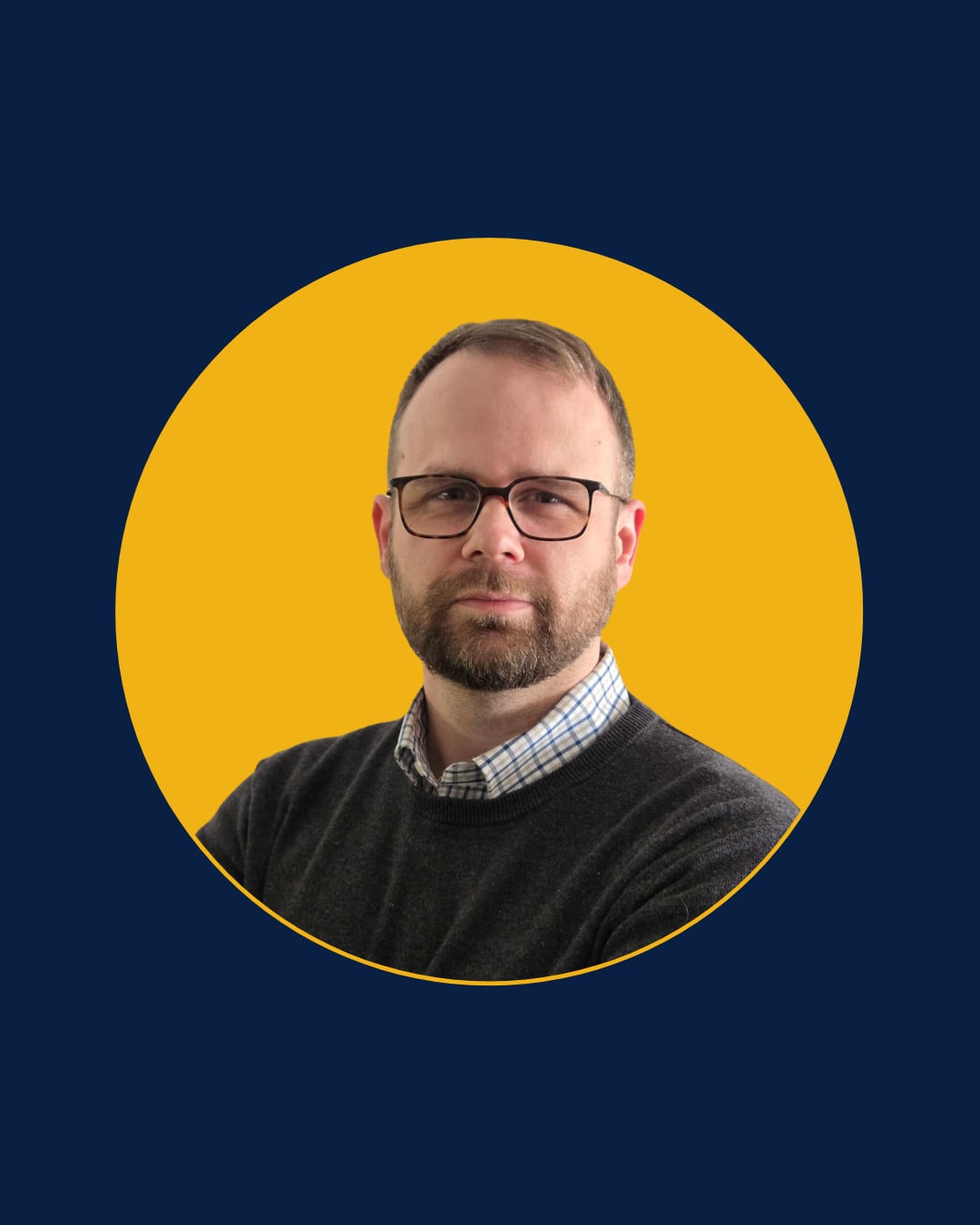
Mario Derksen is the well-known founder of Novus Ordo Watch, a website dedicated to “unmasking the Modernist Vatican II Church.”
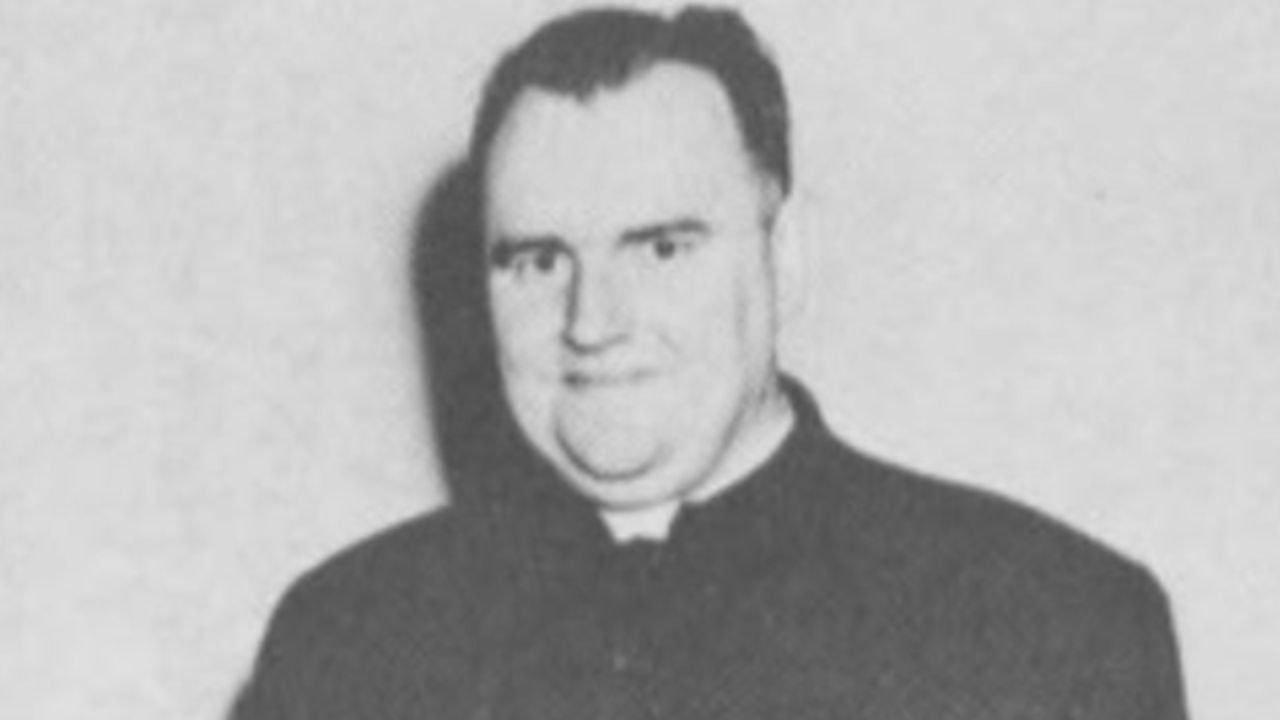
Like me, he has an affinity for Msgr. Joseph Clifford Fenton, whom I consider to be the greatest theologian American Catholicism has ever produced, alongside Fr. Jeremiah Connell.
Both Msgr. Fenton and Fr. Connell were staunch anti-Modernists who integrally defended the Catholic faith on the pages of the American Ecclesiastical Review while liberals like Jesuit priest John Courtney Murray sought to adapt Church teaching on religious liberty and Church-State relations to the modern age.
Derksen previously published Fenton’s diaries on the Second Vatican Council on his website. Now, he has done the world the immense favor of having them transcribed electronically so they can be downloaded as searchable PDF files.
Fenton’s reflections are highly valuable in that they give an insider’s look at the state of the Church leading up to Vatican II. As he rightly pointed out in a 1962 entry, “Since the death of St. Pius X the Church has been directed by weak and liberal popes, who have flooded the hierarchy with unworthy and stupid men.”
Below is a series of questions I sent Mr. Derksen earlier this week. I am grateful for the time he took to respond to them. You can follow him on X, subscribe to his YouTube channel, or visit his website.
You have just made the diaries of Msgr. Joseph Clifford Fenton available in a searchable format. Why did you do this?
These diaries are an exceptional resource for understanding what happened to the Catholic Church in the 20th century, and how and why.
For one thing, they allow us to peek into the mind of a formidable Catholic theologian who under Popes Pius XI and Pius XII proved himself to be a most loyal defender of the Faith especially against Neo-Modernism and other contemporary heresies and errors. Fenton was not only brilliant personally, he also had considerable influence shaping future and current priests theologically by teaching at the Catholic University of America and especially also by serving as editor-in-chief of the American Ecclesiastical Review, which reached a lot of clergy throughout the country.
Secondly, the Fenton journals provide an invaluable glance at the behind-the-scenes struggles for Catholic truth at what is perhaps the most critical point in Church history: the Neo-Modernist attempt to impose a heap of errors on unsuspecting Catholics via the council. They were ultimately successful in this, so much so that one can speak of the establishment of a veritable new religion. But of course this was possible only because the man who solemnly ratified and promulgated all of the council’s documents — Giovanni Battista Montini, ‘Pope’ Paul VI —was not in fact a real Pope and hence had neither the charism of infallibility nor any kind of divine assistance. The remainder of his ‘pontificate’ proved this beyond the shadow of a doubt, and the same is true for his successors.
The Dispatch
Are there any new revelations in these entries that you didn’t know before? What can one expect to find in them?
Certainly. One of the things that stand out in the diaries is the many unorthodox ideas that were floating around freely among the priests and bishops at the time. Mgr. Fenton expresses his surprise more than once at how liberal many bishops and priests actually were, and/or theologically inept. For example, he writes in his entry for Oct. 19, 1962, about a week after the council’s solemn opening: “I started to read the material on the Liturgy, and I was shocked at the bad theology.” Twelve days later, he writes that the council so far “has been a frightful disappointment. I never thought that the episcopate was so liberal” (Oct. 31, 1962).
We have to remember that back then, both travel and communication were nothing like they are today, so a lot of names Fenton was familiar with he knew only through books, articles, and letters. On account of his travels to Rome for the council, he was finally able to meet many of them personally, and this made him understand that there was a frightful reality lurking beneath a healthy-looking facade.
Overall, his keen insights and interesting commentary on the individuals he met, the ideas he encountered, and the scenarios he found himself in, make for a thoroughly enjoyable read.
You previously uploaded his diary on your website. What is your particular fascination with Msgr. Fenton?
Fenton is so interesting because he was a staunchly orthodox theologian who knew Catholic doctrine inside and out, and who understood the real danger being posed to Catholic dogma by Liberalism and Modernism; and this man was then confronted with the impossible situation of Vatican II. This naturally piques one’s interest: What did he say? What did he think? How did he react? His public record is one thing; even more interesting, however, is what he thought and said privately that the diary discloses.
There is a stipulation in one of his diaries that the content from a certain page onward is not to be revealed until at least 20 years after his death (he died in 1969). It concerns his fourteenth trip to Rome, in October of 1960.
What are some of his most insightful remarks in the diary?
I have listed a number of ‘highlights’ from his journals in the blog post here. Let me quote some of my favorites:
- “I do not think that any little work on our part is going to bring good to the Church. We should, I believe, face the facts. Since the death of [Pope] St. Pius X the Church has been directed by weak and liberal popes, who have flooded the hierarchy with unworthy and stupid men. This present conciliar set-up makes this all the more apparent. [Fr.] Ed Hanahoe, the only intelligent and faithful member of [Cardinal] Bea’s secretariat has been left off the list of the periti. Such idiots as [Mgr. John S.] Quinn and the sneak [Fr. Frederick] McManus have been put on. [Fr. George] Tavard is there as an American, God help us. From surface appearance it would seem that the Lord Christ is abandoning His Church. The thoughts of many are being revealed. As one priest used to say, to excuse his own liberalism, which, in the bottom of his heart he knew was wrong, ‘for the last few decades the tendency in Rome has been to favor the liberals.’ That is the policy now. We can only do what we can to avert an ever more complete disloyalty to Christ” (Oct. 19, 1962)
- “The sense or feeling of this gathering seems to be entirely liberal. I am anxious to get home. I am afraid that there is nothing at all that I can do here. Being in the council is, of course, the great experience of my life. But, at the same time, it has been a frightful disappointment. I never thought that the episcopate was so liberal. This is going to mark the end of the Catholic religion as we have known it. There will be vernacular Masses, and, worse still, there will be some wretched theology in the constitutions” (Oct. 31, 1962).
- “If I did not believe God, I would be convinced that the Catholic Church was about to end” (Nov. 23, 1962).
- “The articles in the Milan Corriere della Sera tell of the Pope’s connection with [the excommunicated Modernist priest Fr. Ernesto] Buonaiuti, and they make him look like a real Modernist, at heart. He probably is” (Nov. 26, 1962).
- “[Fr.] Ed Hanahoe gave me two books on Modernism. In one of them I found evidence that the teaching in the first chapter of the new schema on the Church [the one that became the Vatican II dogmatic constitution Lumen Gentium] and the language are those of [the excommunicated Modernist Fr. George] Tyrrell. May God preserve His Church from that chapter. If it passes, it will be a great evil. I must pray and act” (Sept. 24, 1963).
- “M [Fr. John Courtney Murray] has just come in to see the triumph of his false doctrine [of religious liberty]” (Sept. 21, 1964).
- “[Cardinal] Lienart is speaking. He is insisting that all Christians have the Jews as a common source. He ignores the fact that the religion of Israel and Juda before the public life [of Christ] was one thing, and past. Christian Judaism is quite another. The center of Jewish religion after Christ is and has been the denial of Christ” (Sept. 28, 1964).
What relevance do Msgr. Fenton’s reflections on Vatican II have for Catholics today?
Fenton’s diary entries reveal how the revolution of John XXIII and Paul VI was a genuine rupture with perennial Catholic truth, not simply a change of emphasis or approach. This kind of confirmation is helpful in our day, lest we allow ourselves to be gaslit by defenders of the council. A man who was extremely competent in theology as a sacred science, who knew where the errors threatening to undermine Catholic dogma were lurking, who was a member of one of the Vatican congregations, who was made a monsignor by Pope Pius XII for his work in defense of the Pope and the Church, etc. — to have such a man’s testimony of, and critical commentary on, what happened at Vatican II, is historically and spiritually priceless.