The approaching episcopal consecrations of the Society of Saint Pius X have once again exposed the fault lines within the traditional Catholic world.
More interesting than the reaction from Rome has been the reaction of prominent conservative (quasi-traditionalist) voices who have spent years benefiting from traditionalist audiences while hesitating to follow traditionalist conclusions to their logical end.
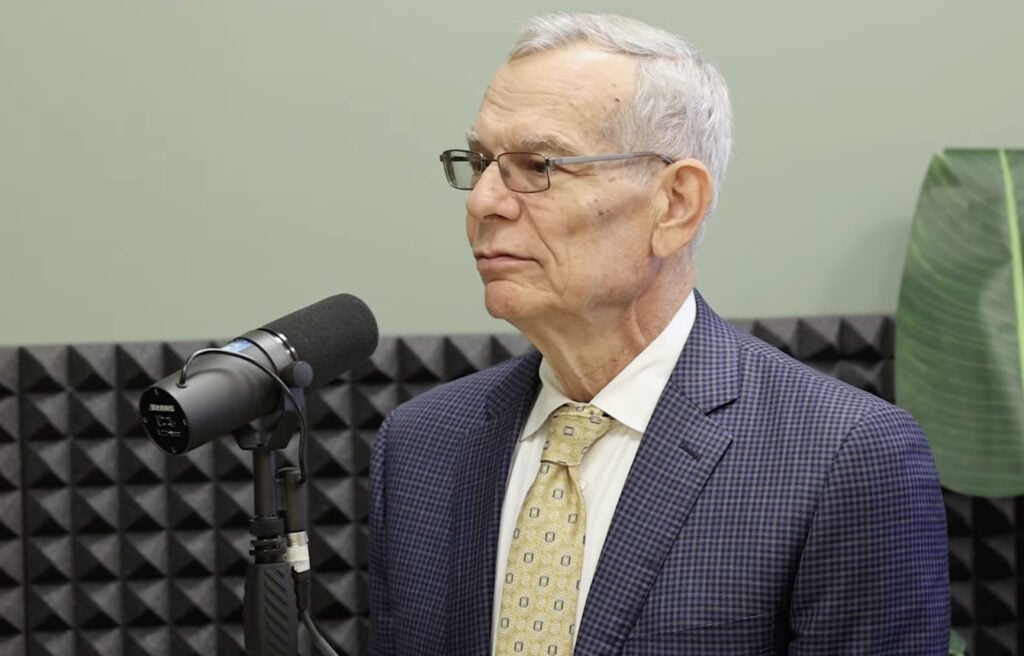
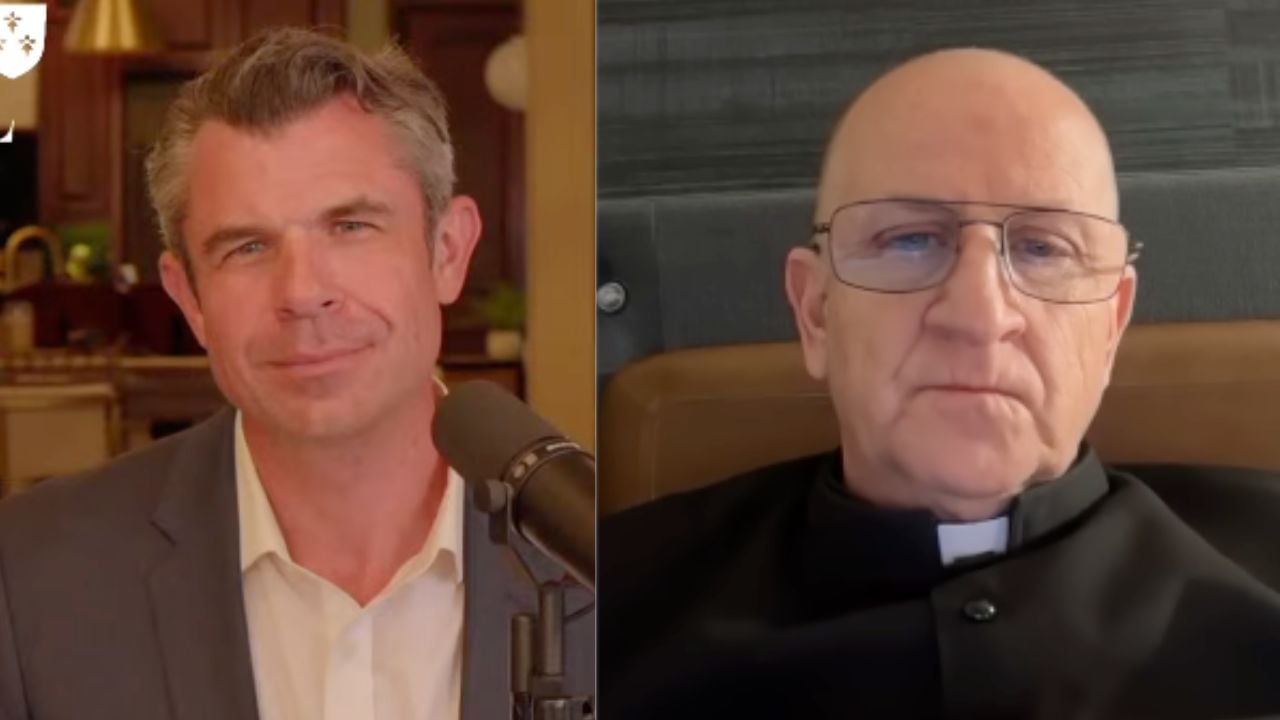
Two examples stand out: Dr. Taylor Marshall’s comments on a recent episode of his podcast titled, “I Just Read SSPXs 28-Page Profession of Faith to the Pope: My Thoughts,” and Fr. Chad Ripperger’s comments during an interview with Marshall’s former partner, Timothy Gordon.
Both men present themselves as sympathetic to the SSPX and both express admiration for Archbishop Lefebvre, but when the moment of truth came to take a clear stand, both retreated into ambiguity, caution, and appeals to obedience to structures that have become instruments of the post-conciliar revolution.
Grifting off Society faithful?
Marshall’s treatment of the SSPX consecrations reveals a man attempting to occupy every position at once. On the one hand, he repeatedly reminds his audience that he is their [SSPX faithful] “friend.” He tells his viewers, “I’ve been a big advocate,” while recounting his visits to SSPX chapels, confirmations, and churches. He also points to his book Infiltration as evidence of his support for Archbishop Lefebvre. This coming from a man who told Divine Mercy priest Fr. Chris Alar last October that he still attends the Novus Ordo occasionally.
Immediately after these assurances comes Marshall’s backpeddling. He states that he has “some hesitations about what’s happening on July 1st” while positioning the entire issue as one of disobedience to “dad,” his name for the pope. In a barbecue analogy which completely misses the point, a son named “Marcel” — representing the SSPX — tells the family: “I think it’s time to disobey dad.” This example reveals the fundamental weakness of Marshall’s position.
The crisis in the Church is not a dispute between siblings over household rules, but a doctrinal and religious crisis of unprecedented proportions which is causing precious souls to end up in Hell.
The problem is not simply that “dad” has made a few bad administrative decisions, but that Vatican II introduced principles that have produced an entirely new and false religion that has, in effect, moved “dad” out of the home and into a completely new residence with an entirely different family — think Leo’s claim about having “unity” with Protestants and his meeting with Anglican female Archbishopress Sarah Mullaly. In a situation such as this, “disobedience” to a non-authority becomes a duty not a mere option.
Similarly, religious liberty, ecumenism, collegiality, interreligious dialogue, and the anthropocentric liturgical revolution were not accidental excesses but the rotten fruits of the Council itself and of the new ecclesiology born from it. Marshall himself practically admits this when he praises the SSPX’s recent declaration of faith for condemning the naturalism that emerged from theologians such as de Lubac, Rahner, and von Balthasar. He rightly notes that these men were “instrumental in forming some of the documents of Vatican II.” He also says “I really wish, dad, I really wish the Pope, would publish something like this.”
This is an admittance that what the SSPX professes, Catholicism, is not what Leo professes. Marshall thus refuses to follow his own observation to its conclusion, which is that submitting to the squatters in Rome is to become an enabler of this new religion and its non-Catholic enforcers. Fidelity to Tradition requires not only resistance to such figures but warning others that they are usurpers, heretics, and apostates.
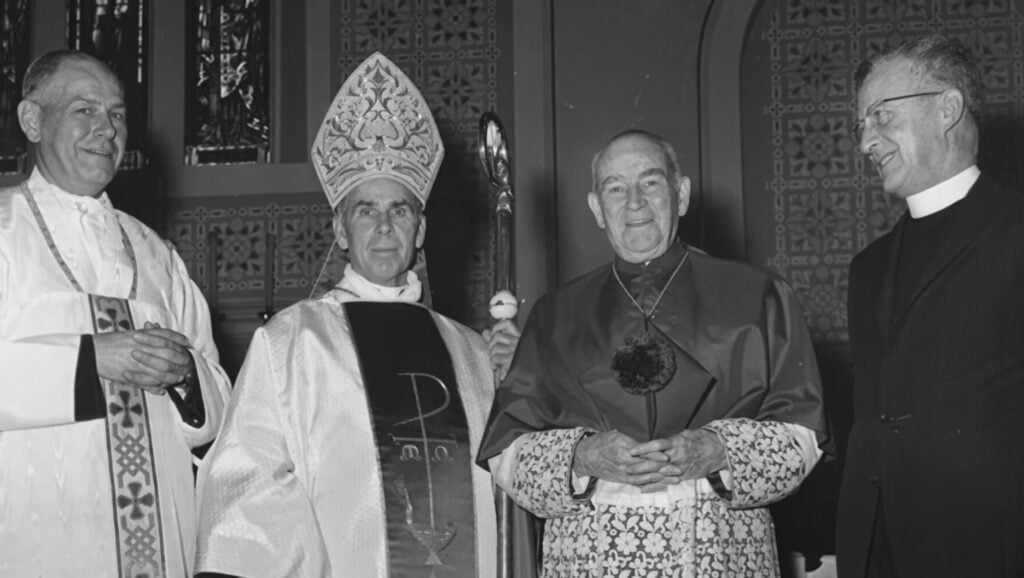
Marshall wants the credibility that comes from standing near the SSPX while avoiding the consequences that come from standing with them. In a January 1, 2015 sermon, Bishop Tissier de Mallerais said that those who want the “regularization” of the Society with the Conciliar Church are “bad friends.” Surely he had men like Marshall in mind.
Archbishop Lefebvre had even harsher words, commenting two years after the consecrations in 1988 that the SSPX’s former allies were “betraying us” by “shaking hands with the Church’s destroyers.”
Marshall’s failure-to-commit, neither-here-nor-there stance becomes even clearer when he discusses an audience poll he hosted shortly before the episode with his viewers. Marshall admits that 61 percent of respondents chose the strongest possible support for the SSPX and the episcopal consecrations. His own viewers overwhelmingly sided with the Society.
But instead of reconsidering his assumptions, Marshall attempts to reassure every faction simultaneously. Bizarrely, in his world, two opposing realities can apparently both be true at the same time: the SSPX is right and the pope is right. The consecrations may be necessary but the consecrations may be imprudent. Archbishop Lefebvre was justified but Archbishop Lefebvre may also not be justified today. This is a perfect example of the schizophrenic mess that plagues the fence sitters.
The Dispatch
While the battle for the soul of the Church rages and the faithful need strong leadership, the best Marshall can do is the management of his profitable audience. The man who spent years documenting infiltration, corruption, doctrinal confusion, and liturgical destruction, now suddenly becomes uncomfortable when Catholics conclude that extraordinary measures are required.
Denying the state of emergency
Fr. Chad Ripperger, the darling of conservatives and Trad Inc., approaches the issue differently but arrives at a similar unfortunate destination.
In his interview with Gordon, he begins by stating, “I would like to see them not do it and try and work something out.”
Like Marshall, he emphasizes sympathy for the Society and repeatedly describes himself as “benign towards the SSPX” while praising their priests and leadership. But once again, sympathy stops exactly where institutional expectations begin.
Ripperger’s central argument revolves around the state of emergency. He argues that no clear definition exists in the magisterium or theological manuals and states that many scholars have searched for one without success. Despite this, he concludes that we are not yet in a universal state of emergency because priests such as himself are still able to live traditional priestly lives within approved structures.
This argument implies that as long as Ripperger can “play trad,” he is content being a sideshow in the conciliar circus — a caged animal in the ecumenical zoo run by Modernists, in other words.
Ripperger’s argument may make sense from the perspective of a priest who comfortably belongs to a traditional institute with ecclesiastical approval, but it makes far less sense from the perspective of ordinary Catholics who have witnessed the destruction of parishes, seminaries, schools, and religious orders over the last sixty years. The goal now must be to rebuild for Christ, regardless of what the “authorities” say.
Vatican II must go
If the collapse of doctrine, liturgy, catechesis, and discipline across the Catholic world would not constitute a universal state of emergency, then for heaven’s sake, Fr. Ripperger needs to tell us what would. When churches host pagan ceremonies, bishops celebrate pride events, Vatican officials promote interreligious indifferentism, and the old Mass survives only by exception and permission, what further evidence is required? Fr. Ripperger acknowledges localized emergencies but hesitates to admit the obvious universal one standing before him.
His treatment of Vatican II is similarly cautious. “You can’t just throw everything out,” he tells Gordon. But this misses the point completely. Vatican II should not be rejected because every sentence is not false, but because it introduced ambiguities, novelties, and principles that enabled the post-conciliar revolution to occur. The fact that some orthodox statements remain within the documents no more saves Vatican II than the presence of some healthy cells saves a diseased organ.
Most revealing is Ripperger’s insistence that discussions with Rome should proceed line by line through the Council documents. After sixty years of theological devastation, it is exactly endless dialogue that has become a major part of the problem.
Potential leaders for the counter-revolution
Ultimately, both Marshall and Ripperger want to remain close enough to traditionalism to retain credibility among traditional Catholics while remaining close enough to the post-conciliar establishment to avoid crossing institutional boundaries, or losing their audiences and the accompanying perks. This is a classic case of wanting to have your cake and eat it too.
On the one hand, they want to speak warmly of Archbishop Lefebvre, criticize Vatican II, and defend Tradition. On the other hand, they warn against following Lefebvre’s example too closely, refuse to condemn Vatican II outright, and continue to legitimize the false Synodal Church by insisting that the SSPX seek permission from it.
The real issue that needs to be judged is whether the religion that emerged from Vatican II represents continuity with the Catholic faith of previous centuries or whether it represents a total rupture disguised by Catholic terminology. An honest examination shows that it is the latter, and therefore it is not Catholicism but a new dogma-less humanism. As such, the preservation of Tradition cannot depend upon obtaining permission from the architects of its destruction.
By recognizing this reality, as Archbishop Lefebvre did decades ago, Marshall and Ripperger would not only strengthen their credibility but also become leaders in the counter-revolution.