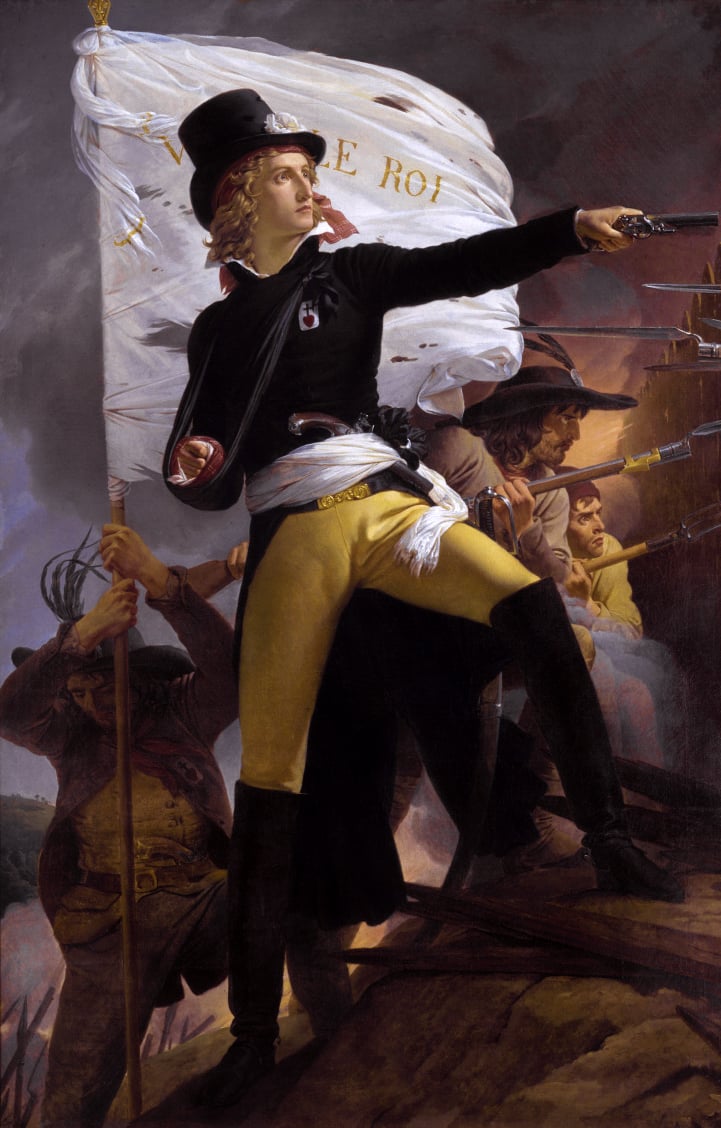
In 1791, Pope Pius VI confronted a revolution that claimed to liberate man while dismantling the Christian foundations of society. Two years later, that same revolution had murdered the Most Christian King, Louis XVI, and unleashed a violent persecution upon the Church.
Pope Pius VI’s response came in the form of Quod Aliquantum (1791) and Quare Lacrymae (1793), in which he exposed not only the political dimension of the rebellion, but its theological revolt against the sovereignty of God. These documents, some scholars argue, including those associated with The Josias, can be regarded as among the earliest Catholic integralist texts.
In 2026, these two documents are as terribly relevant as they were more than two centuries ago, because the Revolution did not end with Robespierre or when the guillotine fell for the last time. It survived through its principles, which conquered the modern state and contaminated the Church. To this day, the struggle continues between those who defend the Kingship of Christ and believe the Revolution must ultimately yield to Christendom, and those who, at Vatican II, capitulated by accommodating the Revolution — with disastrous consequences.
Liberty without truth
In Quod Aliquantum, Pius VI confronted the revolutionary proclamation of liberty and equality, challenging the assertion that man possesses an unlimited natural freedom. Rejecting the idea that man is an autonomous sovereign whose freedom precedes every obligation, rather than a creature subject to divine law who finds true liberty in obedience to it, Pope Pius VI asked where “is that liberty of thinking and acting which the decrees of the Assembly attribute to man in society as an immutable right of his nature?”
It is worth noting that a similar heresy is promoted today in the Synodal machine’s current obsession with infinite human dignity, which divorces man’s dignity from his obedience to Jesus Christ and the Catholic faith, just like the Revolution divorced man’s liberty from the same condition.
Already in Quod Aliquantum, we see our holy pontiff attacking an idea that has become entrenched in modern politics: that the legitimacy of political authority is derived from the tyrannical will of the masses rather than from the authority of God. “This power is to be sought not so much from a social contract as from God Himself, the righteous and just Creator,” Pope Pius VI correctly stated.
In this succinct sentence lies the great tension between Catholic political philosophy and revolutionary liberalism. The latter, of course, is the cancer that has metastasized throughout almost every modern government. In layman’s terms, by rejecting an objective divine order to which both rulers and subjects are bound, and embracing political systems that depend on human consent alone, revolutionary liberalism has traded genuine freedom for the enthronement of the human will in the place of Christ the kIng.
The guillotine and the altar
In Quare Lacrymae (1793), which proclaimed after the barbaric execution of King Louis XVI, Pius VI exposed the terrifying practical consequences of revolutionary principles. Instead of the promised emancipation that was supposedly to follow the destruction of the traditional order, the revolutionaries unleashed persecution. Pope Pius condemned this diabolical ideology in the strongest terms and warned of its consequences:
By these arts they had seduced to their party the great multitude of the people, blandishing (or rather, mocking) them more and more with gifts and promises, they invented that specious name of liberty, and called all to its raised signs and banners. This, then, is that philosophical liberty, which works to corrupt souls and deprave morals, so that all order of the laws and of all things is overturned.
The pontiff saw through the charade of so-called religious freedom as well, which, as it is today, was merely a cover for the violent persecution of Catholicism. “But even though it had been decreed that everyone might freely practice religion as they liked, as if the way to eternal salvation were open through any religion whatsoever, nevertheless the Catholic religion alone was prohibited,” he explained.
Pius VI also understood the same principle operating behind the murder of the King, which he lamented by asking, “who could ever doubt that this king was killed primarily out of hatred of the faith, and as an attack on Catholic dogmas?”
Ultimately, the destruction of the throne and the persecution of the altar were not coincidental developments, but deliberately targeted because they represented an acknowledgement of obligations to an authority higher than the state itself.
The Dispatch
The treason within
Just as we see treasonous men destroying the Church “from within” today, so it was during the French Revolution. Pius VI addressed this betrayal in Quod Aliquantum.
In his document, Pius condemned the Civil Constitution of the Clergy, through which the revolutionaries sought to subject ecclesiastical government to secular liberal political principles. “Ecclesiastical power does not depend on the will of princes but on the divine law,” he declared, bluntly denouncing their diabolical usurpation.
He further recognized that the Revolution would not stop at separating Church and state, but would seek to subject the Church to the political sovereignty of the nation.
Tragically, these wicked principles came to fruition in the post-conciliar epoch. In complete contradiction to the pre-conciliar doctrine concerning the public duties of societies towards the true religion, Dignitatis Humanae un-crowned Christ as king over the civil sphere and the Vatican later encouraged Catholic countries to deconfessionalize in the years that followed.
Discipline and doctrine
Another topic Pius VI addressed was the importance of ecclesiastical discipline.
In Quod Aliquantum, Pius explained that, “We consider it worthwhile to say first how often discipline coheres with dogma and conduces to the preservation of its purity,” and then quoted St Thomas Aquinas. The Angelic Doctor had warned that “they should not be changed unless the common good is recompensed in another area as much as it is damaged in this area.”
This strikes directly at the heart of so many of the “reforms” ushered in by the conciliarists in the 1960s and even after. All too often, these criminals defended their heterodox decisions and actions by dismissing them as overdue updates on matters pertaining merely to “discipline and not doctrine,” as if they needn’t be tied to the true common good tethered to Tradition.
The task of the Counter-Revolution
From these two documents, we see that Pope Pius VI had already established in the eighteenth century principles that once again must be restored to their rightful place of primacy in 2026.
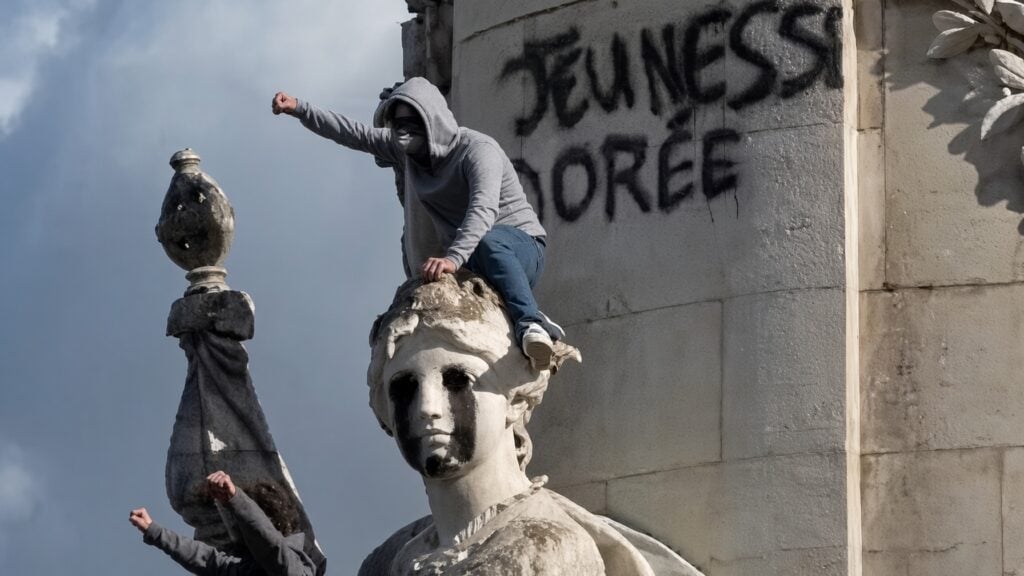
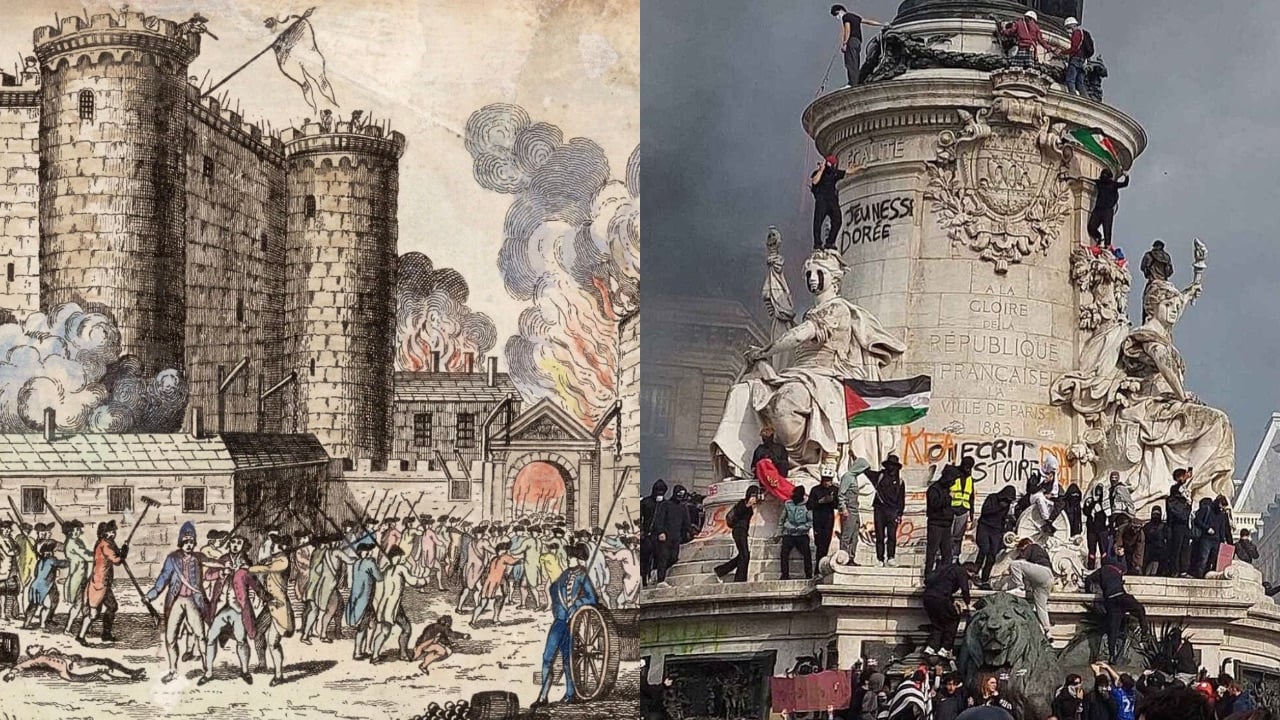
Divine revelation cannot be treated as irrelevant by public authorities. The rioting in France this past week is the logical consequence of precisely such reasoning, and echoes the rioting that occurred in the 1780s and 1790s.
Support independent Traditional Catholic journalism: Donate to Integrity today!
Furthermore, the Conciliar Church must cease being a mechanism of the liberal political complex, because neither ecclesiastical policy nor political sovereignty can be divorced from the Kingship of Christ.
For the Counter-Revolution to truly succeed, it cannot merely defend the vanished institutions and traditional aesthetics of the Faith, as certain factions are currently content to do. It must return to the doctrinal conviction and intransigent opposition to liberalism, Modernism, and all other contemporary errors that rightly prefers death to compromise.