An explosive article published in the Italian newspaper Il Tempo in August — and reprinted by the Rorate Caeli blog this week — lends considerable weight to what Integrity Magazine editor Stephen Kokx and others have long suspected: that conservative cardinals conspired to secure the election of Robert Prevost at the 2025 conclave.
Equally significant, if the report proves true, is that Kokx and traditionalists who believed it was probable that an influential cardinal quietly instructed Trad Inc. commentators to enact a “zip it” policy regarding their criticisms of Robert Prevost now have powerful new reasons to believe that their suspicions were justified and their outspokenness post-conclave entirely valid.
Did two dinners change the conclave?
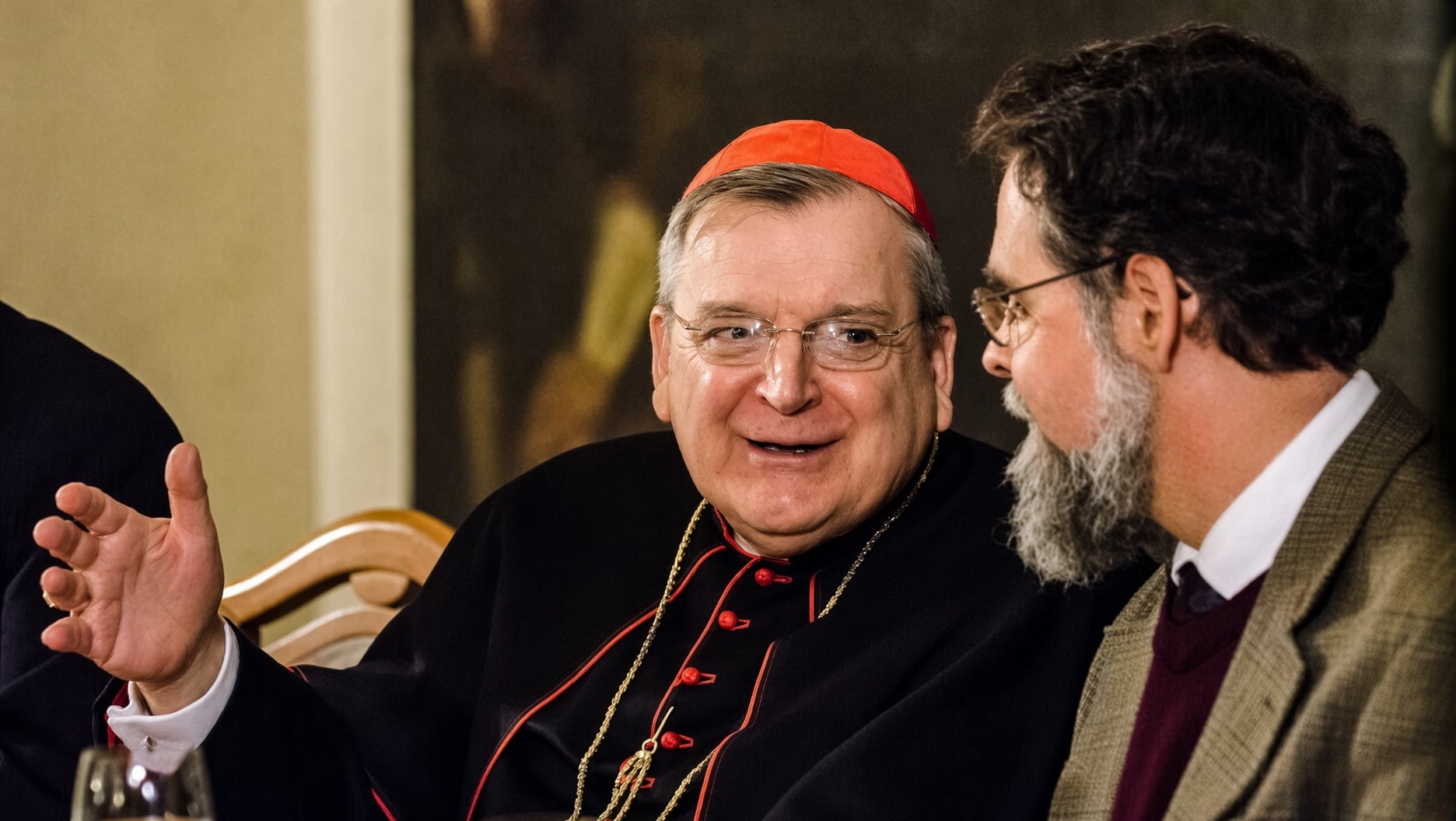
According to reporter Francesco Capozza, two private dinners took place a few days before the conclave in Cardinal Burke’s apartment at Palazzo Rusticucci. Among those in attendance, per the report, were Cardinals Burke, Timothy Dolan, Daniel DiNardo, Gerhard Ludwig Müller, and other European prelates.
The guest of honor at the first meeting was Cardinal Pietro Parolin, widely considered the leading candidate to succeed Francis. The assembled parties allegedly questioned Parolin about how he intended to address their concerns which included the liturgical, theological, and moral divisions that had become the hallmark of Jorge Bergoglio’s reign.
His answers evidently failed to satisfy them, as Il Tempo reported that after Parolin departed, one cardinal’s decisive verdict was, “we cannot trust him — we will vote for anyone except Parolin.”
Help Integrity Magazine meet its Fall fundraising goal: Become a monthly supporter today!
Two days later, essentially the same group of prelates gathered again but this time the guest of honor was Cardinal Robert Francis Prevost, Prefect of the Dicastery for Bishops. The same questions were put to him, but the outcome was dramatically different, and far more pleasing to the ears of the cardinals. According to Il Tempo, by the time coffee was served, “the die was already cast.”
The newspaper alleges that the conservative cardinals controlled a bloc of approximately 20 to 25 votes, and that they were being directed towards Prevost rather than Parolin from the second ballot onwards. This gave Prevost enough initial headwind and later on the sufficient support needed to emerge wearing the white papal vestments.
What did Prevost promise?
A troubling question arises from these alleged meetings concerning what the two parties might have promised each other. Of course, in a high-stakes game of ecclesiastical politics such as this, one would be naïve to imagine that men on both sides would not demand their pound of flesh. But Il Tempo’s article ends in a cliffhanger that implies Leo has gone back on his word.
“The picture was already fully drawn: the conservatives flowed toward Prevost — as had been decided at that dinner whose existence we are today revealing exclusively,” the report reads. “One question remains — not so much for us as for the conservatives who placed their bets on Prevost: will he honor the commitments made at that dinner?”
Unfortunately, the faithful are now left to speculate about what those commitments might have been. Were assurances given to Burke and his comrades concerning the Traditional Latin Mass, appointments of certain bishops promised, or something else? Did Leo renege because Trad Inc. fail in its duty to silence those such as Kokx and others who defended the honor of God by calling out Leo’s deviations from the magisterium and attacks on the faith during his first months in office? Did Leo simply fall under the spell of the Bergoglian Curia/Deep Church apparatus and betray his conservative backers?
The Dispatch
Was Trad Inc. told to keep quiet?
For years, Trad Inc. influencers cultivated close relationships with Burke, Müller, Sarah and others.
Their viewers and followers were encouraged to see these prelates as dependable defenders of Catholic orthodoxy. But following Prevost’s election, it was as though a switch had been flicked. Commentators such as Michael Matt and Taylor Marshall, and more recently Timothy Flanders and Eric Sammons, appeared suspiciously anxious to discourage criticism of Leo XIV, relentlessly badgering the “doom” and gloom “mad trads.”
The revelations reported by Il Tempo now raise the obviously uncomfortable question of whether having invested so heavily in Prevost’s election, the conservative cardinals gave a stand down order to influencers in the U.S. so to not undermining the very man they had helped elect.
The possibility that an influential cardinal, perhaps Burke himself or someone acting on his or Müller’s behalf, quietly communicated to these commentators that their criticisms should be restrained is now an almost tangible reality. Though there is yet to be direct evidence that such an order was given, the alleged electoral arrangement reported by Il Tempo provides the previously missing possible motive.
Did the cardinals violate conclave law?
Another serious implication of this sordid affair that demands scrutiny is whether the cardinals involved may have violated laws surrounding conclaves. John Paul II’s Apostolic Constitution Universi Dominici Gregis contains explicit prohibitions concerning electoral agreements and commitments.
Paragraph 79 forbids anyone, including cardinals, from making plans concerning the election of a successor during a reigning pope’s lifetime without consulting him. It also prohibits promises of votes and decisions concerning the succession made in private gatherings under those circumstances.
Since the alleged dinners took place after Francis’s death, this provision would not directly apply to those meetings. Paragraph 81 of the same document, however, is considerably more relevant.
Help Integrity meet its Fall fundraising goal: Become a monthly supporter today!
It explicitly prohibits cardinals from entering into any pact, agreement, promise, or commitment obliging them to give or withhold their votes from particular candidates. Such agreements are declared null and void, and violations incur automatic excommunication (latae sententiae), subject to the applicable canonical requirements.
The following paragraph, 82, also prohibits agreements binding cardinals to specific courses of action should one of them become pope, while paragraph 83 warns against allowing electoral decisions to be influenced by pressure groups, personal favoritism, or other improper considerations.
It is important to note, however, that discussions concerning the suitability of candidates are not forbidden. Whether a canonical violation occurred would depend on the precise nature of any agreements made. Only those involved can and should provide answers to the following questions. Did Cardinal Burke and his associates merely discuss Prevost’s suitability, or did they enter into a binding electoral agreement? What promises, if any, did Prevost make in return for their support? And did those responsible for engineering his election subsequently attempt to silence criticism among traditionalist Catholic commentators?
If the Il Tempo exposé is true, it means that those commentators who were expected to defend the integrity of Holy Mother Church and the truths she teaches traded their birthright for porridge. Their betrayal, which can no longer be denied, has exposed the fragile foundation beneath the small side chapel of concessions and compromises they have built not on a rock but on sand.