Editor’s note: The following article is reprinted from The Plough. It has been lightly edited for stylistic and editorial standards.
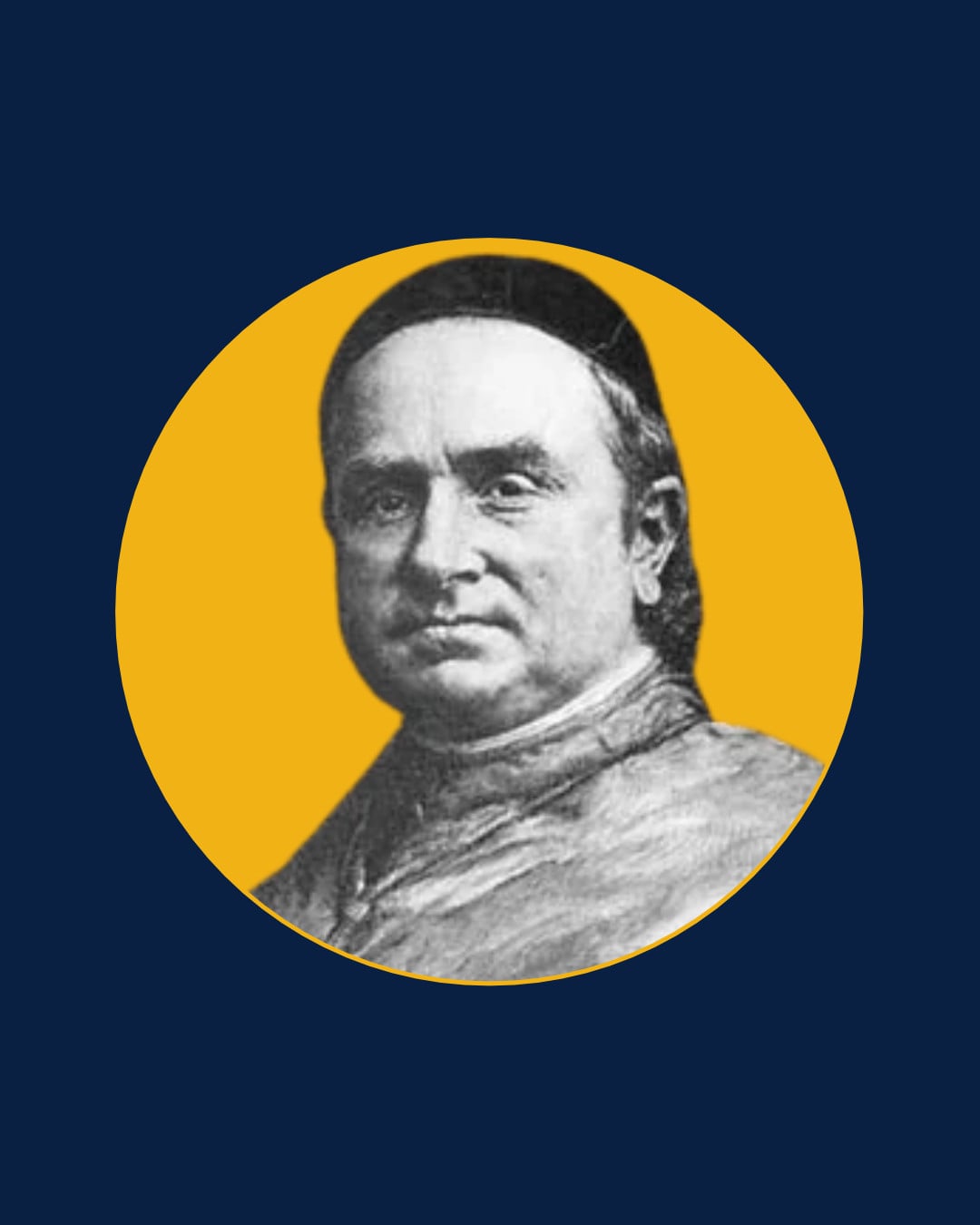
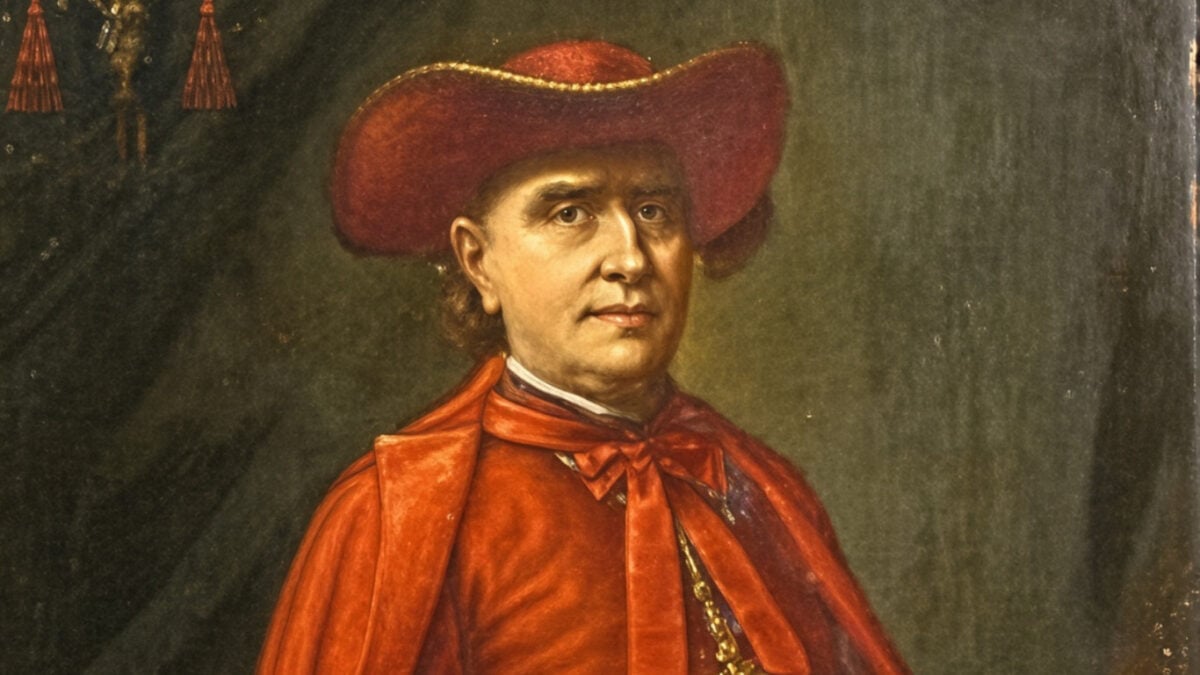
While still largely unknown to the English-speaking world, Cardinal Pie of Poitiers (1815 – 1880) is among the most important modern prelates for American Catholics to learn from. He is famous for his comprehensive exposition of the Social Kingship of Christ and its implications for modern States. St. Pius X himself called the French prelate “My Master.” Very soon, we hope, readers will know why.
Known simply as Cardinal Pie (pronounced ‘PEE’), he was a French Catholic bishop of Poitiers and cardinal, known for his ultramontanism and aforementioned defense of the social reign of Christ the King.
Now, without further ado, we are pleased to present the writing of Cardinal Pie of Poitiers on the necessity of doctrinal intolerance for Catholics, along with its implications.
The necessity of doctrinal intolerance according to Cardinal Pie
A wise man said that the actions of man are the daughters of his thought, and we ourselves have established that all the goods as well as all the evils of a society are the fruit of the good or bad maxims that it professes. Truth in the mind and virtue in the heart are things that correspond almost inseparably; when the mind is given over to the demon of lies, the heart, if the obsession has not begun there, is very close to being given over to the demon of vice. Intelligence and will are two sisters between whom seduction is contagious; if you see that the first has abandoned itself to error, cast a veil over the honor of the second.
It is because it is so, My Brothers, it is because there is no attack, no lesion in the intellectual order that does not have dire consequences in the moral and even in the material order, that we are committed to fighting the evil in its principle, to drying it up at its source, that is to say in its ideas. A thousand prejudices are accredited in our midst: sophistry, astonished to hear itself attacked, invokes prescription; the paradox flatters itself on having acquired the right of citizenship. Christians themselves, living in the midst of this impure atmosphere, do not avoid all contagion; they too readily accept many errors. Tired of resisting on the essential points, often, weary of war, they give in on other points that seem less important to them, and they do not always see, and sometimes they do not want to see how far they could be led by their imprudent weakness. Among this confusion of ideas and false opinions, it is up to us, priests of incorruptible truth, to interpose ourselves, and to protest with gesture and voice; happy if the rigid inflexibility of our teaching can stop the overflow of falsehood, dethrone erroneous principles that reign superbly in intelligences, correct disastrous axioms that already authorize themselves with the sanction of time, finally enlighten and purify a society that threatens to sink, as it grows older, into a chaos of darkness and disorders where it would no longer be possible for it to distinguish the nature and even less the remedy for its ills.
Our century cries: Tolerance! tolerance! It is agreed that a priest must be tolerant, that religion must be tolerant. My Brothers, in all things nothing equals frankness; and I come to tell you straightforwardly that there exists in the world only one society that possesses the truth, and that this society must necessarily be intolerant. But, before entering into the subject, in order to understand each other well, let us distinguish things, agree on the meaning of words, and confuse nothing. Tolerance can be either civil or theological; the first is not our concern, I will only say a word about it. If the law means that it allows all religions because in its eyes they are all equally good, or even because the public power is incompetent to take a position on this matter, the law is impious and atheist; it professes, no longer civil tolerance as we are going to define it, but dogmatic tolerance, and, by a criminal neutrality, it justifies in individuals the most absolute religious indifference. On the contrary, if, recognizing that only one religion is good, it merely tolerates and allows the peaceful exercise of others, the law in this, as has been observed before me, may be wise and necessary according to circumstances. If there are times when it is necessary to say with the famous constable: One faith, one law; there are others when it is necessary to say with Fénelon to the son of James II: “Grant to all civil tolerance, not by approving everything as indifferent, but by suffering with patience what God suffers.” But I leave aside this field bristling with difficulties, and, sticking to the properly religious and theological question, I will present these two principles:
- The religion that comes from heaven is truth, and it is intolerant towards doctrines.
- The religion that comes from heaven is charity, and it is full of tolerance towards people.
Let us pray to Mary to come to our aid, and to invoke for us the Spirit of truth and charity: Spiritum veritatis et pacis.
To condemn truth to tolerance is to force it to suicide.
Principle one
It is of the essence of all truth not to tolerate the contradictory principle. The affirmation of a thing excludes the negation of that same thing, as light excludes darkness. Where nothing is certain, where nothing is defined, sentiments can be shared, opinions can vary. I understand and I ask for freedom in doubtful things: In dubiis libertas. But as soon as the truth presents itself with the certain characteristics that distinguish it, by the very fact that it is truth, it is positive, it is necessary, and, consequently, it is one and intolerant: In necessariis unitas. To condemn truth to tolerance is to force it to suicide. Affirmation kills itself, if it doubts itself; and it doubts itself, if it indifferently allows negation to be placed next to it. For truth, intolerance is the care of conservation, it is the legitimate exercise of the right of property. When you possess, you must defend, under penalty of being soon completely despoiled.
Thus, my Brothers, by the very necessity of things, intolerance is everywhere, because everywhere there is good and evil, true and false, order and disorder; everywhere the true does not tolerate the false, the good excludes the evil, order combats disorder. What is more intolerant, for example, than this proposition: 2 and 2 make 4? If you come to tell me that 2 and 2 make 3, or that 2 and 2 make 5, I answer you that 2 and 2 make 4. And if you tell me that you do not dispute my way of counting, but that you keep your own, and that you ask me to be as lenient towards you as you are towards me; while remaining convinced that I am right and that you are wrong, at a push I will perhaps remain silent, because after all it matters little to me that there is on earth a man for whom 2 and 2 make 3 or 5.
On a certain number of questions, where the truth may be less absolute, where the consequences may be less serious, I may to some extent compromise with you. I will be accommodating if you talk to me about literature, politics, art, pleasant sciences, because in all these things there is no single and determined type. There, the beautiful and the true are, more or less, conventions; and, moreover, heresy in this matter incurs no other anathemas than those of common sense and good taste. But if it is a question of religious truth, taught or revealed by God himself; if your eternal future and the salvation of my soul are at stake, then no transaction is possible. You will find me unwavering, and I must be so. It is the condition of all truth to be intolerant; but religious truth being the most absolute and the most important of all truths, is consequently also the most intolerant and the most exclusive.
My Brothers, nothing is as exclusive as unity. Now, hear the word of Saint Paul: Unus Dominus, una fides, unum baptisma. There is only one Lord in heaven: Unus Dominus. This God, whose unity is the great attribute, has given on earth only one symbol, one doctrine, one faith: Una fides. And this faith, this symbol, he has entrusted only to one visible society, to one Church whose children are all marked with the same seal and regenerated by the same grace: Unum baptisma. Thus, divine unity, which resides for all eternity in the splendors of glory, has produced itself on earth by the unity of the evangelical dogma, the deposit of which has been entrusted by Jesus Christ to the hierarchical unity of the priesthood: One God, one faith, one Church: Unus Dominus, una fides, unum baptisma.
An English pastor had the courage to write a book on the tolerance of Jesus Christ, and the philosopher of Geneva said, speaking of the Savior of men: “I do not see that my divine Master has quibbled over dogma.” Nothing is more true, my Brothers: Jesus Christ did not quibble over dogma. He brought truth to men, and he said: If anyone is not baptized in water and in the Holy Spirit; if anyone refuses to eat my flesh and drink my blood, he will have no part in my kingdom. I confess, there is no subtlety there; it is intolerance, the most positive, the most frank exclusion. And again, Jesus Christ sent his Apostles to preach to all nations, that is, to overthrow all existing religions, to establish the one Christian religion throughout the earth, and to substitute the unity of the Catholic dogma for all beliefs received among the different peoples. And foreseeing the movements and divisions that this doctrine will stir up on earth, he is not stopped, and he declares that he has come to bring not peace but the sword, to ignite war not only between peoples, but within the bosom of the same family, and to separate, as far as convictions are concerned at least, the believing wife from the unbelieving husband, the Christian son-in-law from the idolatrous father-in-law. The thing is true, and the philosopher is right: Jesus Christ did not quibble over dogma.
The same sophist says elsewhere to his Emile: “I do as Saint Paul does, and I place charity well above faith. I think that the essence of religion consists, in practice, in that not only must one be a good man, humane and charitable, but that whoever is truly so, believes enough to be saved, no matter what religion he professes.” That is certainly, my Brothers, a fine commentary on Saint Paul, who says, for example, that without faith it is impossible to please God; on Saint Paul, who declares that Jesus Christ is not divided, that in him there is no yes and no, but only yes; on Saint Paul, who affirms that, if by impossible an angel should come to evangelize a doctrine other than the apostolic doctrine, one would have to say to him anathema. Saint Paul, apostle of tolerance! Saint Paul, who marches overthrowing all proud knowledge that rises up against Jesus Christ, reducing all intelligences under the servitude of Jesus Christ.
We have spoken of the tolerance of the first centuries, of the tolerance of the Apostles. My Brothers, one does not think of it; but the establishment of the Christian religion has been, on the contrary, par excellence a work of religious intolerance. At the moment of the preaching of the Apostles, the entire universe possessed approximately this much-vaunted dogmatic tolerance. As all religions were as false and as unreasonable as each other, they did not wage war on each other; as all gods were of equal value among themselves, they were so many demons, they were not exclusive, they tolerated each other: Satan is not divided against himself. Rome, by multiplying its conquests, multiplied its divinities; and the study of its mythology became more complicated in the same proportion as that of its geography. The triumphator, ascending to the Capitoline, paraded the conquered gods before him with even more pride than he dragged vanquished kings in his wake. More often than not, by virtue of a senatus consultum, the idols of the Barbarians were henceforth merged into the domain of the fatherland, and the national Olympus grew as the empire did.
Christianity, at the moment it appeared (note this, my brothers, these are historical insights of some value in relation to the present question), Christianity, at its first appearance, was not rejected all at once. Paganism wondered if, instead of fighting this new religion, it should not grant it access into its fold. Judea had become a Roman province; Rome, accustomed to receiving and reconciling all religions, initially welcomed the cult from Judea without too much dread. An emperor placed Jesus Christ as well as Abraham among the divinities of his oratory, as another Caesar was later seen to propose rendering solemn homage to him. But the prophet’s word had not been long in coming to pass: the multitudes of idols, which ordinarily watched without jealousy as new and foreign gods came to take their place beside them, at the arrival of the God of the Christians suddenly cried out in terror, and, shaking off their tranquil dust, stirred on their threatened altars: Ecce Dominus ascendit, et commovebuntur simulacra a facie ejus. Rome was attentive to this spectacle. And soon, when it was realized that this new God was the irreconcilable enemy of the other gods; when it was seen that the Christians, whose cult had been admitted, did not want to admit the cult of the nation; in a word, when the intolerant spirit of the Christian faith had been established, it was then that the persecution began.
Listen to how the historians of the time justify the tortures of the Christians: they do not speak ill of their religion, of their God, of their Christ, of their practices; it was only later that calumnies were invented. They only reproach them for not being able to suffer any other religion than their own. “I did not doubt,” says Pliny the Younger, “whatever the nature of their dogma, that their stubbornness and inflexible obstinacy had to be punished: Pervicaciam et inflexibilem obstinationem.” “They are not criminals,” says Tacitus, “but they are intolerant, misanthropes, enemies of the human race. There is in them an obstinate faith in their principles, and an exclusive faith that condemns the beliefs of all other peoples: Apud ipsos fides obstinata, sed adversus omnes alios hostile odium.” The pagans generally said of the Christians what Celsus said of the Jews, who were long confused with them because Christian doctrine had originated in Judea: “That these men adhere inviolably to their laws,” said this sophist, “I do not blame them for it; I only blame those who abandon the religion of their fathers to embrace a different one! But if the Jews or the Christians want to put on airs of a wisdom more sublime than that of the rest of the world, I will say that one must not believe that they are more pleasing to God than the others.”
Thus, my brothers, the main grievance against the Christians was the overly absolute rigidity of their symbol, and, as they said, the unsociable humor of their theology. If it had only been one more God, there would have been no complaints; but it was an incompatible God who chased all the others away: that is why the persecution. Thus, the establishment of the Church was a work of dogmatic intolerance. The entire history of the Church is likewise only the history of this intolerance. What are the martyrs? Intolerant people in matters of faith, who prefer torture to professing error. What are the symbols? Formulas of intolerance, which regulate what one must believe and which impose necessary mysteries on reason. What is the Papacy? An institution of doctrinal intolerance, which through hierarchical unity maintains the unity of faith. Why the councils? To stop the deviations of thought, condemn the false interpretations of dogma, anathematize the propositions contrary to the faith.
We are therefore intolerant, exclusive in matters of doctrine: we profess it; we are proud of it. If we were not, it is because we would not have the truth, since the truth is one, and consequently intolerant. Daughter of heaven, the Christian religion, in descending to earth, produced the titles of its origin; it has offered for the examination of reason incontestable facts, which irrefutably prove its divinity. Now, if it comes from God, if Jesus Christ, its author, could say: I am the truth: Ego sum veritas; it is necessary, by an inevitable consequence, that the Christian Church preserve incorruptibly this truth as it has received it from heaven itself; it is necessary that it repulse, that it exclude everything that is contrary to this truth, everything that would destroy it. To reproach the Catholic Church for its dogmatic intolerance, its absolute affirmation in matters of doctrine, is to address to it a very honorable reproach. It is to reproach the sentinel for being too faithful and too vigilant; it is to reproach the wife for being too delicate and too exclusive. We tolerate you well, the sects sometimes say to the Church, why then do you not tolerate us? My brothers, it is as if the slaves were saying to the legitimate wife: We support you well, why be more exclusive than we are? Foreigners support the wife; it’s a great favor, truly; and the wife is very unreasonable to lay claim alone to rights and privileges, of which they are willing to leave her a part, at least until they manage to banish her completely!
Join the Counter-Revolution: Become a supporter of Integrity today!
See how intolerant Catholics are! We often hear around us: they cannot abide any other Church than their own; Protestants put up with them just fine! My Brothers, you were in the peaceful possession of your house and your estate; armed men rush in; they seize your bed, your table, your money, in a word, they settle in your home, but they don’t chase you away, they go so far as to condescend to leave you your share. What do you have to complain about? You’re awfully demanding not to be satisfied with common law!
Protestants do say that one can be saved in your Church; why do you maintain that one cannot be saved in theirs? My Brothers, let us transport ourselves to one of the squares of this city. A traveler asks me for the road that leads to the capital; I show it to him. Then one of my fellow citizens approaches me and says: I admit that this road leads to Paris, I grant you that; but you owe me reciprocal consideration, and you will not deny me that this other road, the road to Bordeaux for example, also leads to Paris.
The Dispatch
In truth, this road to Paris would be very intolerant and very exclusive for not wanting a road that is directly opposed to it to lead to the same goal. It does not have a conciliatory spirit; how far does encroachment and fanaticism not creep in? My Brothers, and I might still yield, for the most opposite roads might eventually meet, perhaps, after circling the globe, whereas one would eternally follow the path of error without ever arriving in heaven. Don’t ask us then why, when Protestants admit that one can be saved without our religion, we refuse to recognize that, generally speaking and outside the case of good faith and invincible ignorance, one can be saved in theirs. Thorns may admit that the vine yields grapes, without the vine being bound to recognize the same property in thorns.
My Brothers, we are often confused by what we hear on all these issues from otherwise sensible people. They completely lack logic when it comes to religion. Is it passion, is it prejudice that blinds them? It’s both. Deep down, passions know very well what they want when they seek to shake the foundations of faith, to place religion among things without substance. They are well aware that by demolishing dogma, they are preparing an easy morality for themselves. It has been said with perfect accuracy: it is rather the Decalogue than the symbol that creates the unbelievers. If all religions can be placed on the same level, it is because they are all equal in value; if all are true, it is because all are false; if all gods tolerate each other, it is because there is no God. And when one has managed to get there, there is no longer any morality that is truly bothersome. How many consciences would be at peace the day the Catholic Church gives the fraternal kiss to all its rival sects!
The indifference of religions is therefore a system that has its roots in the passions of the human heart. But it must also be said that, for many men of our century, it is due to the prejudices of education. Indeed, either it is a matter of these men, already advanced in age, and who have sucked the milk of the previous generation; or it is a matter of those who belong to the new generation. The former sought the philosophical and religious spirit in Jean-Jacques’ Émile; the latter, in the eclectic or progressive school of these half-Protestants and half-rationalists who today hold the scepter of teaching.
Jean-Jacques was among us the apologist and propagator of this system of religious tolerance. The invention does not belong to him, although he audaciously outdid paganism, which never pushed indifference so far. Here, with a brief commentary, are the main points of the Genevan catechism, which has unfortunately become popular: All religions are good; that is to say, otherwise for the French, all religions are bad. One must practice the religion of one’s country; that is to say, that truth in religious matters depends on the degree of longitude and latitude: truth on this side of the mountains, falsehood beyond the mountains. Consequently, what is even more serious, one must either have no sincere religion and be a hypocrite everywhere, or, if one has a religion deep in one’s heart, become an apostate and renegade when circumstances require it. The woman must profess the same religion as her husband, and the children the same religion as their father; that is to say that what was false and bad before the marriage contract must be true and good after, and that it would be wrong for the children of cannibals to deviate from the respectable practices of their parents!
But I hear you tell me that the age of the Encyclopedia is past, that a longer refutation would be an anachronism. Very well; let’s close the book of Education. Let us open in its place the learned Essays which are like the common source from which the philosophy of the 19th century spreads through a thousand faithful channels over the entire surface of our country. This philosophy is called eclectic, syncretic, and, with a slight modification, it is also called progressive. This beautiful system consists of saying that there is nothing false; that all opinions and all religions can be reconciled; that error is not possible for man, unless he divests himself of humanity; that all the error of men consists in believing that they exclusively possess all the truth, when each of them holds only one ring and that from the reunion of all these rings the entire chain of truth must be formed. Thus, according to this incredible theory, there are no false religions, but they are all incomplete without one another. The true religion would be the religion of syncretic and progressive eclecticism, which would bring together all the others, past, present and future: all the others, that is to say, the natural religion that recognizes a God; atheism that does not know one, pantheism that recognizes him in everything and everywhere; spiritualism that believes in the soul, and materialism that believes only in flesh, blood and humors; evangelical societies that admit a revelation, and rationalist deism that rejects it; Christianity that believes the Messiah has come, and Judaism that still awaits him; Catholicism that obeys the Pope; and Protestantism that regards the Pope as the Antichrist. All this is reconcilable; these are different aspects of the truth. From the ensemble of these cults will result a broader, vaster cult, the great truly Catholic cult, that is to say universal, since it will contain all the others in its bosom.
My Brothers, this doctrine, which you have all described as absurd, is not of my creation; it fills thousands of volumes and recent publications; and, without the substance ever varying, it takes on new forms every day under the pen and on the lips of the men in whose hands the destinies of France rest.
To what point of madness have we arrived? We have arrived, My Brothers, at the point where anyone who does not admit this incontestable principle that we have established must logically arrive, namely: that truth is one, and consequently intolerant, exclusive of all doctrine that is not its own. And, to gather in a few words all the substance of this first part of my speech, I will tell you: You were looking for truth on earth, look for the intolerant Church. All errors can make mutual concessions; they are close relatives, since they have a common father: Vos ex patre diabolo estis. Truth, daughter of Heaven, is the only one that never capitulates.
O you who wish to judge this great cause, adopt the wisdom of Solomon in this matter. Among these different societies between which truth is an object of contention, as was that child between the two mothers, you want to know to whom to award it. Say that a sword be brought to you, feign to cut it in two, and examine the faces of the claimants. There will be several who will resign themselves, who will be content with the portion that is to be delivered to them. Say immediately: those are not the mothers. There is one, on the contrary, who will refuse any compromise, who will say: the truth belongs to me and I must preserve it whole, I will never suffer it to be diminished, fragmented. Say: this one is the true mother. Yes, holy Catholic Church, you have the truth, because you have unity, and because you are intolerant of letting this unity decompose. That, My Brothers, was our first principle: The religion that descends from Heaven is truth, and consequently it is intolerant, as to doctrines. It remains for me to add: The religion that descends from Heaven is charity, and consequently it is full of tolerance, as to persons. This time again, I will hardly do more than state it and will not undertake the development. Let us breathe for a moment.
Principle two
It is characteristic of the Catholic Church, My Brothers, to be firm and unshakeable on principles, and to be gentle and indulgent in their application. What is astonishing about that? Is she not the bride of Jesus Christ, and, like Him, does she not possess both the intrepid courage of the lion, and the peaceful meekness of the lamb? And does she not represent on earth the supreme Wisdom, which strongly tends to its goal and which disposes all sweetly? Ah! It is by this sign again, it is by this sign above all that the religion descended from Heaven must be recognized, it is by the condescension of its charity, by the inspirations of its love. Now, My Brothers, consider the Church of Jesus Christ, and see with what infinite consideration, with what respectful regard she proceeds with her children, both in the way she presents her teachings to their understanding, and in the application she makes of them to their conduct and actions. Soon you will recognize that the Church is a mother, who invariably teaches truth and virtue, who can never consent to error or evil, but who strives to make her teaching amiable, and who treats the wanderings of weakness with indulgence.
Allow me to communicate to you, My Brothers, an impression which is certainly not unique to me and personal, and which all those of my brothers who have devoted themselves with leisure and reflection to the incomparable study of sacred science have experienced as I have. From the first steps I was given to take in the realm of sacred theology, what caused me the most admiration, what spoke most eloquently to my soul, what would have inspired faith in me if I had not had the good fortune to possess it already, is on the one hand the tranquil majesty with which the Catholic Church affirms what is certain, and on the other hand the moderation and reserve with which she abandons to free opinions all that is not defined. No, it is not thus that men teach the doctrines of which they are the inventors, it is not thus that they express the thoughts which are the fruit of their genius.
When a man has created a system, he sustains it with absolute tenacity; he yields neither on one point nor on another. When he has become enamored of a doctrine sprung from his brain, he seeks to make it prevail with authority; do not contest a single one of his ideas: the one you allow yourself to discuss is precisely the most assured and the most necessary. Almost all the books that come from the hand of men are marked by this exaggeration and tyranny. Is it a question of literature, history, philosophy, science? Each one sets himself up as an oracle, wants to be contradicted in nothing; it is a perpetual affirmation; it is a narrow, petty, haughty, absolute criticism. Sacred science, on the contrary, holy Catholic theology, offers a completely different character. Since the Church has not invented the truth, but is only its custodian, there is no passion or excess in its teaching. It pleased the Son of God descended on earth, in whom resided the fullness of truth, it pleased him to clearly reveal certain faces, certain aspects of truth and to only allow others to be glimpsed. The Church does not push its ministry further, and, content with having taught, maintained, and defended the certain and necessary principles, it allows its children to discuss, conjecture, reason freely on the doubtful points.
Catholic teaching has been so slandered, My Brothers, men are so accustomed to judging it with their biases, that you will perhaps find it difficult to believe what I am going to tell you. There is not a single science in the world that is less despotic than sacred science. The deposit of teaching has been entrusted to the Church; now do you know what the Church teaches? A symbol in twelve articles that do not form twelve lines, a symbol composed by the Apostles and which the first two general councils explained and developed by the addition of a few words that became necessary.
We proclaim, we Catholics, that the authentic interpretation of the Holy Scriptures belongs to the Church; now do you know, My Brothers, with respect to how many verses of the Bible the Church has used this supreme right? The Bible contains approximately thirty thousand verses, and the Church has perhaps not defined the meaning of eighty of these verses; the rest is left to the commentators, and, I can say, to the free examination of the Christian reader, so that, according to the words of Saint Jerome, the Scriptures are a vast field in which intelligence can frolic and delight, and where it will only encounter a few barriers here and there around precipices, and also a few fortified places where it can entrench itself and find assured assistance.
Councils are the principal organ of Christian teaching; now the Council of Trent, wishing to enclose all obligatory doctrine in a single declaration, did not need two pages to contain the most complete profession of faith. And if one studies the history of this council, one recognizes with admiration that it was equally zealous in maintaining dogmas and in respecting opinions; and there is such a word that the assembly of the Fathers rejected and to which it had no rest until it had substituted another, because its grammatical meaning seemed to exceed the measure of certain truth and steal something from the free controversies of the doctors.
Finally, the incomparable Bossuet, having opposed his famous Exposition of Catholic Faith to the slanders of the Protestants, it turned out that this same Church, which was accused of tyrannizing over intelligences, could reduce its defined and necessary truths into a body of doctrine much less voluminous than were the confessions, synods, and declarations of the sects that had rejected the principle of authority and professed free examination.
Now, I repeat, My Brothers, this remarkable phenomenon which is only found in the Catholic Church, this tranquil majesty in affirmation, this moderation and this reserve in all undefined questions, that, in my opinion, is the adorable sign by which I must recognize the truth come from heaven. When I contemplate on the face of the Church this serene conviction and this benign indulgence, I throw myself into her arms, and I say to her: You are my mother. It is thus that a mother teaches, without passion, without exaggeration, with a calm authority and a wise measure.
And this character of the Church’s teaching, you find it in her most eminent doctors, in those whose writings she adopts and authorizes almost without restriction. Augustine undertakes his immortal work of the City of God which will be until the end of the ages one of the richest monuments of the Church. He will avenge against the slanders of expiring paganism the holy truths of the Christian faith; he feels the ardor of zeal bubbling within him; but if he has read in the Scriptures that God is truth, he has also read that God is charity: Deus charitas est; he understands that the excess of truth can become the defect of charity; he kneels down, and he sends towards heaven this admirable prayer: Mitte, Domine, mitigationes in cor meum, ut charitate veritatis non amittam veritatem charitatis: Send, Lord, send into my heart the softening, the tempering of your spirit, so that, carried away by the love of truth, I do not lose the truth of love: Mitte, Domine, mitigationes in cor meum, ut charitate veritatis non amittam veritatem charitatis. And, at the other end of the chain of holy doctors, hear these beautiful words of the blessed bishop of Geneva: The truth which is not charitable ceases to be the truth; for in God, who is the supreme source of truth, charity is inseparable from truth. Thus, My Brothers, read Augustine, read Francis de Sales: you will find in their writings the truth in all its purity and, because of that very fact, all imbued with charity and love.
O priest of Carthage, illustrious apologist of the early ages, I admire the vigor of your energetic language, the irresistible power of your sarcasm; but shall I say it? Beneath the bark of your most orthodox writings, I seek the unction of charity; your incisive syllables do not have the humble and gentle accent of love. I fear that you defend the truth as one defends one’s own system, and that one day your wounded pride will abandon the cause that your bitter zeal had sustained. Ah! My Brothers, why did Tertullian, before dedicating his immense talent to the service of the gospel, not pray to the Lord, like Augustine, to send into his heart the softenings, the temperings of his spirit? Love would have maintained him in doctrine. But because he was not in charity, he lost the truth.
Read more: Cardinal Zigliara against the modern error of liberty of worship
And you, O celebrated apologist of these latter days, you whose first writings were greeted by the unanimous applause of all Christians, shall I tell you, O great writer, this apparent logic in the clutches of which you want to stifle your adversary, these hurried, multiplied, triumphant reasonings with which you overwhelm, all this leaves me wanting something; your zeal resembles hatred, you treat your adversary as an enemy, your impetuous word does not have the unction of charity nor the accent of love. O our unfortunate brother in the priesthood, why must it be that before dedicating your beautiful talent to the defense of religion, you did not offer up Augustine’s prayer at the foot of your crucifix? Mitte, Domine, mitigationes in cor meum, ut charitate veritatis non amittam veritatem charitatis. More love in your heart, and your intelligence would not have made such a deplorable defection; charity would have maintained you in the truth.
And if the Catholic Church, My Brothers, presents to our minds the teaching of truth with so much consideration and gentleness, ah! It is with even more condescension and kindness that she applies her principles to our conduct and our actions. Incapable of ever enduring evil doctrines, the Church is immeasurably tolerant of individuals. Never does it confuse the error with the one who teaches it, nor sin with the one who commits it. It condemns the error, but continues to love the man; it brands the sin, but pursues the sinner with its tenderness, it aspires to make him better, to reconcile him with God, to restore peace and virtue to his heart.
It shows no partiality: for it there is neither Jew, nor Greek, nor barbarian; it does not concern itself with your opinions; it does not ask whether you live in a monarchy or a republic. You have a soul to save, that is all it needs. Call it, it is yours, it arrives with hands full of graces and forgiveness. You have committed more sins than you have hairs on your head; that does not frighten it, it erases everything in the blood of Jesus Christ. Some of its laws are too onerous for you, it agrees to accommodate them to your weakness; their rigor yields before your infirmity, and the oracle of theology, Saint Thomas, posits as a principle that if no one can be exempt from divine law, condescension, on the other hand, should not be too difficult in the laws of the Church, because of the gentleness that is the basis of its government: Propter suave regimen Ecclesiae. Thus, My Brothers, when civil law is rigid and inflexible, the law of the Church is just as supple and pliable. What other authority on earth governs, administers as the Church does? Suave regimen Ecclesiae.
Ah! May the world, which preaches tolerance to us, be as tolerant as we are! We reject only principles, and the world rejects people. How often we absolve, and the world continues to condemn! How often, in the name of God, we have drawn the veil of oblivion over the past, and the world always remembers! What am I saying? The very mouths that reproach us for intolerance blame us for our too credulous and too easy kindness; and our inexhaustible patience towards individuals is almost as contested as our inflexibility against doctrines.
My Brothers, do not ask us any more for tolerance with regard to doctrine. On the contrary, encourage our solicitude to maintain the unity of dogma, which is the only bond of peace on earth. The Roman orator said it: the union of minds is the first condition of the union of hearts. And this great man includes in the very definition of friendship the unanimity of thought with regard to divine and human things: Eadem de rebus divinis et humanis cure summa charitate juncta concordia.
Our society, My Brothers, is prey to a thousand divisions; we complain about it every day. Where does this weakening of affections, this cooling of hearts, come from? Ah! My Brothers, how can hearts be brought closer together, where minds are so far apart? Because each of us isolates himself in his own thought, each of us also confines himself to the love of himself. Do we want to put an end to these countless dissensions, which threaten to destroy soon all spirit of family, of city and of country? Do we want to no longer be strangers, adversaries and almost enemies to one another? Let us return to a symbol, and we will soon find concord and love.
Any symbol concerning the things of this world is very far from us; a thousand opinions divide us and there has been no human dogma for a long time, and I do not know if one will ever be reconstituted among us. Fortunately, the religious symbol, the divine dogma has always been maintained in its purity in the hands of the Church, and thereby a precious germ of salvation is preserved for us. The day when all Frenchmen say: “I believe in God, in Jesus Christ and in the Church”, all hearts will soon come closer together, and we will find the only truly solid and lasting peace, the one that the Apostle calls peace in truth. So be it.