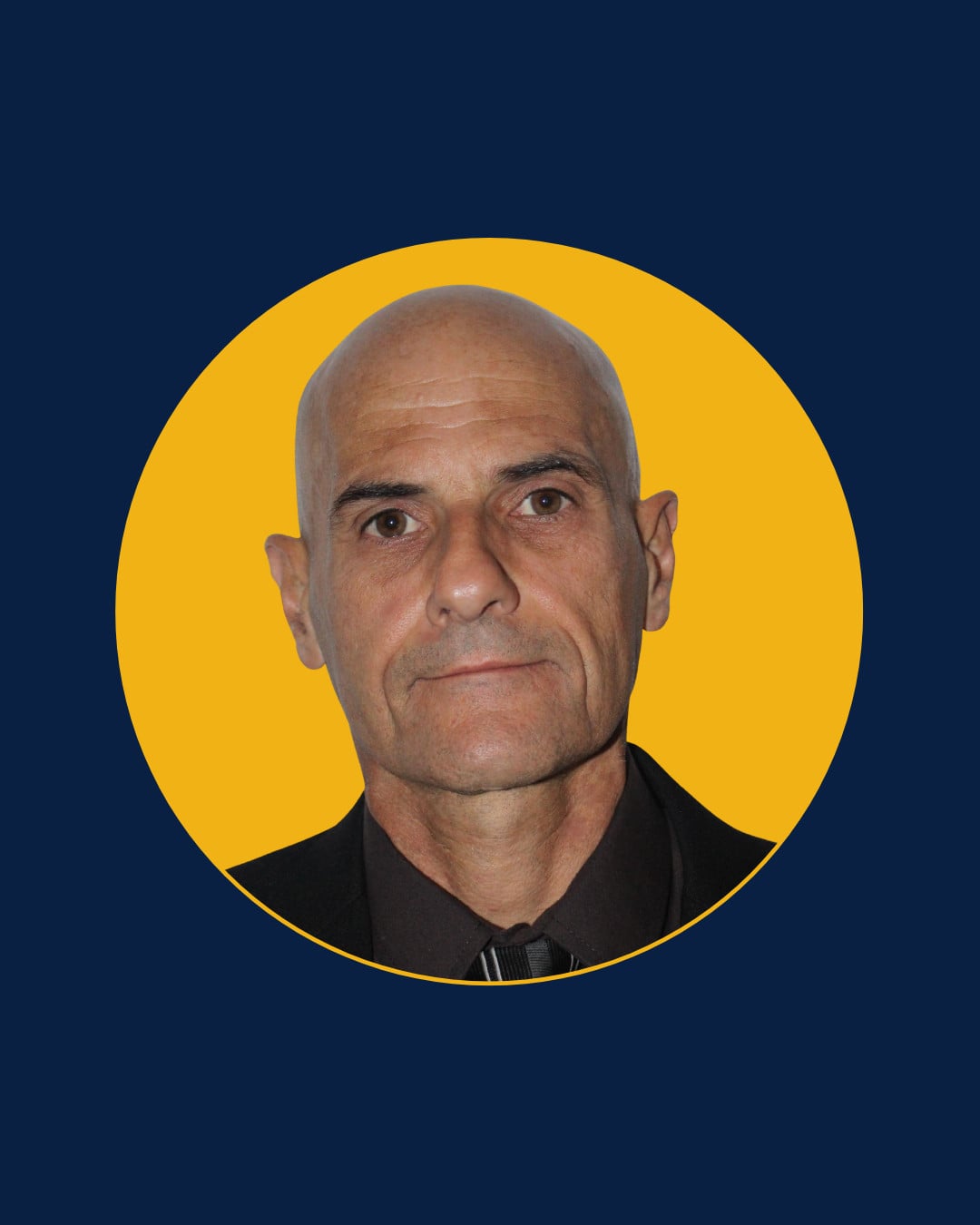

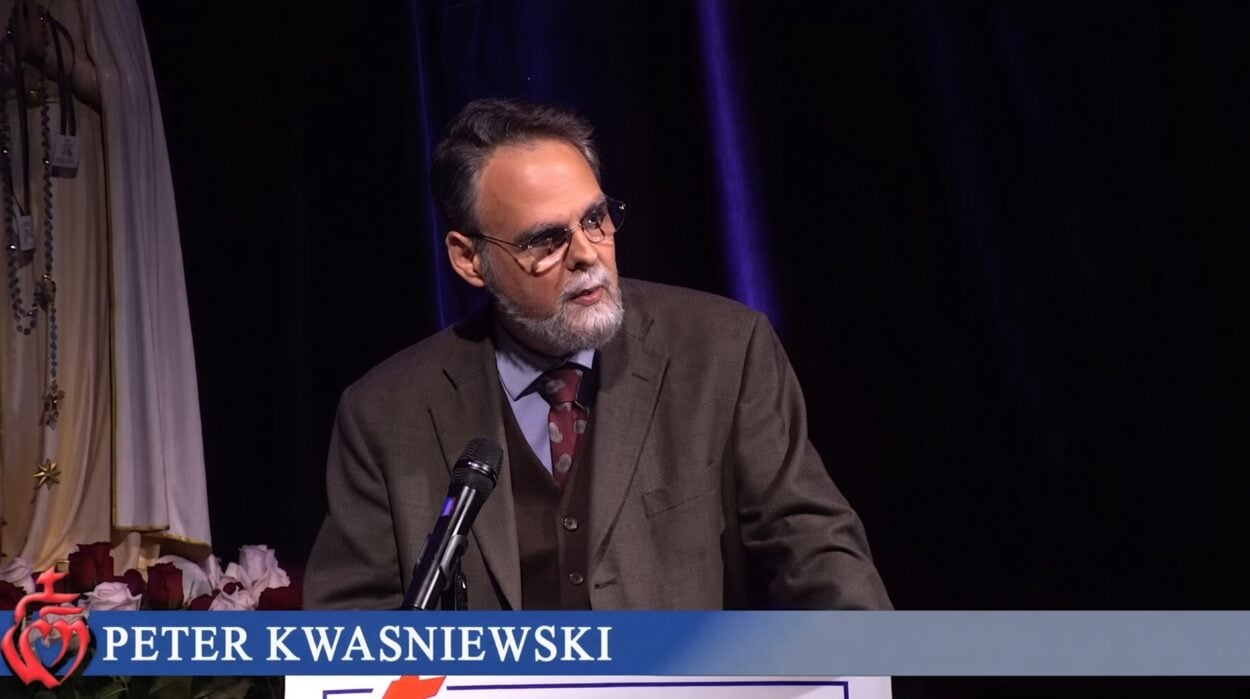
Following his recent anathematizing of “sedevacantists” at the Catholic Identity Conference (CIC), Dr. Peter Kwasniewski has republished an article on Rorate Cæli this week rebuking Traditionalists who have done nothing more than defend the Catholic faith while Leo XIV relentlessly attacks it.
“The cottage industry of ‘naysayers,’ self-appointed spokesmen for tradition, who seem to have nothing to do all day but complain about or find fault with Pope Leo XIV … squander the energies and weaken the reputation of the traditionalist movement,” Kwasniewski argued without naming names. “These doomsday writers regularly turn against other trads just as frequently as they turn against conservatives and progressives.”
At this point, it is clear that Dr. Kwasniewski — who himself repeatedly “found fault” with Francis — is the gatekeeper par excellence for the neo-trad establishment, despite lip-service to the contrary. While conceding that the article he reprinted “overstates its case,” Kwasniewski claimed on X that its criticisms apply to a “small yet noisy online subset” of traditionalists.
Before analyzing what the essay actually says, it is important to ask who this “small yet noisy online subset” of traditionalists who “complain” about Leo is. It seems Dr. Kwasniewski is referring to those who recognized Leo is Francis 2.0 right out of the gate, and who rejected the “zip it” policy of Michael Matt in order to win liturgical crumbs from the Modernists in Rome after the 2025 conclave and who didn’t want to go along with the futile strategy of Cardinal Burke and Cardinal Müller.
Indeed, in Dr. Kwasniewski’s eyes, explaining to the general public where and how Leo is deviating from the Church’s traditional magisterium on the death penalty and promoting false ecumenism, open borders, synodality, Vatican II’s erroneous theology, and the like amounts to being a “naysayer” and a prophet of doom. In reality, Dr. Kwasniewski did exactly the same thing for years under Francis. And he was right to. As Pope Felix III once explained, “not to oppose error is to approve it; and not to defend truth is to suppress it.”
In the introduction of his blog post, Dr. Kwasniewski echoes the party line taken by his fellow house trads. “The author [of the essay] essentially argues that the enormous capital fund that trads raised under Francis are being squandered by them under Leo.” We will discuss what the author of the essay means by this below. It must first be recalled that Dr. Kwasniewski and dozens of others denounced Francis nearly every day for many years, even accusing him of promoting heresy and of publishing documents so contrary to the faith that they were, to borrow his own words, “null and utterly void.” Yet the implication being given here is that the rag tag group of Substack users and podcasts that have emerged since the conclave last year that are calling out Leo’s continuation of Bergolgio’s agenda are to blame for besmirching the goodwill that “trads” had built up over the last decade.
Support independent Traditional Catholic journalism: Donate to Integrity today!
It is worth asking who Dr. Kwasniewksi means by “trads” anyway. It seems he is referring to indult, Ecclesa Dei, and FSSP attendees, with the occasional SSPX influencer thrown in for good measure. But this “trad movement” dissolved on its own accord after the July 1 SSPX consecrations. Dr. Taylor Marshall, Eric Sammon, Timothy Flanders, Kennedy Hall, and others all went their separate ways after. Yet Dr. Kwasniewski seems to want to blame voices at Integrity and elsewhere for fracturing the false unity these and other persons string together around the Latin Mass and a generic opposition to the “ambiguities” and poor implementation of Vatican II.
If Dr. Kwasniewski wishes to assign blame for the “squandering” of the “capital” that trads built up, he should look no further than his own (former?) allies, as it was their viewers and their supporters who left them after they went silent after the conclave and demanded everyone else “give Leo time.” In other words, it was the traditionalists in the pews who saw through the charade that was foisted upon them by these influencers, some of whom have since admitted they would be fine attending the Novus Ordo Missae if their Latin Mass is taken away. Talk about a LARP! Ultimately, it was ordinary trad Catholics who voted with their feet to support the new voices in the traditionalist space, those who are fulfilling the prophesy of Our Lord in the Gospel of Luke when He said that the “stones” will cry out if others remain silent.
What is clearly happening is the death rattle of the semi-trad movement. It is being replaced by a counter-revolutionary, uncompromising group of younger intellectuals and clergy who reject Vatican II and see it as a Modernist coup that ruptured with tradition and who do not strive to be a mere side chapel in the Conciliar Cathedral. These persons want true dialogue and even an alliance with those who hold to the various “sedevacantist” positions, as they rightly recognize that the “fighting from within” strategy is a fool’s errand given that it has only resulted in loss after loss after loss for tradition. Ultimately, if Dr. Kwasniewski wants to issue public calls for “tolerance” and charity among traditionalists on “controversial” topics while at the same time treating them as lepers by relying on ad hominem attacks, let him at least admit the insincerity of his claims, as they ring completely hollow.
Denouncing trads ‘on the right’
The hypocrisy of Michael Matt’s “unite the clans” mantra was on display elsewhere at the CIC when conference co-founder Eric Frankovitch told attendees that there should be “no enemies to the right.” Echoing Kwasniewski, he said the following:
Traditional Catholics have enough serious challenges before them without turning their own movement into a circular firing squad. We do not need friendly fire. We need charity, courage, and a clear understanding of what we are trying to preserve.
Many of you remember Michael Davies, the great British Catholic author and lecturer. Through his books, articles, booklets, and lectures, he gave generations of Catholics the knowledge and confidence to defend the traditional Mass and the faith it expresses.
One of his most frequent statements was: ‘We have no enemies on the right.’
For our purposes, that means something very straightforward: a fellow Catholic working to preserve the traditional faith should not become our enemy merely because he takes a different approach.
But this, too, rings hollow. Not only has Michael Matt, Mr. “Zip it” himself, repeatedly taken shots at anyone he deems outside the “clans” he so ironically claims to want to unite, but Kwasniewski did the same by opening fire on them in his blog post.
The Dispatch
What does it profit a man to gain ‘political capital’ in the conciliar church?
The essay Dr. Kwasniewksi republished first appeared on a Spanish blog titled Wanderer. The author begins with a mysterious proposition that makes no sense and, frankly, is laughable.
“For the first time in a very long time, traditionalism and its allies played their cards right and were part of the winning faction in the conclave,” he writes.
Is he referring to conservatives such as Burke, Müller, and Sarah, who conveniently reject only what will not cost them personally? Or were there secret trad “allies” to whom only the author is privy?
More specifically, the author also needs to explain how “traditionalism” played its cards right at the conclave. Perhaps there was an effort by the Francis faction that sought to promote someone even more “to the left” than Prevost? Perhaps Burke and his allies prevented that from happening? Perhaps there was a deal put in place between the pro-Latin Mass conservatives and Prevost’s supporters that resulted in an agreement that influencers would put down their arms as a test in exchange for more liturgies?
The author of the essay seems to suggest that a bargain of that sort is precisely what took place. “Prevost was elected as a consensus Pope to restore normalcy to the Church,” he writes. But he then lamented that trads started “calling for a return to civil war while holding very little real power in their hands, thereby shattering the fragile truce.” Apparently, for this group of politicians, Catholic doctrine is something to be negotiated according to the shifting balance of power within the Vatican. In such a situation, agreeing to look the other way while spiritual genocide is being carried out by Leo with his many heretical remarks is the complete opposite of a virtuous act.
Take a stand against Trad Inc: Donate to Integrity today!
The author further argues that traditionalists possessed a certain sympathy earned through persecution under Francis. He says that a potentially receptive new pontiff, aided by the collapse of progressivism and the influence trads accumulated under Benedict XVI was sort of like wind in their sails. All this constitutes the political “capital” that traditionalists have allegedly squandered through confrontation with Leo, he argues. The essay then explicitly proposes an exercise in “ecclesiastical political realism in the manner of Machiavelli and Tacitus.” But whatever happened to telling the truth and trusting God will reward our courage for defending the faith when it is unpopular to do so? No wonder these semi-trads keep Archbishop Lefebvre at arms length. They see his 1988 consecrations as an act that was far from “political realism.”
Three catastrophes or three unanswered questions?
The Wanderer identifies three principal disasters allegedly created by the ugly step children of the traditionalist movement: demands for the removal of Francis-era officials, controversy over the Co-Redemptrix title, and the SSPX’s confrontation with Rome.
The author condemns traditionalists who wanted a purge of “Franciscites,” describing them as “traditionalist Bergoglios in miniature,” as though it were unreasonable to demand the removal of officials who have caused destructive doctrinal confusion and promoted grave error. He then alleged that those “opposing those titles is just as legitimate as defending them, since they are not dogmas.” Finally, he rebuked “the schism of the Econites — the last straw.” Putting aside one’s opinion of the SSPX’s position on the papacy for a moment, there is a worthwhile question that the Wanderer essayist avoids mentioning: Was the SSPX wrong to refuse compliance with teachings and practices that grossly contradict Catholic Tradition?
Here we can tie the gist of the Wanderer essay to the central weakness of Kwasniewski & Co.’s novel version of traditionalism. Their brand of traditionalism cautiously criticizes the revolutionary character of the post-conciliar transformation, recognizes the devastation of Catholic worship, the suppression of long-standing traditions, and the profound rupture with pre-conciliar Catholicism, yet almost proudly fails to draw the correct conclusions.
If one could submit a dubia of sorts to him and others, answers to the following questions would be greatly appreciated.
- If a “revolution” against Catholic Tradition was not only imposed from above, but has been enforced for decades, can this be done with Christ’s authority?
- If, as Dr. Kwasniewski said in his CIC speech, there are “usurpers” in the Church, how can a Catholic recognize them as legitimate? When is a Catholic ever obligated to obey a “usurper” in Christ’s Church?
- Given that Leo has now proven that it is his desire to bring to completion Francis’ synodal agenda, at what point will he jump into the fight just as he did under Francis and denounce with the same vigor the many erroneous and blasphemous statements Leo is making?
- Finally, the First Vatican Council taught that the Holy Spirit was promised to the successors of Peter not so that they might invent new doctrine, but so that they might faithfully guard and expound the apostolic deposit. But Vatican II clearly taught new doctrines, and explicitly departed from tradition. How, then, can the institution that emerged after it be the Catholic Church and how can the Church’s divinely protected teaching authority become the instrument of a systematic religious revolution that persecutes those who adhere to her perennial magisterium?
Unfortunately, invoking the personal failings and “non-infallible” off the cuff remarks and documents put forward by conciliar churchmen across the world and the Vatican cannot suffice as an answer. The problem clearly concerns decades of habitual divergence from Catholic magisterial teachings and the public exercise of ecclesiastical authority in matters of faith and worship — relating to indefectibility — not merely the private shortcomings or even sins of individual clerics. As Archbishop Lefebvre once said:
The more one analyzes the documents of Vatican II, and the more one analyzes their interpretation by the authorities of the Church, the more one realizes that what is at stake is not merely superficial errors, a few mistakes, ecumenism, religious liberty, collegiality, a certain Liberalism, but rather a wholesale perversion of the mind, a whole new philosophy based on modern philosophy, on subjectivism.
Therefore, what the Wanderer author, Dr. Kwasniewski, and Michael Matt have yet to offer an explanation for — beyond mere sophistry — is how faithful Catholics can be expected to separate true loyalty to the See of Peter from true loyalty to the teaching, governance, and worship imposed by Peter.