
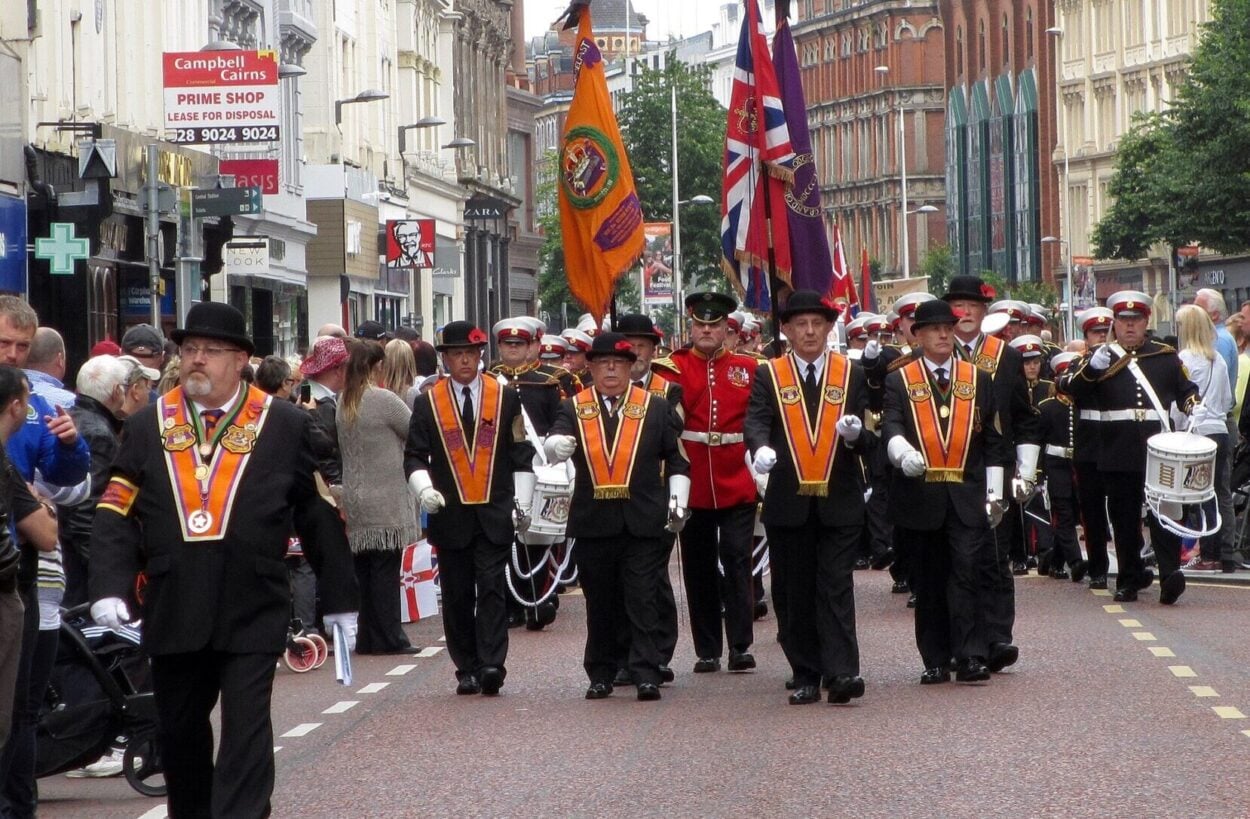
Protestants in Northern Ireland are using a recent court ruling to antagonize Catholics.
Since 1998, the Orange Order has been prevented by the local Parades Commission from marching down the predominantly Catholic Garvaghy Road in Portadown, County Armagh.
The Order is an international, anti-Catholic fraternal group that has a long history of activism in politics and religious affairs. Having been founded in 1795 with alleged ties to Freemasonry in order to “drive Papists our of Ireland,” it takes its name from William III, Prince of Orange, the Dutch-born Protestant king of Great Britain who succeeded Catholic King James II after the woefully misnamed Glorious Revolution of 1688 drove him from the throne. William defeated James in the Battle of the Boyne in Ireland 1690, solidifying Protestant succession.
On Friday, September 25, the Commission reversed its long-standing ban after years of appeals, deciding that a limited march of no more than 35 persons with no bands or flags, other than a Portadown banner, could proceed from 8am until 9:30am on Sunday, September 26.
Catholic residents immediately filed an injunction to prevent the march. Judge Patricia Smyth granted them their request on Saturday, warning that the procession had “the potential to escalate” conflicts across Northern Ireland, which it has. The Order appealed that ruling and higher courts overturned the prohibition, clearing the way for the march to proceed.
On Sunday, a group of Orangemen departed from the Anglican Drumcree Church, only to be met by 2,000 Catholics who stood in the rain to block their passage. Police were on site in order to prevent tensions from rising. Orangemen tried again later, though Garvaghy Road residents have continued to turn out in droves while further appealing the ruling. The Order has reportedly called for Jon Boutcher, the Police Service of Northern Ireland chief constable, to be removed.
The Dispatch
In 1995, a three-day stand-off ended when Orangemen were permitted to walk the road. In 1996, the event was initially banned but was allowed after several days of chaos ensued. During that crisis, a Catholic taxi driver, Michael McGoldrick, was allegedly shot and killed by a pro-Protestant paramilitary group called Mid-Ulster UVF.
In 1998, the newly created Parades Commission banned the march from the Garvaghy Road section. More disorder followed. Eventually, three young brothers — Richard, Mark and Jason Quinn — died when their home in Ballymoney was bombed by men from the same Protestant paramilitary group.
Between July 1996 and June 1999, at least twenty-one people, most of them Catholic, were killed in violence associated with the parade. The Garvaghy Road section of the march has not been completed by Orangemen since 1997. To allow it to continue is seen by many faithful as a trampling on the graves of the Quinn boys, as well as other Catholics who have died over the decades, not to mention a capitulation to Protestant aggression dating back centuries.
The dispute has caught the attention of Irish politicians. Sinn Fein First Minister Michelle O’Neill visited Garvaghy Road to stand beside the protesters, alongside Sinn Fein President Mary Lou McDonald, who said on X that “We stand with the people of Garvaghy Road. We will not stand by while their right to live in peace is put at risk.”
In 1998, Irish leaders signed the Good Friday Agreement, which sought to bring religious and political conflicts to an end by ushering in power-sharing and diplomatic measures aimed at peaceful resolution of differences.