
When it comes to sheer blasphemous apostasy and unadulterated heresy, this year’s Assisi “at 40” meeting did not disappoint.
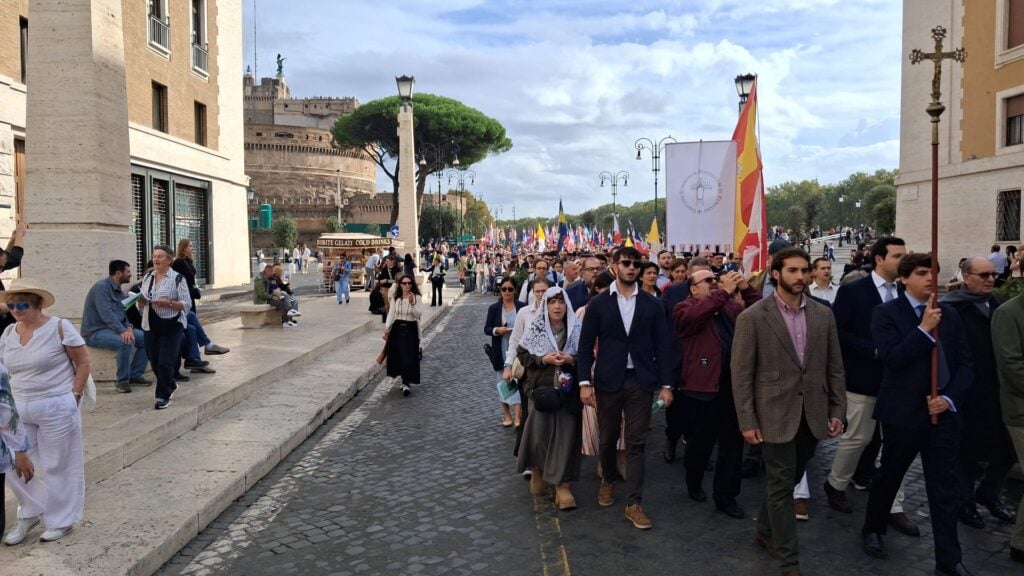
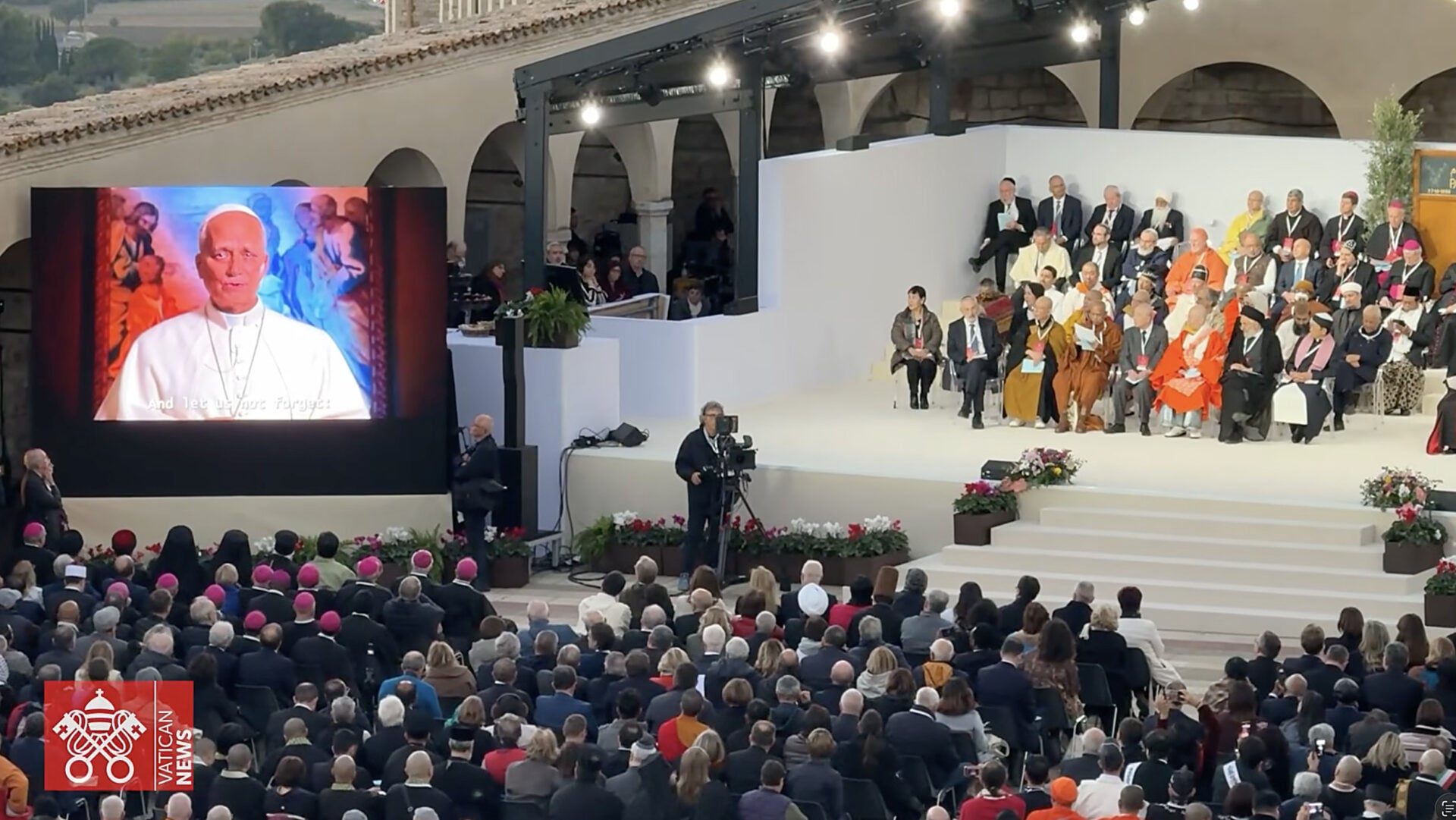
40 years after John Paul II assembled representatives of the world’s religions in 1986, the Vatican has once again celebrated this odious event. The gathering, which concluded on October 27, brought together Conciliar prelates, Protestant representatives, and non-Christian religious leaders under the banner of peace.
Leading those in attendance further into error, instead of preaching Catholic truth, was none other than the papal claimant himself, albeit not in person. In a video message shared with participants during the final ceremony, Leo XIV denied the existence of “holy war,” a claim that would undoubtedly have raised the ire of the popes who commissioned the Crusades. He also failed to mention the name of Jesus Christ, never mind proclaim His Kingship over the world.
Help Integrity meet its $15,000 fundraising goal: Become a one-time or monthly donor today!
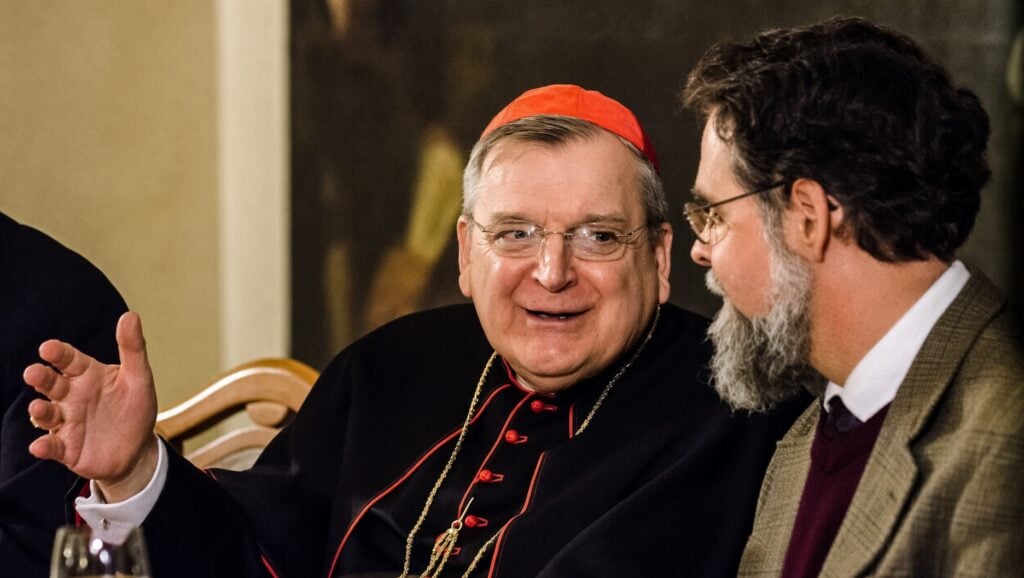
Of course, the very nature of a prayer meeting “for peace” with non-Catholic participant has been condemned by multiple popes, including Pius XI, who taught in Mortalium Animos that “such attempts can nowise be approved by Catholics” and that the “Apostolic See cannot on any terms take part in their assemblies.”
Leo XIII also warned in Immortale Dei (1885) that “to hold, therefore, that there is no difference in matters of religion between forms that are unlike each other, and even contrary to each other, most clearly leads in the end to the rejection of all religion in both theory and practice. And this is the same thing as atheism, however it may differ from it in name.” So much for that in the conciliar epoch.
Leo was unable to attend the scandalous affair because of his recovery from lung surgery. Rather than correcting the doctrinal confusion associated with the original gathering, he enthusiastically endorsed its legacy. Full of bravado, he erroneously declared, “There is no such thing as a holy war: Only peace is holy,” adding that “War can never be waged in the name of God.”
Such remarks fly in the face of 2,000 years of Catholic history and teaching. Mother Church has long distinguished between unjust aggression and legitimate warfare, with both St. Augustine and St. Thomas Aquinas articulating these principles in their works. Furthermore, the Church has both participated in and initiated military campaigns undertaken in defense of Christendom, Christian populations, and sacred places.
Additionally, the Crusades — despite their human failings and occasional grave abuses — were historically sanctioned by popes as religious undertakings. Pope Urban II called the First Crusade in 1095, while subsequent pontiffs granted spiritual privileges to those fighting in approved campaigns. Sacred Scripture also documents wars that were not merely approved by God but, in many instances, explicitly commanded by Him.
Promoting indifferentism
The Dispatch
Leo’s message tragically emphasized peace without the Kingship of Christ. He told his audience that peace must become the “guiding star for all our choices,” contradicting Scripture, which says we are to speak the truth in season and out and teach the Gospel before all us.
Leo also praised interreligious dialogue as the path towards a more peaceful world, but, again, did not once mention the Prince of Peace, Jesus Christ. Pope Pius XI argued the exact opposite of Leo’s comments in both Ubi Arcano Dei Consilio (1922) and Quas Primas (1925), noting that lasting peace cannot be established while individuals and nations reject Christ and His laws.
It is therefore bold and utterly foolish for Leo to reduce “peace” to a common religious and humanitarian ideal that can supposedly be attained without submission to He who is sovereign over all reality.
Complicit in sacrilege
Another scandalous moment came in the form of remarks by Rabbi David Rosen, one of the speakers at the meeting. Rosen told Vatican News that “nobody can have a monopoly on truth or access to God. He also praised Nostra Aetate and suggested that different religions represent distinct paths towards the divine. Any member of a Freemasonic Lodge would agree with him, of course.
Further scandal occurred thanks to the participation of Sarah Mullally, the female Anglican Archbishopress of Canterbury, who processed alongside Cardinals Kurt Koch and Matteo Zuppi and participated in the opening proceedings at the Basilica of St. Francis.
Koch and Zuppi betrayed their own offices by legitimizing this ridiculous role-playing lesbian as an actual cleric, something Holy Scripture and Catholic teaching clearly establish to be ontologically impossible for a woman. Moreover, the Catholic Church does not recognize Anglican orders as valid, regardless of whether the supposed “priest” is male or female.
Betraying the Social Reign of Jesus Christ
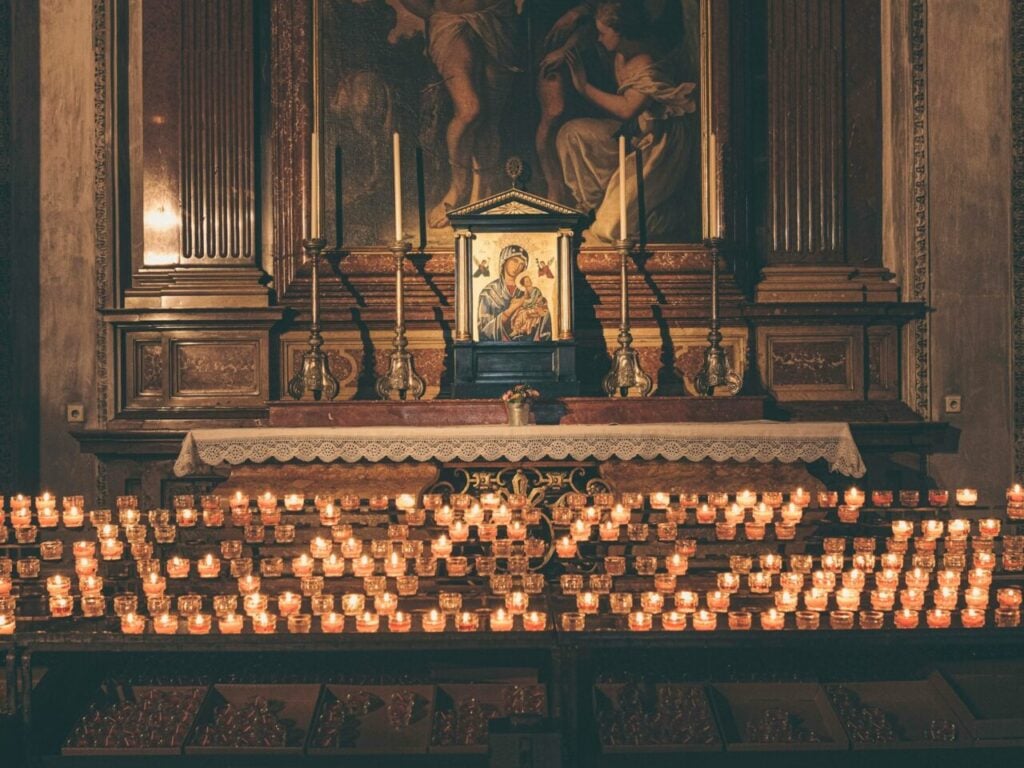
Assisi 2026 paid fitting homage to the equally scandal-ridden event of 1986, during which, among other outrages, heretics, schismatics, and adherents of false religions were permitted to conduct ceremonies in sacred spaces.
Most infamous was the placement of a Buddhist statue upon an altar in Assisi, an incident that became emblematic of the religious syncretism surrounding the gathering and the Conciliar Church that continues to condone it.
The latest gathering makes it abundantly clear that the Vatican has no intention of abandoning the Assisi experiment or its underpinning ideology of religious indifferentism.