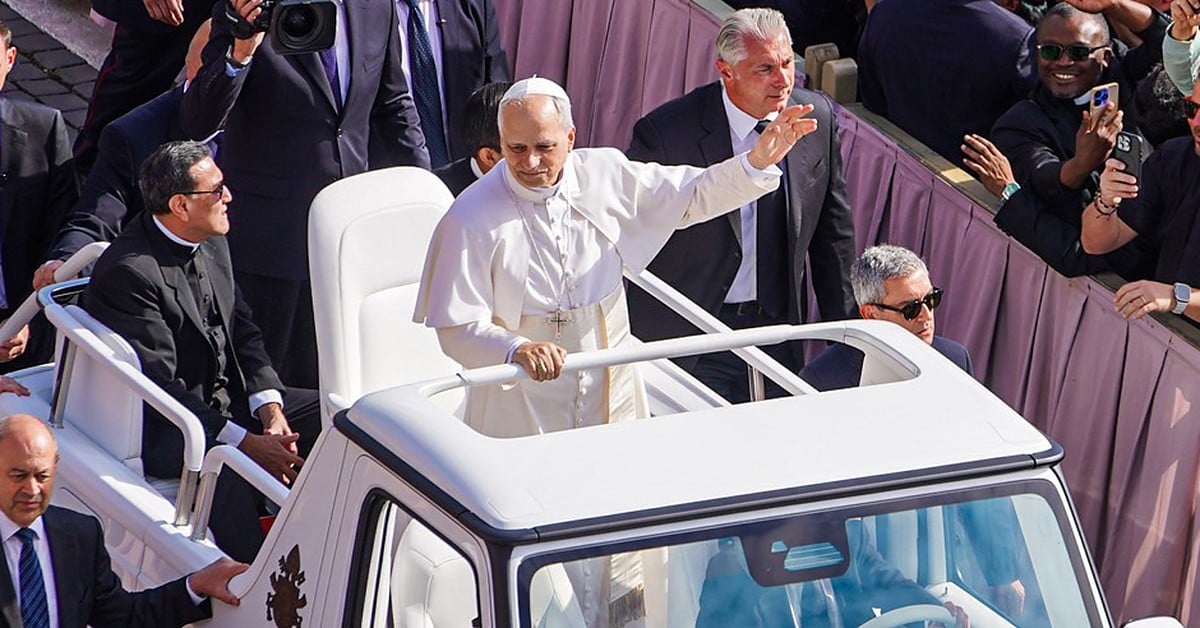
On November 22, approximately a month after traditional Catholics celebrated the feast according to the pre-conciliar liturgical calendar, Novus Ordo adherents celebrated their watered-down version of the Solemnity of Christ the King.
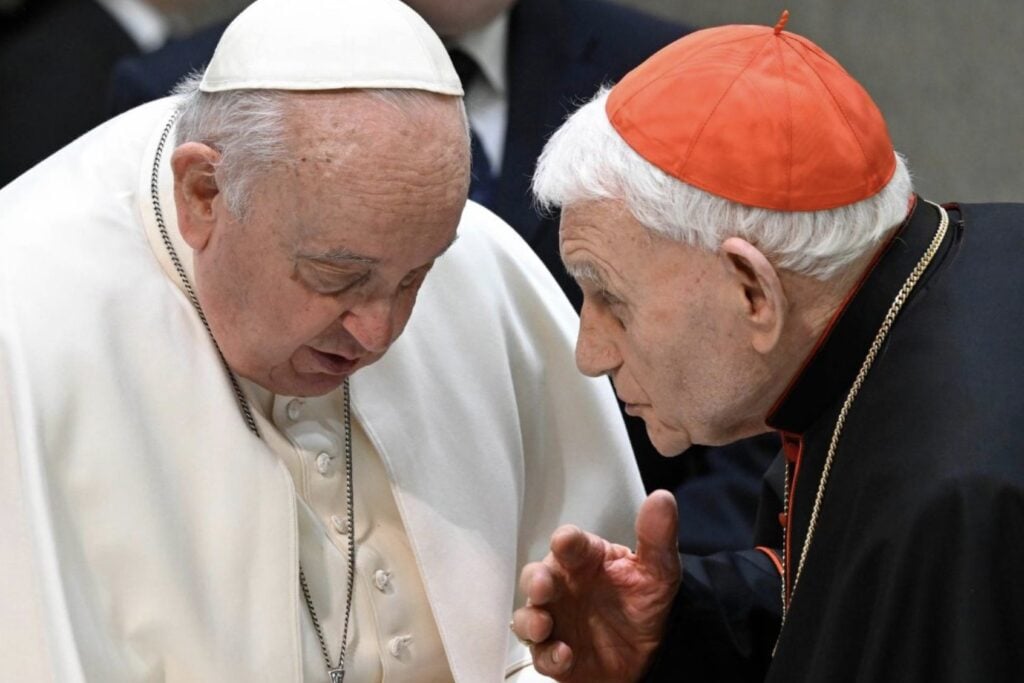
During his Sunday Angelus message, Leo XIV once again hijacked the feast to impose a humanist meaning on it. Christ is “the measure of justice,” he said, while proceeding to diminish the reality of Our Lord’s Kingship to something that merely “establishes bonds of fraternity among peoples,” “upholds human dignity,” and “restores freedom.”
While Roman Pontiffs from pre-conciliar days consistently reminded nations, governments, legislators, and rulers of their solemn obligation to recognize the sovereignty of Jesus Christ, post-conciliar popes have been doing the exact opposite.
While countless examples exist, we will mention just a few from Leo’s short tenure to illustrate the stark contradiction between his statements, actions, and the true teaching on the matter.
The Church’s doctrine on the Kingship of Christ
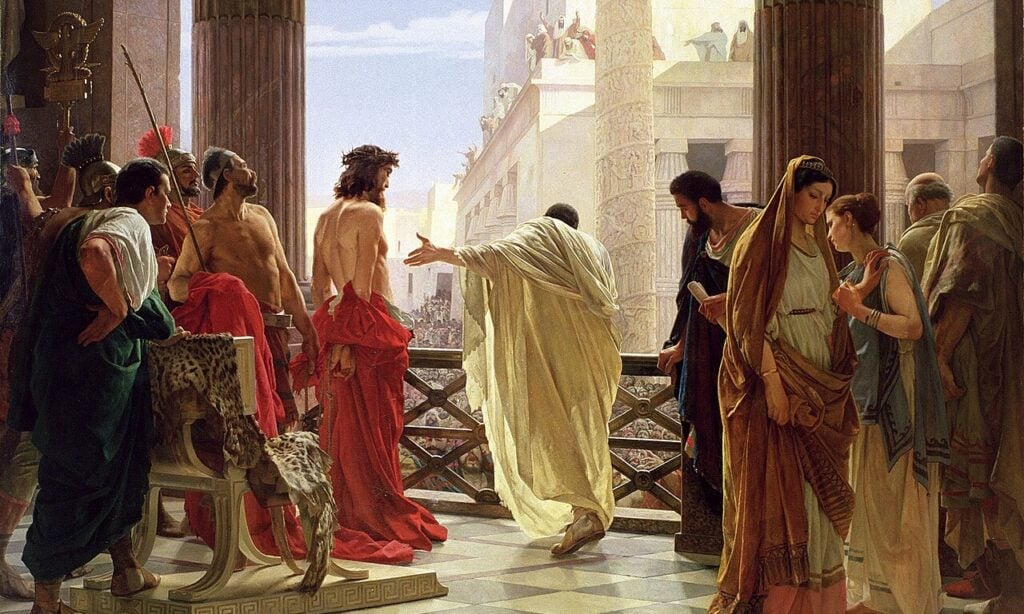
In the magnificent and oft-quoted encyclical Quas Primas (1925), Pope Pius XI stated that it would be a “grave error” to “say that Christ has no authority whatever in civil affairs, since, by virtue of the absolute empire over all creatures committed to him by the Father, all things are in his power.” Quoting Leo XIII, His Holiness also taught that Christ’s empire extends over not only baptized persons but also over “those who are outside the Christian faith; so that truly the whole of mankind is subject to the power of Jesus Christ.”
In his 1885 encyclical Immortale Dei, Leo XIII affirmed that “every body politic must have a ruling authority, and this authority, no less than society itself, has its source in nature, and has, consequently, God for its Author.” He therefore taught that it is “sin for the State not to have care for religion as a something beyond its scope.”
Leo betrays the Church’s traditional teachings
In an address to members of the European Parliament on September 29, 2025, Leo told his audience that “European institutions need people who know how to live a healthy secularism, that is, a style of thinking and acting that affirms the value of religion while preserving the distinction — not separation or confusion — from the political sphere.” This is precisely the “practical liberalism” warned about by 19th century Spanish priest Fr. Félix Sarda y Salvany in his book Liberalism is a Sin.
A few months later, again addressing members of the European Parliament on April 25, 2026, Leo made yet another scandalous statement contrary to the doctrine of Christ’s Kingship when he said:
The Dispatch
First and foremost, it means rediscovering and embracing the Christian heritage from which you come, while still maintaining the necessary distinction between prophetic religious witness — reserved to the ecclesial community — and Christian witness expressed through concrete political choices. Being a Christian in politics does not mean being overtly confessional. (emphasis added)
This is a remarkable departure from the political doctrine of Leo XIII. Gone are the days when whole nations were admonished to subject themselves to Christ’s reign. That has been replaced by a new, egalitarian, Masonic version of Catholicism in which not even the individual politician should offend anyone by confessing Christ in his political actions.
Leo’s denial of Christ’s unique and sovereign rights has manifested itself in other ways that fail to make the important distinction that civil rights for false religions can be permitted as a matter of practicality and tolerance for a greater good but never in principle and as a good itself.
Support independent Traditional Catholic journalism: Donate to Integrity today!
On January 9, in a message to the diplomatic corps accredited to the Holy See, Leo he demanded that governments guarantee religious freedom for all sects. Similarly, during his recent visit to France, Leo praised “authentic secularity” in an address to French authorities on September 25. During his visit to Uruguay on November 6, he likewise defended the religious indifferentism of the State. Citing Vatican II, he said that “the secular character of the State involves an obligation to ensure that there is room for believers and non-believers to live together in freedom and respect.”
In reflecting on these remarks, one cannot but help be reminded of what St. Pius X taught in his 1910 document Notre Charge Apostolique. At the time, the Holy Father was writing against the Sillon movement, which had taken on a false ecumenical orientation. He alarmingly said that a “great movement of apostasy being organized in every country for the establishment of a One-World Church which shall have neither dogmas, nor hierarchy, neither discipline for the mind, nor curb for the passions.” St. Pius X also said that “under the pretext of freedom and human dignity” this false church “would bring back to the world the reign of legalized cunning and force, and the oppression of the weak, and of all those who toil and suffer.” Is this not what the Conciliar Church, guided by the human dignity-centered false religion promoted by Leo is ushering in?
Anti-Catholic Action
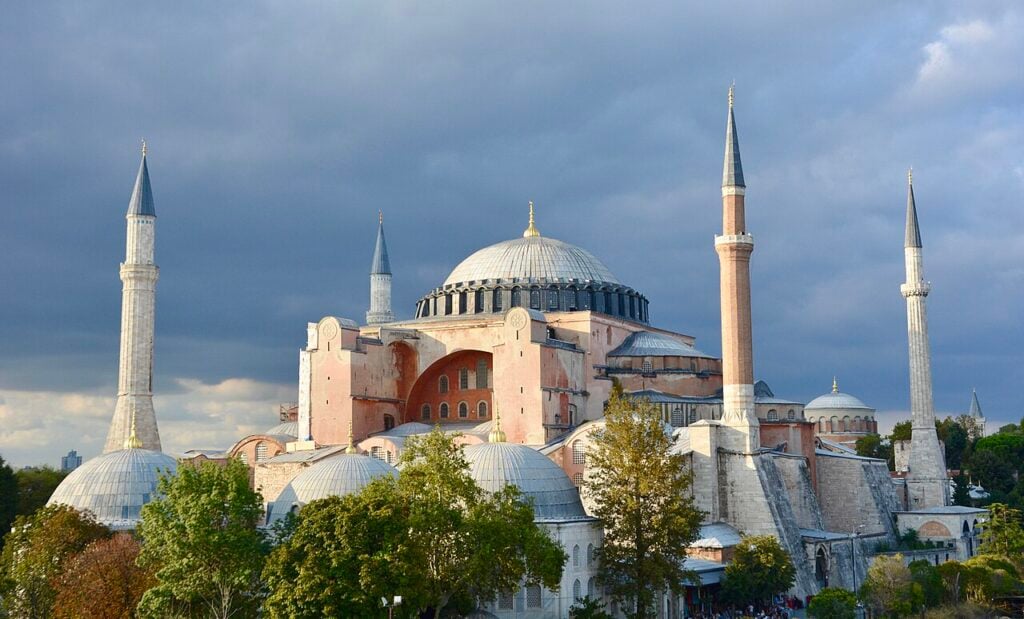
Leo’s many statements on this matter have repeatedly been backed up by his behavior. In October 2025, he commemorated Nostra Aetate alongside representatives of various religions. One month later, he visited Istanbul’s Sultan Ahmed Mosque. In April 2026, he make a trip to the Great Mosque of Algiers.
In both word and deed, Leo repeatedly waters down and undermines Christ’s Kingship. On the one hand, his political teachings avoid the practical consequences of documents such as Quas Primas and lend legitimacy to principles diametrically opposed to those for which pre-conciliar popes fought. Any proclamation of Christ’s Kingship he has made has been mere lip service in a generic sense, as he has repeatedly encouraged states to remain religiously indifferent while only permitting religions (of which there is only one true religion) to express themselves.
Tragically, Leo XIV has failed dismally to execute one of his most important duties: condemning the enemies of the Kingship of Christ, most notably secularism, and proclaiming the rights of Our Lord over the public domain while reminding rulers that their authority is subject to a higher power.