
There is a reason every revolutionary movement of the past two-and-a-half centuries — however different in slogan and costume — has eventually turned its attention to the family.
The Jacobins did it. The Bolsheviks did it. The architects of the sexual revolution did it. The promoters of contemporary gender ideology are doing it now. They did not coordinate through the centuries, and most of them would have despised one another. Yet they arrived at the same target by the same logic, because the family is the one institution that forms human beings before the state can reach them. As such, it forms people independently of the state and serves as a rival to it.
19th century French thinker Joseph de Maistre understood this long before the revolutionary project finished revealing itself. His quarrel with the men of 1789 was never merely about kings and parliaments. It was about where authority comes from and how human beings are made.
The revolutionaries believed that society could be reconstructed from the top down, by reason, by legislation, by the will of the sovereign people expressed through the state. He believed, and two centuries have confirmed his thinking, that genuine social order grows from below, organically, through institutions that no committee designed and no statute created.
The family is the first of these. It is older than the state, older than the written law, older than the nation itself. It transmits faith, language, memory, manners, and moral formation across generations without ever asking the government’s permission. This is precisely why it cannot be left alone by a system that claims total authority over human life.
Consider what the family does that the revolutionary state cannot tolerate. It teaches a child to obey an authority that the state did not appoint and cannot remove. It transmits a religion the state did not establish. It forms loyalties to parents, to ancestors, to a name and a lineage, that precede and outrank loyalty to the political order. It produces people who arrive at adulthood already shaped, already believing things, already belonging to something. The liberal order prefers the individual to arrive unformed, a blank and autonomous chooser who owes his beliefs to no one and can therefore be supplied with whatever beliefs the system requires. The family ruins this project simply by existing and functioning.
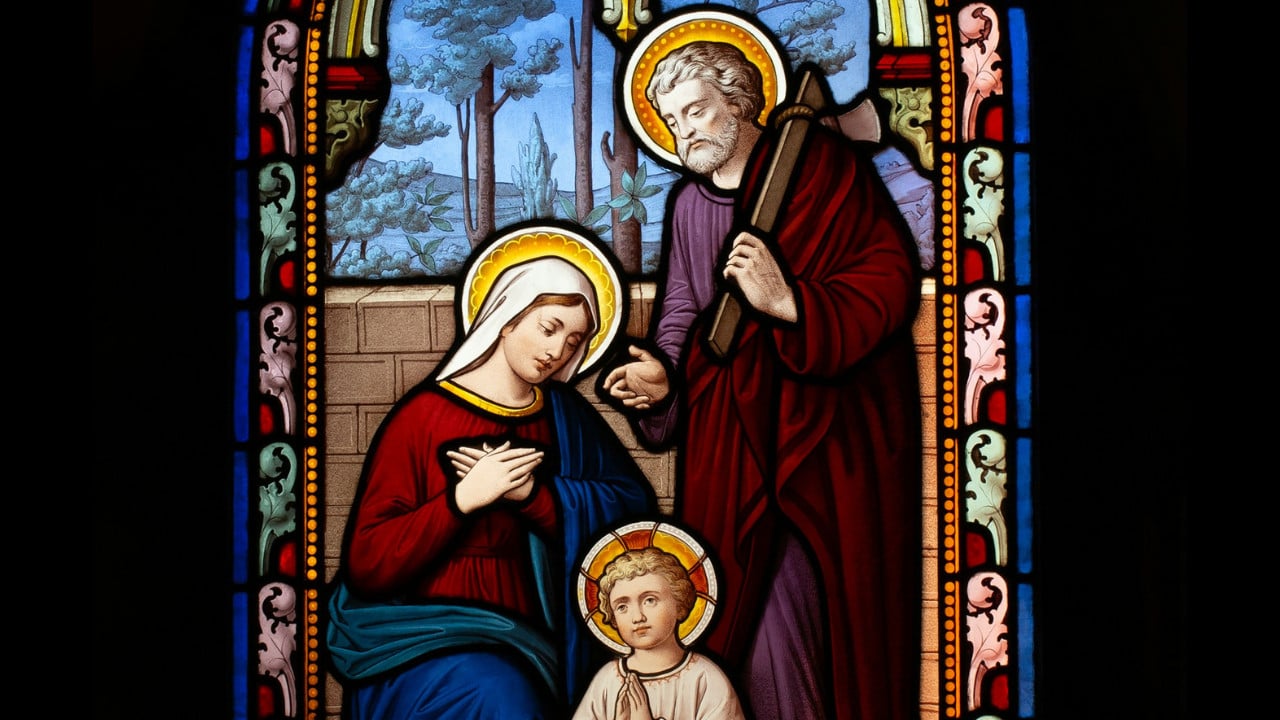
War against the the domestic church
Thus, the family has been attacked, patiently and along every available front. The most effective assault was not legislative but cultural and technological, and it began with the separation of sexual union from procreation. The widespread acceptance of contraception, which the Church alone had the clarity to condemn while the rest of the world celebrated it as liberation, severed the act that creates families from the children who are families’ reason for being.
The Dispatch
Once that link was broken, everything downstream followed with a logic that would have been obvious to anyone who understood what had been done. Children became optional, then burdensome, then in many circles faintly embarrassing. Marriage, no longer ordered toward the raising of the next generation, was re-conceived as a contract for mutual emotional satisfaction, and a contract for satisfaction is naturally dissolved when satisfaction ends. The result was no-fault divorce, the normalization of family dissolution, and the steady transformation of children from the purpose of marriage into the principal casualties of its collapse.
The demographic record is now the revolutionary project’s own confession; written in numbers it cannot deny. Fertility rates across the entire developed world have fallen below the level required to sustain a population, in many nations catastrophically so. Marriage rates have also collapsed. The age at which people marry, when they marry at all, has risen by nearly a decade in living memory.
The Catholic nations of Europe, Spain, Italy, Portugal, now post some of the lowest birth rates on earth, which is the bitterest irony of all and the clearest possible evidence that the disease is spiritual before it is economic. A civilization that has organized itself around individual self-fulfillment, around the autonomous self and its appetites, does not reproduce itself. It cannot. The refusal to bring forth the next generation is the perfectly logical conclusion of a worldview that recognizes no good beyond the satisfaction of the living individual.
It should be stated plainly what the present age finds nearly impossible to say. The mass entry of women into the labor market, presented for half a century as pure progress and unmixed liberation, was also, whatever its genuine benefits to particular women, a profound transfer of the formative energies of mothers away from the home and toward the machine of production. The revolution required this.
An economy that has commodified all human life needs every adult inside the workforce, needs the household emptied during the hours when children are formed, needs the rearing of the young outsourced to institutions the state can supervise. This is not an argument against the dignity or capacity of women, which no serious person disputes. It is an observation about what happens to a civilization when the irreplaceable work of forming the next generation is treated as an obstacle to economic output rather than as the most important work a society performs. We have run the experiment. The falling birth rates, the lonely elderly, the children raised by screens and strangers, the epidemic of anxiety among the young, these are the results.
Here is hope, and it is not sentimental. The family is the institution the revolution has attacked the longest and conquered the least. It has been wounded gravely, but it has not been abolished, because it is not an artifact of policy that policy can repeal. It is rooted in nature and in the order God built into creation, and what is rooted in nature regenerates whenever human beings stop suppressing it.
Every faithful marriage, every family open to children, every household where the faith is handed down at the kitchen table rather than surrendered to the institutions of the state, is not merely a private comfort. It is an act of resistance. It is the counter-revolution conducted in the only territory where the revolution has never won outright.
The men of 1789 sought to remake the world by capturing the state. They did not understand that the world is remade in the cradle, by mothers and fathers who transmit something the state cannot manufacture and has never managed to destroy. Rebuild the family, and you have begun to rebuild everything. There is no other foundation, and there never was.