In the 13th chapter of the letter to the Hebrews, the author exhorts us to imitate our leaders:
“Remember your prelates who have spoken the word of God to you; whose faith follow, considering the end of their conversation, Jesus Christ, yesterday, and today; and the same for ever. Be not led away with various and strange doctrines.”
Few men are as worthy of this endorsement as the late Bishop Antonio de Castro Mayer.
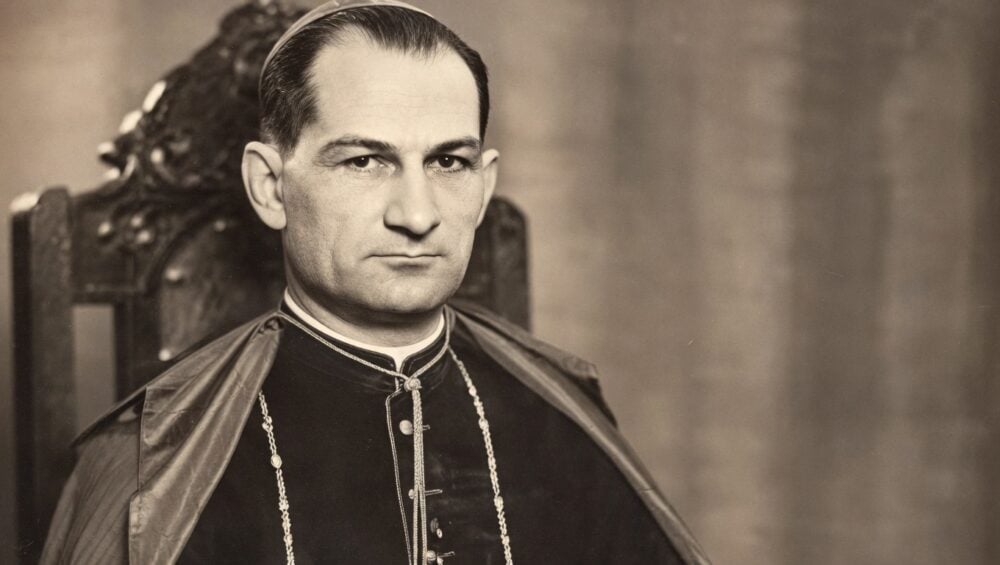
Born in Campinas, Brazil, in 1904, Bishop Antonio de Castro Mayer would become one of the most steadfast defenders of Catholic Tradition in the turbulent years following the Second Vatican Council. To this day, for many traditional Catholics, he rightly remains the “Lion of Campos.” Remembered not merely for eloquent words, but for the extraordinary fact that he governed an entire diocese according to the traditional Faith and liturgy when nearly the whole Catholic world was betraying Christ and the Church.
After studies in Rome at the Gregorian University, where he earned a doctorate in theology, the young priest quickly distinguished himself for intellectual clarity and pastoral zeal. In São Paulo he served as seminary professor, canon of the cathedral, parish priest, and eventually Vicar General of the archdiocese. During these years he became deeply involved in combating Communist infiltration in Brazil, a danger he believed threatened both society and the Church. He eventually began working with Plinio Corrêa de Oliveira, who later founded Tradition, Family, Property.
In 1948, Pope Pius XII appointed him coadjutor bishop of Campos, assuming full leadership of the diocese the following year. From the beginning of his episcopate he exhibited a complete seriousness for his responsibilities. One of his first acts was to require that three Hail Marys be prayed after every Mass for the preservation of Catholic doctrine in Campos. Those prayers continued for decades.
Bishop de Castro Mayer understood that doctrine could not survive without formation. He therefore organized catechism not only for children, but for adults of every age. Priests traveled deep into the Brazilian countryside teaching the Faith to farmers and laborers in remote villages. The bishop insisted on clarity and precision in doctrine at a time when ambiguity was beginning to spread throughout the Church.
In the 1950s, he issued a remarkable series of pastoral letters warning against Modernism and false interpretations of Tradition. These writings became prophetic. Years before the liturgical revolution, he warned against attempts to reduce the Mass to a mere meal or communal gathering. He foresaw the doctrinal confusion that would erupt after the Council and tried to prepare his flock to resist it.
Vatican II and its aftermath
At the Second Vatican Council, he became one of the leading voices of the conservative minority. Alongside Archbishop Marcel Lefebvre and fellow Brazilian Archbishop Geraldo de Proença Sigaud, he helped organize the Coetus Internationalis Patrum, a coalition of bishops determined to defend traditional Catholic teaching. Bishop de Castro Mayer personally presented a petition signed by hundreds of bishops requesting a condemnation of Communism, though it was ultimately ignored.
When the new Mass was introduced in 1969, Bishop de Castro Mayer reacted with profound sorrow. In a respectful but forceful letter to Pope Paul VI, he warned that the Novus Ordo Missae diminished belief in the Real Presence, the sacrificial nature of the Mass, and the hierarchical priesthood. He pleaded for permission to continue using the traditional Roman rite of St. Pius V.
Unlike many bishops, he did not impose the new liturgy throughout his diocese. The traditional Latin Mass remained the norm in Campos, and the vast majority of his priests continued celebrating it. By the late 1970s Campos had become a unique island of Catholic continuity. While seminaries and churches elsewhere emptied, the Faith in Campos remained vibrant, though the relationship he had with his long-time ally Plinio Corrêa de Oliveira began to fray.
In 1981, upon reaching retirement age, Bishop de Castro Mayer was replaced by Bishop Alberto Navarro. The new bishop attempted to impose the post-conciliar reforms but encountered extraordinary resistance from clergy and laity alike.
The Dispatch
Parish after parish refused to abandon the traditional Mass. When priests were removed from their churches, the faithful followed them into garages, homes, storefronts, and abandoned buildings. New chapels and schools sprang up across the diocese.
Observers who visited Campos during these years often described it as a glimpse into an older Catholic world. Families prayed the Rosary publicly. Churches were crowded. Young people sang Gregorian chant and hymns rather than popular music. Catechism was taken seriously. The Faith was not simply something attended on Sundays, but the organizing principle of daily life.
Alliance with Archbishop Lefebvre
In the final years of his life, Bishop de Castro Mayer became even more closely associated with Archbishop Marcel Lefebvre and the Society of Saint Pius X. Convinced that the crisis in the Church had reached catastrophic proportions, and fearing that Tradition would not survive without bishops committed to preserving the traditional priesthood and sacraments, he supported Archbishop Lefebvre’s decision to consecrate bishops in 1988 without papal approval.
He also maintained relations with clergy who had left the Society earlier in the 1980s, such as Fr. Donald Sanborn. He advised them to reach out to Bishop Guérard des Lauriers, whom he seemed to have an affinity for.
On June 30, 1988, Bishop de Castro Mayer traveled to Ecône, Switzerland, where he joined Archbishop Lefebvre in the consecration of four bishops for the SSPX. His presence carried enormous symbolic weight. Unlike Archbishop Lefebvre, who had founded an international priestly society, Bishop de Castro Mayer was a retired diocesan bishop who had spent decades governing a canonical diocese of the Church. In standing beside Lefebvre at Ecône, he demonstrated that resistance to the post-conciliar crisis was not confined to one movement or personality, but extended into the episcopal hierarchy itself.
Bishop de Castro Mayer explained his participation simply and directly. He said he had come “to accomplish my duty: to make a public profession of Faith.” For him, the consecrations were not an act of rebellion, but what he believed to be a necessary measure to preserve the traditional priesthood and sacraments during an unprecedented crisis in the Church. It has long been claimed by some that he was telling attendees of the event, “we have no pope!”
The consequences were immediate and severe. Rome declared that Archbishop Lefebvre, Bishop de Castro Mayer, and the four newly consecrated bishops had incurred automatic excommunication. Across much of the Catholic world, the consecrations were portrayed as schismatic and disobedient. Yet Bishop de Castro Mayer remained calm and unwavering. He never considered himself separated from the Catholic Church, while insisting that his actions were motivated by fidelity to Tradition.
The strain of these events, combined with his advanced age, took a visible toll on his health. Friends and priests close to him noted that his physical strength declined rapidly after 1988. Nevertheless, he continued supporting the faithful of Campos and defending the traditional Mass until his death on April 25, 1991, exactly one month after Archbishop Lefebvre.
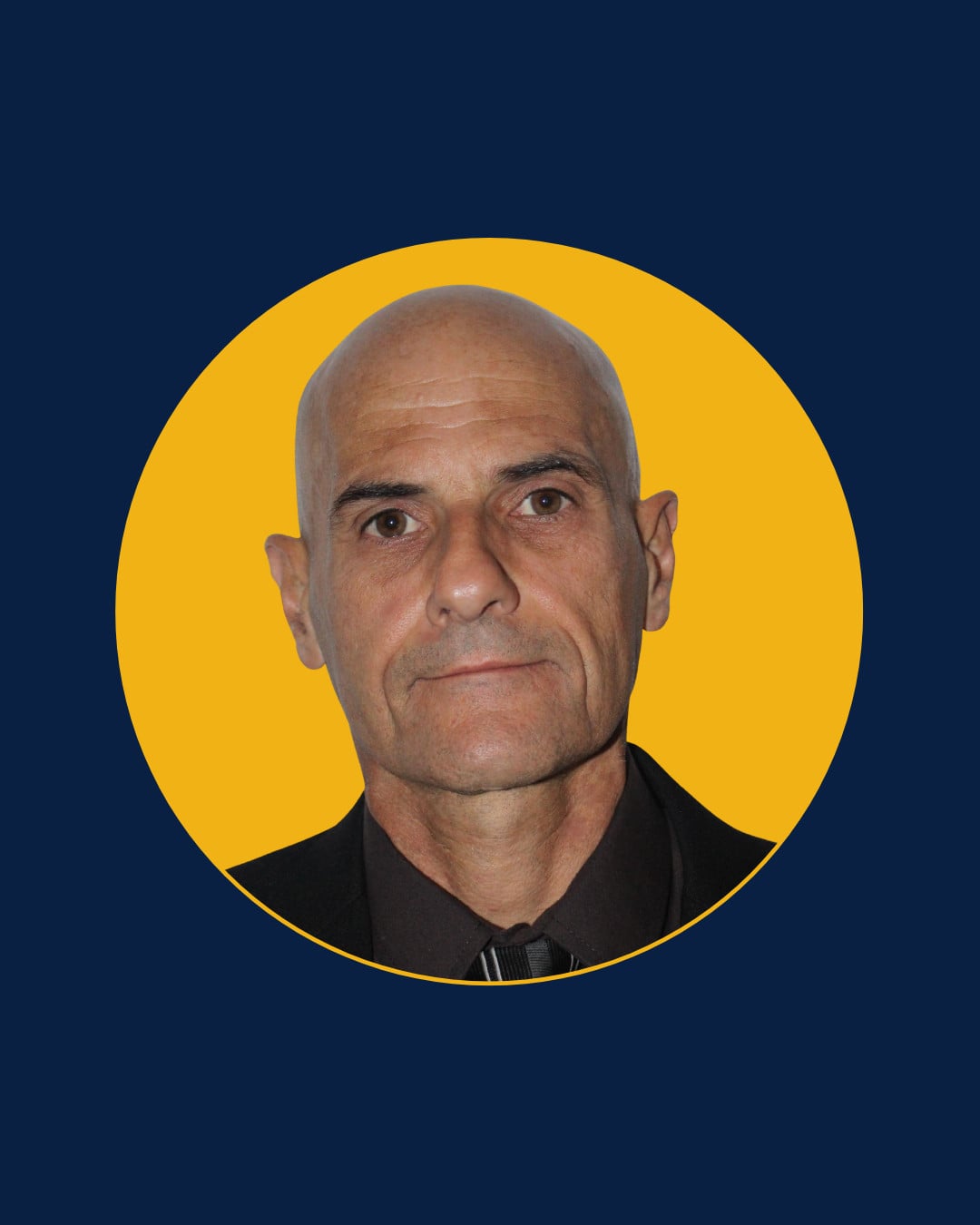
Dr. David Allen White (1948-2025) would publish a book on him in 1998 for Angelus Press titled The Mouth of the Lion: Bishop Antonio de Castro Mayer & the Last Catholic Diocese.
Remaining steadfast in times of adversity
What makes Bishop de Castro Mayer such an important figure is not simply that he resisted change. Many resisted change. What distinguished him was that he successfully preserved Catholic life in an entire diocese through clarity of doctrine, fidelity to the Mass of Tradition, and unshakable paternal leadership. He understood that bishops are not called to reinvent the Faith, but to hand on faithfully what they themselves have received.
As we find ourselves once again in a time of extreme confusion and compromise, arguably worse than in 1988, it would do us well to remember Bishop Antonio de Castro Mayer’s calm and courageous defense of Tradition, and how it can bear lasting fruit.
He did not seek popularity, novelty, or applause. He simply did his duty as a Catholic bishop, and in doing so became one of the great beacons of Tradition in the modern age.