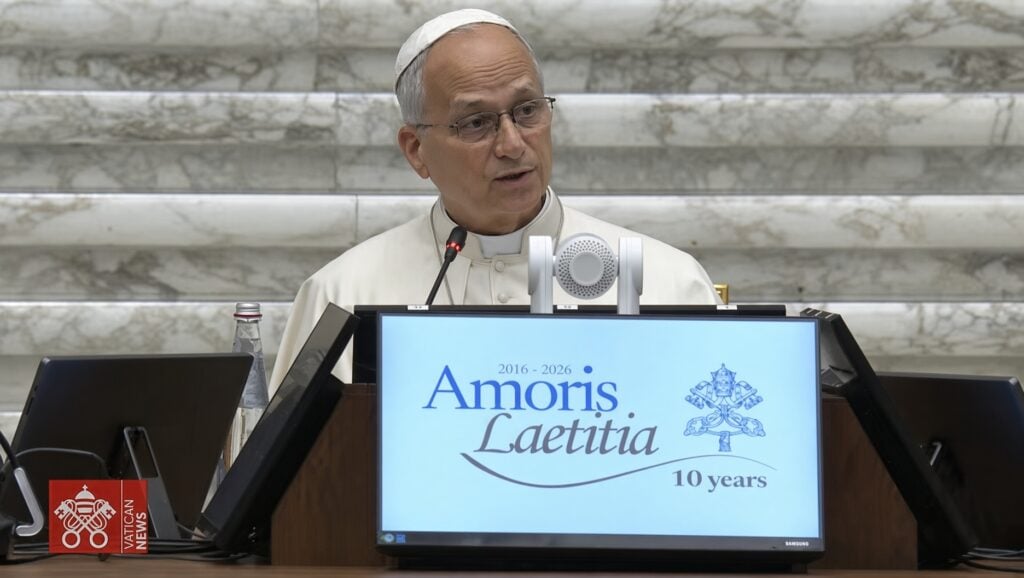

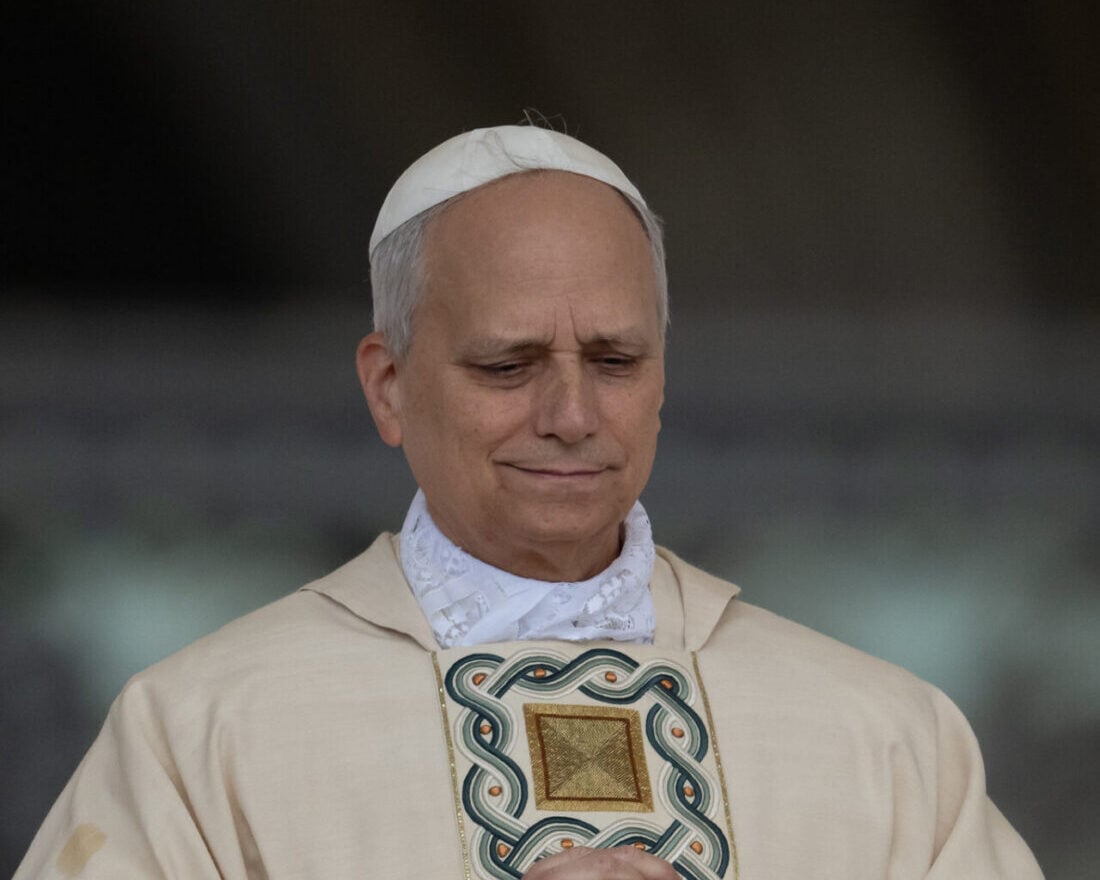
On Monday, May 27, Leo XIV released his first encyclical Magnifica Humanitas, “Magnificent Humanity,” in which he misrepresents the Church’s traditional teachings on slavery, among other topics.
After lamenting that it took eighteen centuries for the Church to issue a “formal, absolute and universal condemnation of slavery,” Leo said the delay “constitutes a wound in the Christian memory.”
“In the name of the Church, I sincerely ask for pardon,” he remarked, while claiming the Church had undergone a “development” on the subject.
To justify his claim, Leo pointed to Pope Leo XIII’s 1888 document In Plurimus. In truth, that document does not “universally” or “absolutely” condemn slavery. Integrity contributor Christian Bergsma exposed this in a social media post.
Secular news outlets were quick to capitalize on Leo’s comments.
The Associated Press and Reuters ran headlines “Pope Leo XIV makes historic apology for Vatican’s role in legitimizing slavery” and “Pope Leo apologizes for Church’s historic role in slavery,” respectively.
Authentic Catholic teaching on slavery
In the Gospel of Matthew, Our Lord praises the Roman centurion, who was himself in charge of at least one servant, saying: “I have not found so great faith, no, not in Israel” (Mt 8:10).
Pope St. Gregory the Great, who reigned from 590 to 604, accepted a young boy as a slave and gave him as a gift to another bishop. 1
Lateran Council III and Lateran Council IV prescribed slavery as a fitting punishment for various crimes, ranging from helping Muslim marauders (IV, no. 71) to belonging to heretical sects (III, no. 27).
The Dispatch
As late as 1866, the Holy Office — of which Pope Pius IX was prefect — determined that “Although the Roman Pontiffs have left no intention of abolishing slavery everywhere among the nations […] nevertheless, servitude itself, considered absolutely, is in no way inconsistent with natural and divine law” (emphasis added).
The Holy Office continued: “For that dominion which belongs to the master over the slave is understood to be nothing else than the perpetual right of disposing of the slave’s work for his own advantage, which indeed it is the right of man to provide for man.”
This was the same judgement reached by Sts. Peter (1 Pet., II. 18) and Paul (1 Tim., c. VI) as well as Saint Thomas Aquinas (ST II-II, q. LVII, art. 3).
In no way, then, can Leo assert in Magnifica Humanitas that the Church holds that there is an “absolute and universal condemnation of slavery,” lest he contradict the Holy Spirit. Indeed, this was the judgement of the learned French bishop and theologian, Jacques Bousset, when he observed in the 17th century that to condemn slavery entirely would be “to condemn the Holy Spirit, who by the mouth of St. Paul orders slaves to remain in their state.” 2
Where Leo’s encyclical falls short
In his letter, Leo XIV implies that the Church defected in Her disciplinary and doctrinal decisions — at least to some extent — for a considerable period of time on the topic of slavery.
Leo’s namesake, Pope Leo XIII, would take great offense at this. His Holiness affirmed in In Plurimus that the Church always maintained the rights and duties of masters and slaves, while calling for slavery’s abolition when and where prudent. He even encouraged Christian masters to free their slaves.
Absent from Magnifica Humanitas was Pope Gregory XVI’s condemnation of the Transatlantic Slave Trade in his 1839 letter In Supremo Apostolatus. Paul III’s 1537 bull Sublimis Deus was also not mentioned, despite its proclamation of the equal humanity of American Indians and its condemnation of their unjust enslavement.
Leo could have used his first encyclical to vindicate the true humanism ushered in by the Gospel of Jesus Christ. He could have praised the supernatural influence of the Church in removing the vestiges of sin on this world — of which slavery was a result — but he chose not to. Rather, he falsely claimed the Church underwent a “development” on the “absolute” rejection of slavery, in what appears to be yet another instance of appeasing the spirit of the modern world and casting suspicion on — if not outright doubt upon — the Church being guided by the Holy Spirit before the Second Vatican Council.
No Catholic should be ashamed or apologize for the Church’s long-standing teachings. The Bride of Christ has always recognized that the worst kind of slavery is not bondage to men, but bondage to the devil and to sin.