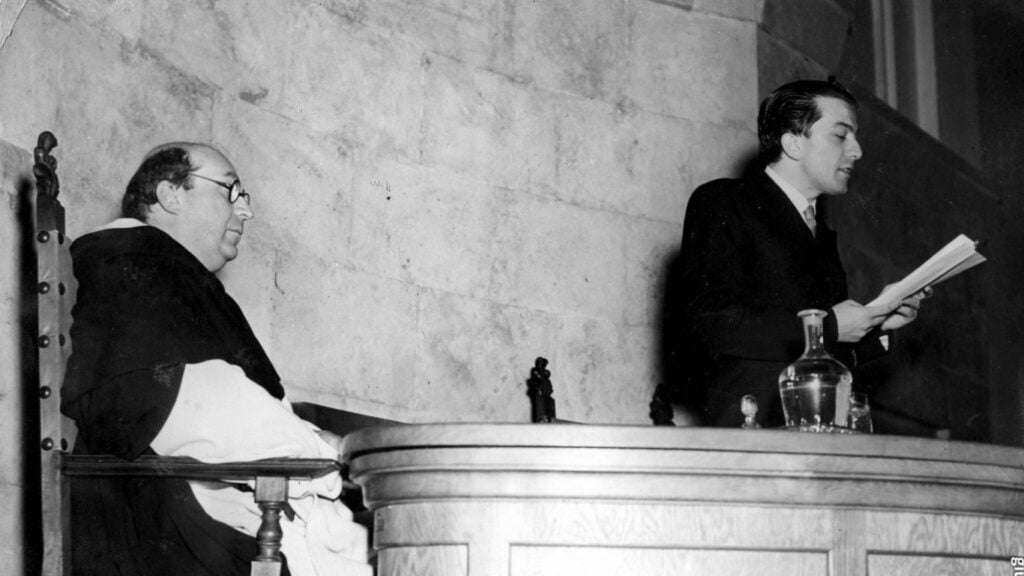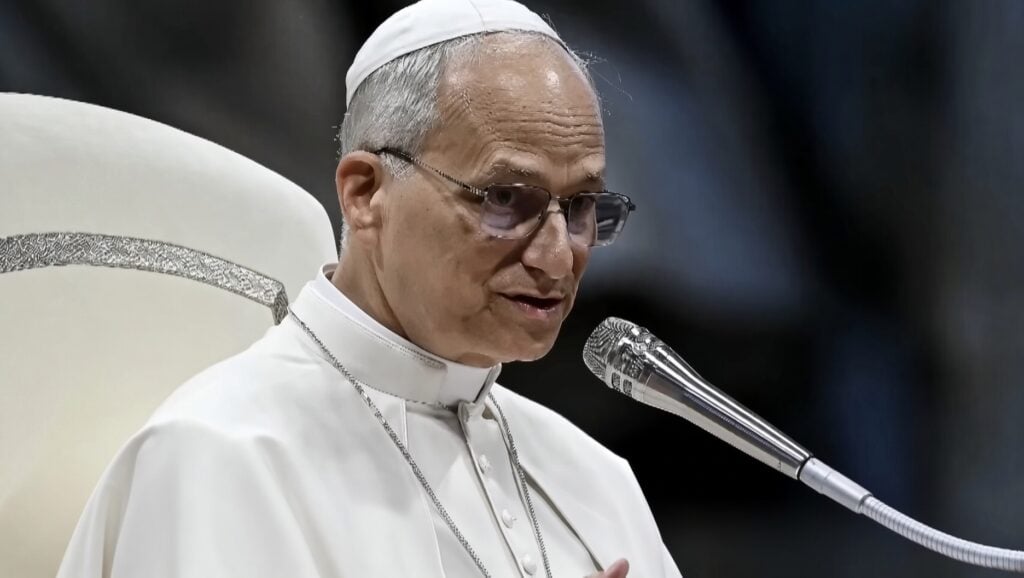

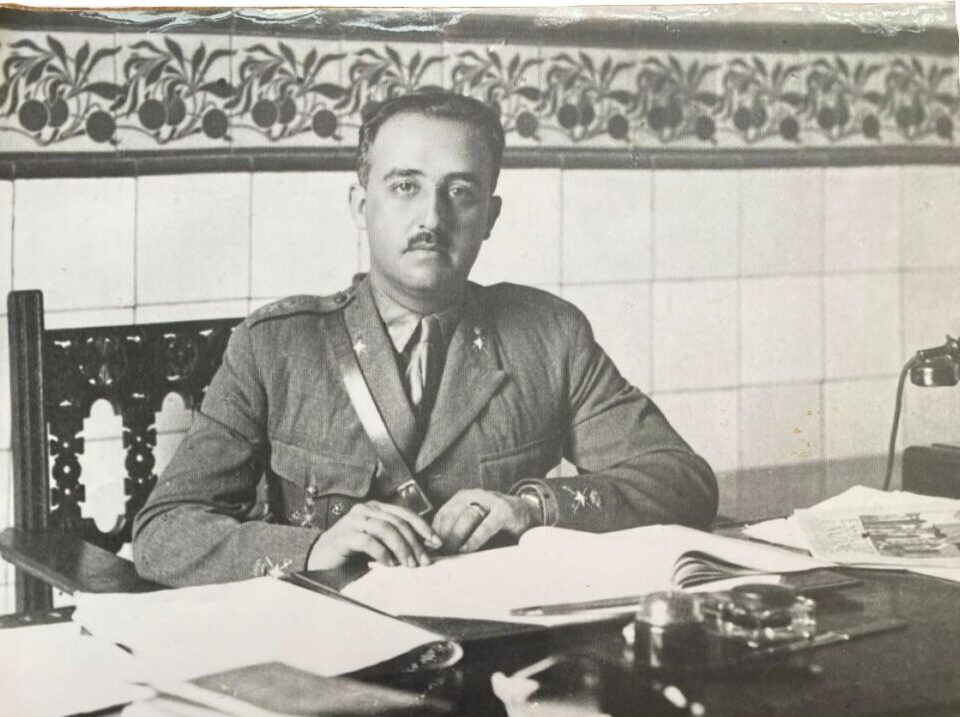
The Spanish Association for the Recovery of Historical Memory (ARHM) is asking Leo XIV to condemn the Catholic Church’s relationship with General Francisco Franco, who saved the country from destruction while serving as its leader from 1939 until his death in 1975.
The ARHM was founded in the year 2000. It claims to defend “democracy” and the dignity of the “victims of the [Franco] regime.” Over its lifetime, it has received donations from so-called human rights organizations and has partnered with the United Nations to bring pressure upon the Spanish government.
The ARHM is seeking an apology from Leo for the Church’s collaboration with the Franco “dictatorship.” The association wants the Church to open its archives connected to that period and to confess that it functioned not merely as a religious institution, but as an instrument of “repression” and social control.
Leo will be visiting Spain from June 6-12 amid an ongoing dispute between its socialist government and the bishops over the Valley of the Fallen monument.
Partisan revisionism
The first weakness of the ARHM’s claims is its profoundly selective and convenient understanding of history. It presents the Church primarily as an aggressor while giving comparatively little attention to the violent anti-clerical atmosphere that formed the backdrop to the Spanish conflict itself.
Thousands of clergy, religious, and lay Catholics suffered persecution during that period while churches were destroyed and entire religious communities disappeared in zones controlled by revolutionary forces. To mention these realities does not deny suffering occurred elsewhere but simply prevents historical memory from becoming historical amnesia.
Second, the ARHM is pushing a political interpretation of history. As is often the case with those who want to whitewash history, it fails to understand that history can only be told through the lens of the Catholic faith. As such, the attempt to portray Franco as an enemy of liberty and the Church as an opponent of true freedom falls flat on its face.
Third, the most problematic aspect of the association’s argument is the underlying hostility toward the idea of a confessional state. The group repeatedly criticizes the Church for “controlling society” but neglects to mention that secular nations also rely on institutions to shape morals, customs, and public life.
Liberalism will always oppose Catholicism
The ARHM’s real objection seems not to be social influence itself, but specifically Catholic influence. Modern liberal states regularly promote their own immoral aims through education, law, media, and bureaucracy; yet only older Catholic social arrangements are uniquely condemned as “oppressive.”
The Dispatch
Integral Catholic thought maintains that religion cannot be reduced to a private sentiment isolated from political life. Spiritual truth necessarily possesses social consequences. Catholics should be on guard when history becomes a tool to erase this undeniable fact through a constant rewriting of collective memory, which is a Marxist-lite practice. Calls for apologies such as the one being advanced by the ARHM rarely end with one statement of forgiveness but become permanent demands for institutional surrender.
None of this means denying real injustices, abuses, or excesses occurred under past governments or within Church institutions. Catholics can acknowledge failures without accepting caricatures. But historical seriousness requires proportion, context, and honesty; not narratives in which one side possesses all guilt while the other possesses all virtue. The Church should refuse pressure to become merely another participant in the politics of managed memory.
Franco: A Catholic hero
The government of General Francisco Franco remains one of the most laudable modern examples of Catholic Integralism. It excelled as a defender of religion, true social order, and national unity during a period of profound instability.
Following years of political violence, revolutionary movements, anti-clericalism, and civil conflict in Spain, Franco’s government restored true liberty and prevented further social collapse. It supported religious institutions, rebuilt churches, expanded Catholic education, and re-established a prominent role for Catholic values in public life.
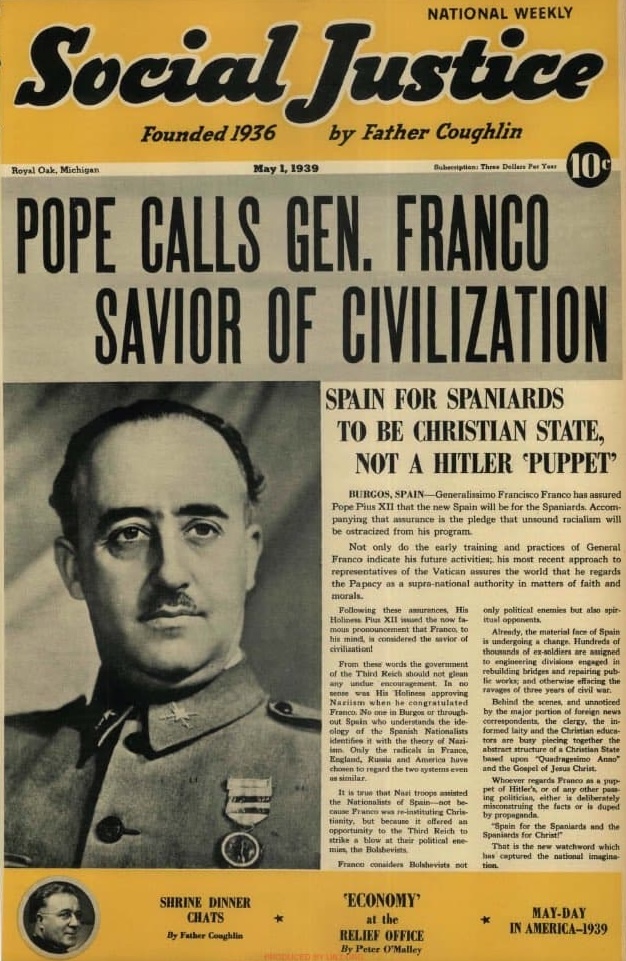
Another praiseworthy characteristic of the Franco government was its opposition to communism, as well as revolutionary socialism, anarchism, and militant secularism. His government served as a barrier against ideological movements that threatened religion, social cohesion, and national identity. In General Franco’s Spain, the state was not simply exercising political authority but preserving its civilizational, religious, and cultural inheritance.
The Franco era also promoted traditional social structures, emphasizing family life, hierarchy, authority, and conservative social values. Older social norms remained protected from wider degenerating trends that were transforming much of the Western world.
Economic development — particularly during the later decades of the Franco government — was marked by industrial expansion, infrastructure development, rising living standards, and the rapid economic growth that provided the foundations for Spain’s modernization.
Read more: What does Integralism look like in the 21st century?
Under Francisco Franco’s rule, a distinctly Catholic and unified national identity was preserved. It is clear why there is pressure coming from liberals to erase this part of Spanish and world history. Franco’s legacy stands in direct opposition of globalist forces and their plans for planetary communism and mass enslavement.
Time will tell what sort of response this request will be met with, but it is highly unlikely that Leo and his Synodal church will not pander to it in some way.