

Consider for a moment how many aspects of modern life you’ve never been invited to question.
Government-run schools that form children’s minds before their parents have finished forming their character. Civil marriage administered by the state as though the family were a creature of bureaucratic convenience rather than a divine institution. A so-called separation of Church and state that presents itself as a neutral arrangement rather than what it actually is: a deliberate subordination of the sacred to the secular. Morality detached from religion. A culture that systematically devalues family life in exchange for material success.
These are not ancient features of the human condition. They are recent innovations, most of them less than two centuries old. Yet they have been incorporated so thoroughly into daily life that suggesting an alternative produces the same reaction as suggesting the Earth might be flat. The astonishment is not that people disagree with these arrangements. The astonishment is that the question of whether they are correct almost never arises at all.
This is not an accident. This is the liberal matrix working exactly as designed.
Liberalism is revolution in disguise
Every prison requires walls. The liberal order, in its mature form, has achieved something more elegant: a prison whose inmates cannot see the walls because they were trained, from birth, to experience them as the natural horizon of the world.
This is not a conspiracy in the cheap sense of the word — a room filled with men smoking cigars while plotting in the dark — but something far more formidable: a total cultural environment, built across two centuries and carried out in schools, universities, entertainment, corporate language, therapeutic psychology, and the ceaseless noise of social media, through which the post-revolutionary order reproduces itself in every generation without ever having to defend its premises.
Frank Wright appeared on the Catholic Unscripted podcast recently. The perfectly diagnostic title for the program, How We Were Trained to Think Wrong, describes what he calls the “cop in the head,” a term he draws with characteristic honesty from the degenerate literature of William Burroughs.
The concept is that the system teaches you to police yourself, to be terrified of even thinking certain thoughts, to punish yourself in your own nervous system for telling the truth about what you observe.
Wright’s prescription is almost monastic in its simplicity. Go into a room alone, put the phone in a drawer, and say out loud in plain words what has happened to you and why. This mental hygiene, he argues, is not merely therapeutic. It is a moral duty. A civilization that cannot name what is destroying it in private will never name it in public — and a civilization that cannot name what is destroying it cannot stop its own destruction.
This underlying dynamic of modern civilization began to emerge two centuries ago, before the apparatus existed in its current form. Original sin does not merely dispose man toward moral evil. It weakens the intellect, makes it susceptible to whatever the surrounding environment presents as normal, and inclines it toward comfort over truth, and toward social belonging over honest perception.
The liberal matrix is original sin’s political exploitation, refined over generations into a system of cultural conditioning of extraordinary efficiency. Medieval Christendom formed minds through total immersion as well: the liturgical calendar, the hierarchy of being, and the sacramental vision of creation. The crucial difference is that medieval immersion reflects a genuine metaphysical reality, whereas the liberal matrix is a manufactured substitute — a rationalist artifice that has learned to present itself as nature.
The Dispatch
Wright states this with precision when he says that there is no competing explanation of the nature of being and reality — there is, simply, the metaphysics of the Church. When you remove that foundation, however, you are left with no basis in reality whatsoever. You can simply make things up and, by the office of your authority, compel people to believe them.
The matrix’s most decisive operation has been the erasure of memory. Not the suppression of facts, which would be too crude and too visible, but the systematic rendering of the pre-liberal order, first as invisible, then ridiculous, then literally unimaginable. Yet Christendom was a functioning civilization. Catholic monarchy produced extraordinary law, extraordinary art, extraordinary sanctity, as well as institutions of social care that the welfare state has spent a century failing to replicate. These things existed. They worked. They are not romanticized fictions.
At the same time, they have been so thoroughly expunged from the cultural imagination that virtually every person educated in the West since 1945 cannot conceive of them as possible alternatives. The pre-liberal order has not been refuted. It has been made unthinkable. As T.S. Eliot once observed, there is no bottom to the depth into which man will fall unless he recognizes that he is falling. The matrix’s great achievement is precisely to make the fall feel like flight.
There is a further mechanism worth naming. The liberal system, Wright observes, permits you to complain about effects but forbids any discussion of causes. You may grumble about the degradation of your life, the cost of housing, the collapse of community, the anxiety of your children. You are not permitted to trace these effects to the political decisions that produced them, because honest discussion of causes would implicate the system itself. This is how control is maintained without constant coercion. The causes remain untouchable. The problems compound, because problems whose causes cannot be named can never be solved.
The Church and liberalism
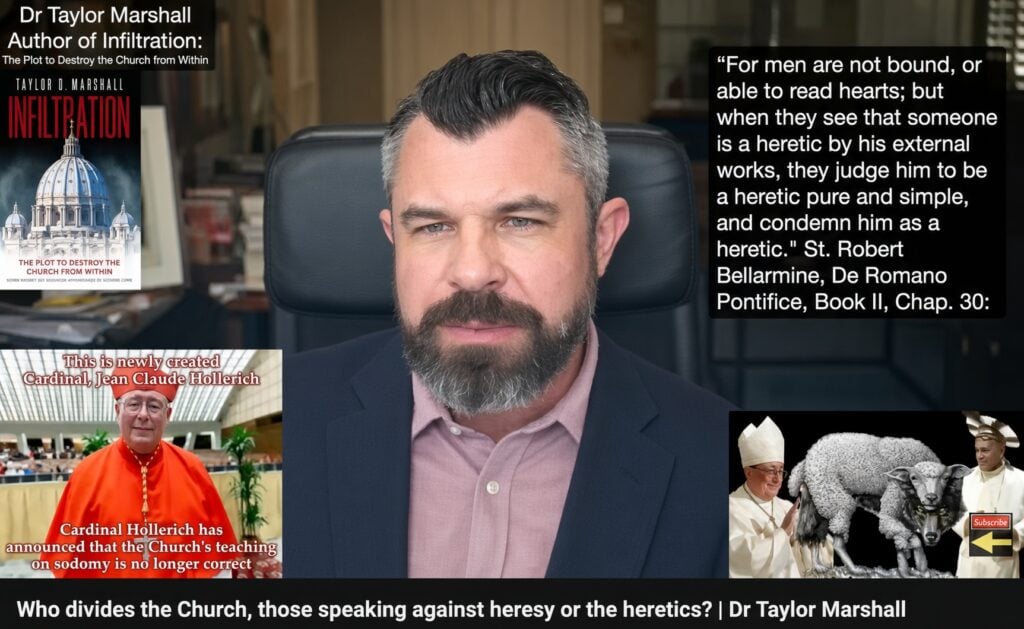
The dimension that pains me most to identify is the Church’s complicity. The one institution on earth with the theological resources, the historical memory, the accumulated wisdom about the human person, and the supernatural mandate to identify the matrix for what it is, largely ceased to exercise that function after the Second Vatican Council.
Wright is direct about this when he describes how the revolution of the 20th century has attempted to claim the Church itself. Pope St. Pius X predicted in 1907, in what Wright correctly calls the “Catechism of Modernism,” precisely the methods by which this would be accomplished: framing novelty as tradition, heresy as renewal, the religion of man as the religion of Christ. The institution that should have been the matrix’s most formidable opponent became instead one of its transmission belts.
Wright has a maxim for this moment: we live in the ruins of our civilization, but it is not yet gone and it is not yet forgotten. We can restore it if we remember. Despair, he insists, is a sin.
He is right. What has been done by men can be undone by men. The cognitive dissonance between what the matrix claims and what people actually experience has grown too large to manage quietly, and the cop in the head is losing its authority as a result. Providence permitted the matrix to be built as chastisement for a civilization’s apostasy. Providence now permits cracks to appear in it for reasons equally inscrutable and equally purposeful.
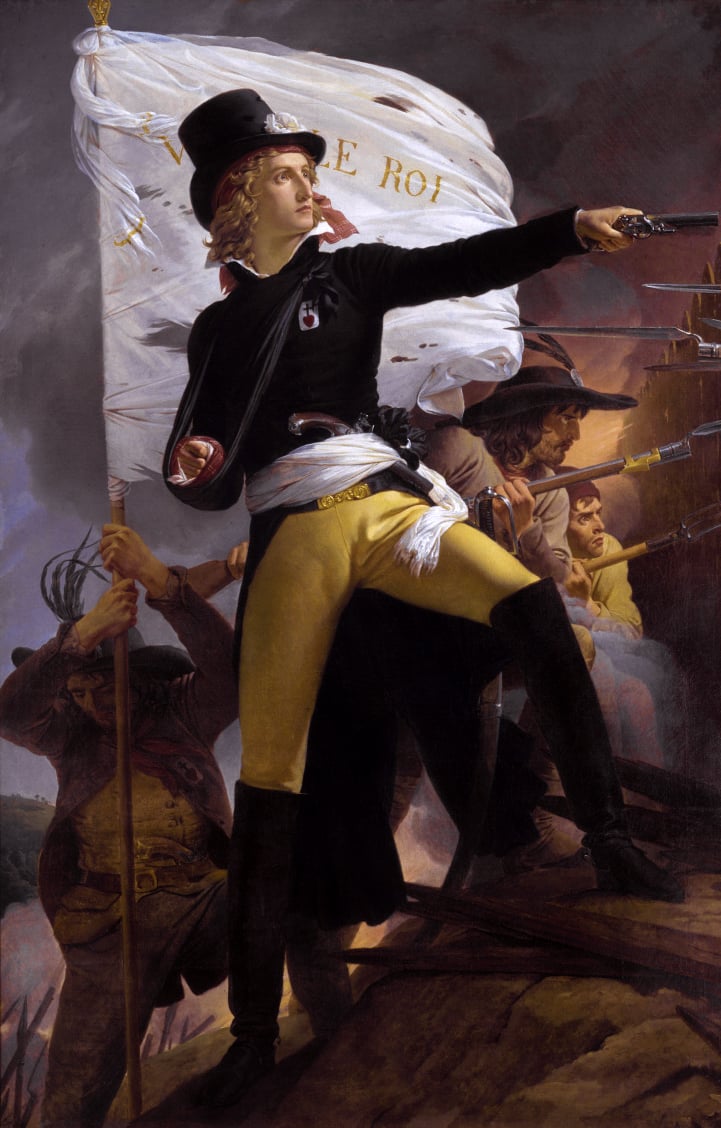
The counter-revolution does not begin with a party or a platform. It begins with a memory. Remember what was built. Remember what was destroyed and why. Remember that the horizon is a construction, not a fact.
Then walk toward the border wall of liberalism and climb over it.