Earlier today, four priests of the Society of St. Pius X were consecrated bishops in the face of the ongoing destruction caused by the Modernist revolution at the Second Vatican Council and continued by Leo XIV since the 2025 conclave.
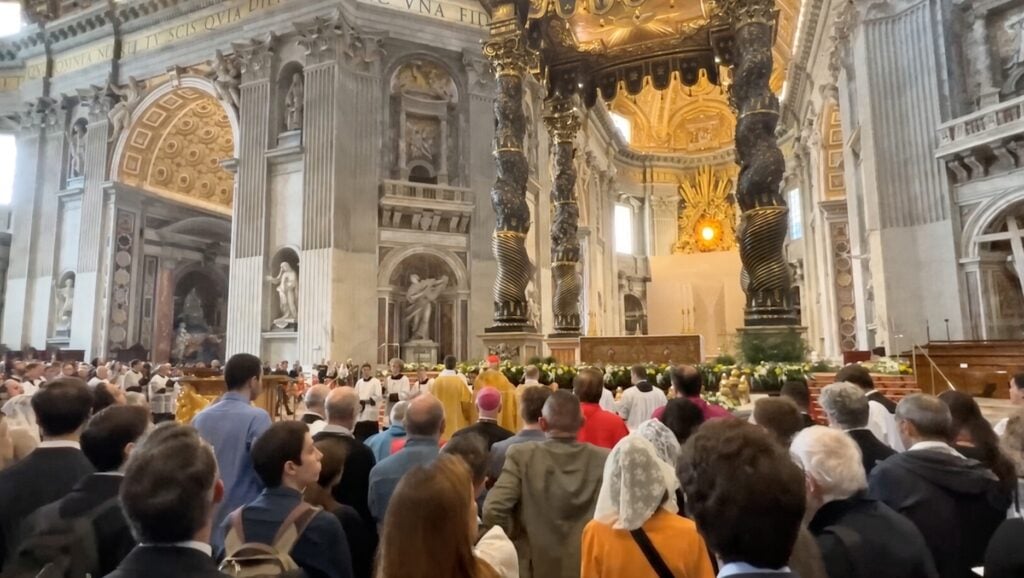
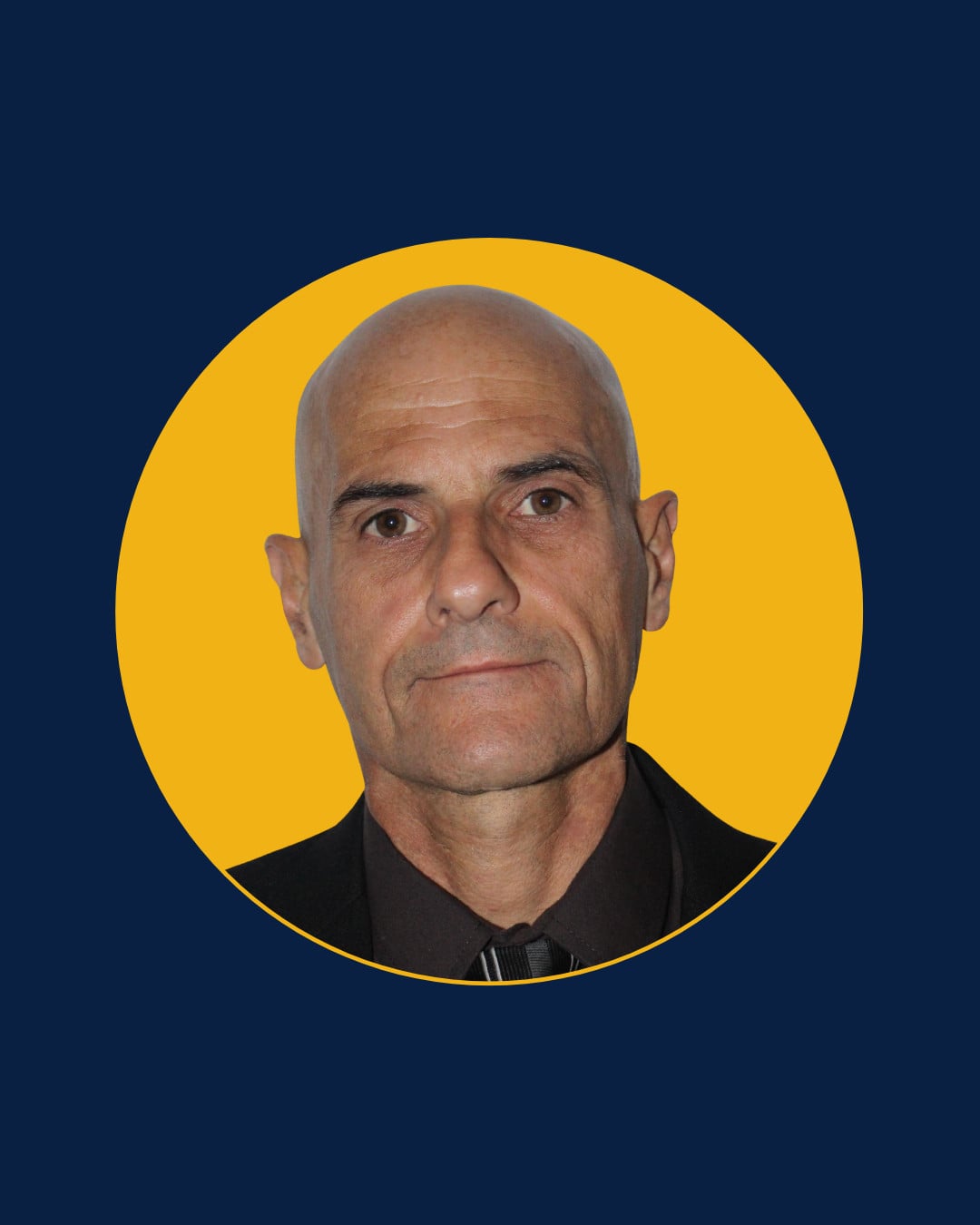
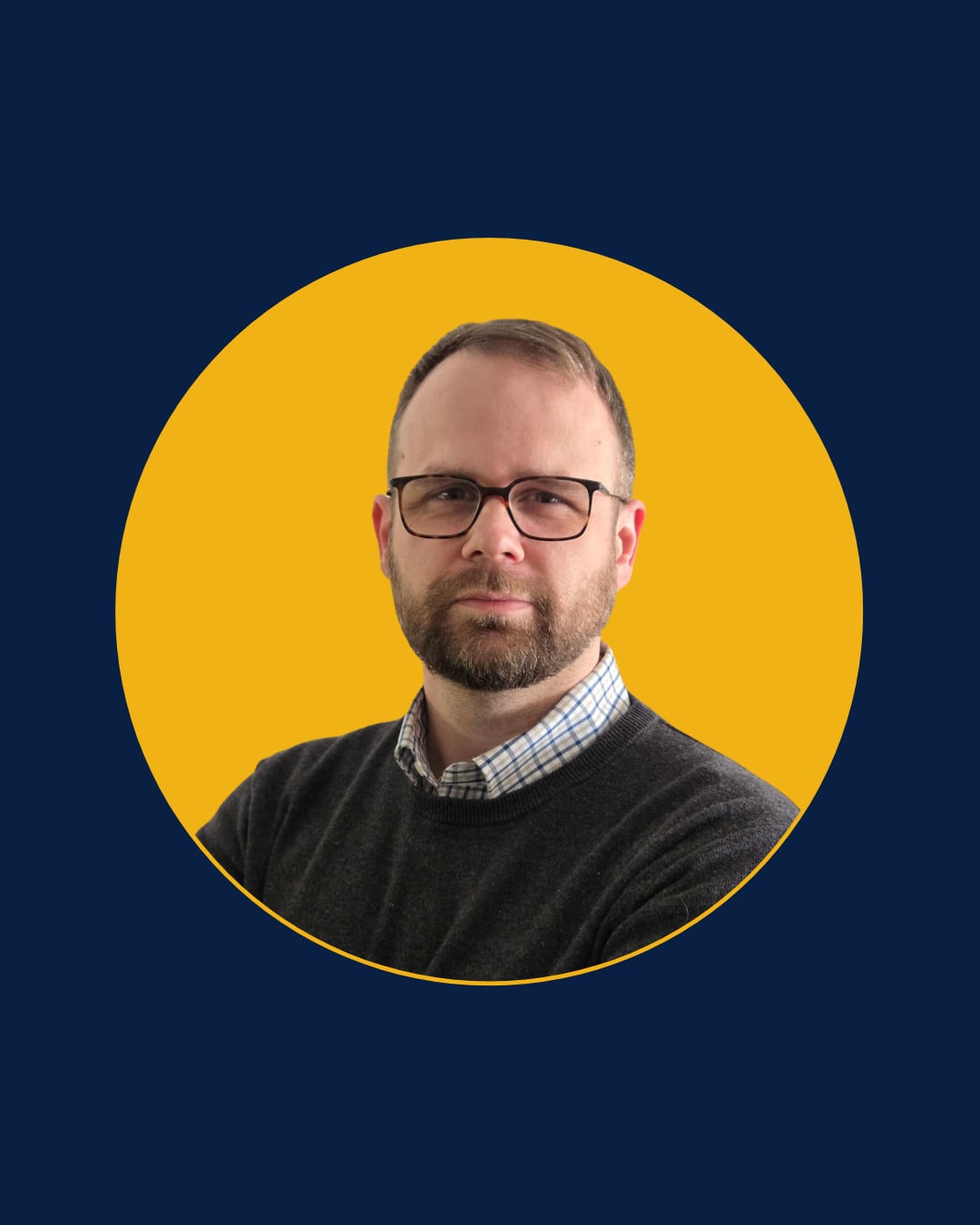
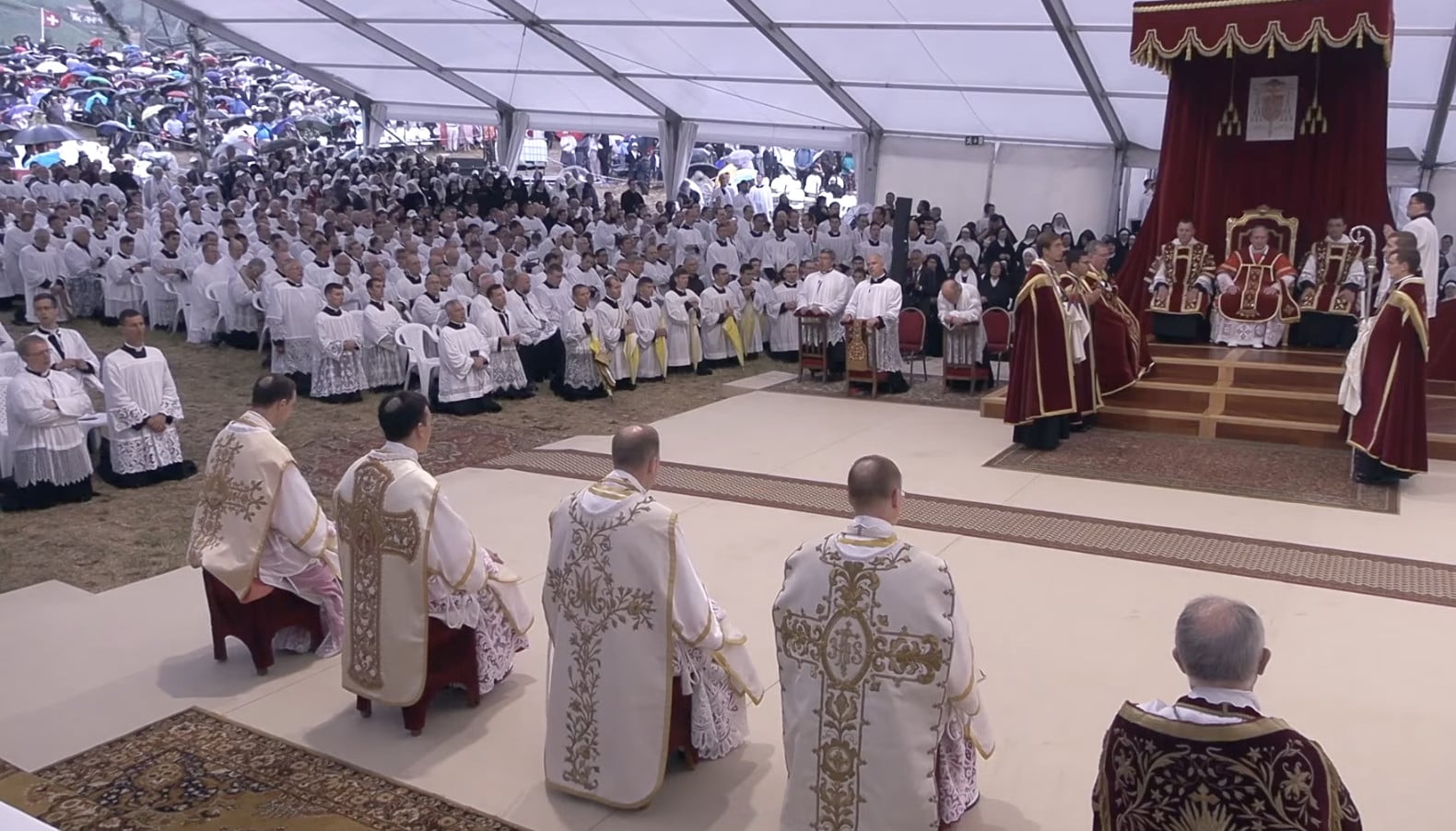
Bishop Alfonso de Galarreta and Bishop Bernard Fellay — the last remaining bishops consecrated by Archbishop Marcel Lefebvre in 1988 — laid hands on their successors in front of a crowd estimated to be around 15,000. The ceremony took place amid rain at the group’s flagship seminary in Écône, Switzerland. The new bishops are Bishop Pascal Schreiber, 53, (Switzerland), Bishop Michael Goldade, 45, (United States), Bishop Michel Poinsinet de Sivry, 42, (France), and Bishop Marc Hanappier, 36, (France).
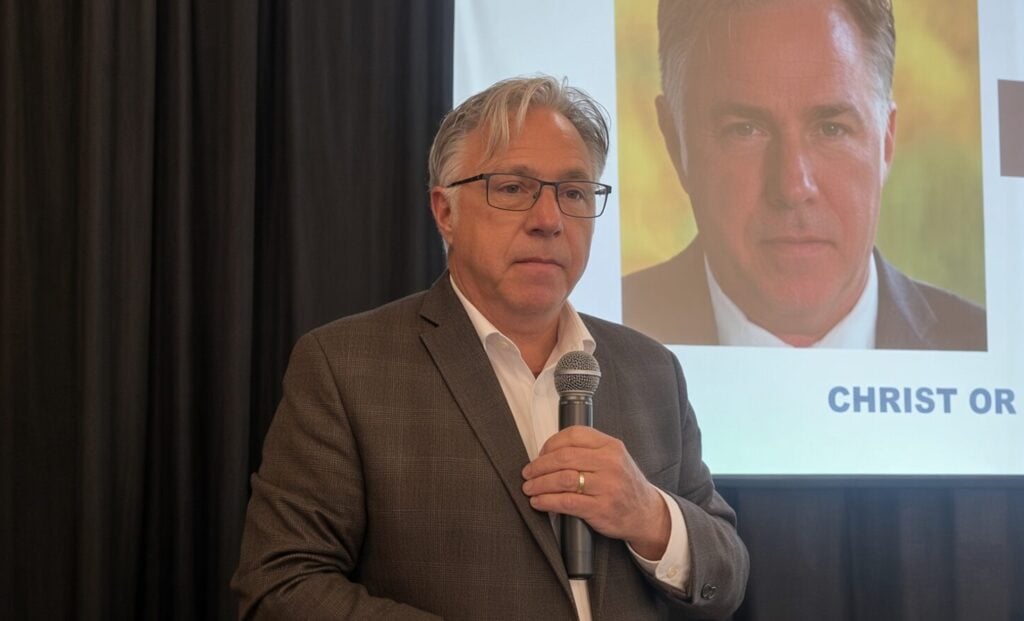
During his sermon, which was notably more restrained than Archbishop Lefebvre’s “Operation Survival” address in 1988, Superior General Fr. Davide Pagliarani said, while speaking in French, that the Society cannot “remain indifferent and do nothing,” warning that to do so would amount to betrayal.
“We are accused of not loving the Pope and of not respecting him. But it is precisely because we sincerely love the Pope as the Vicar of Christ and head of the Church that we no longer want to see him humiliated alongside false shepherds representing false religions,” he said, according to AdVaticanum. “These consecrations must be understood and lived in a spirit of charity towards souls and especially towards the Church.”
Pagliarani also wove the theme of the Precious Blood throughout his sermon while defending the central role of the Blessed Virgin Mary and emphasizing that there is only one Covenant, adding that to deny this is to lose the faith.
Addressing the new bishops directly, he told them they would be “lambs among wolves” and that “a bishop must fight for the rights of God, not man,” further recalling Christ’s counsel to be “wise as serpents and innocent as doves.”
“Today we take exceptional means which are proportionate to the needs of the Church today … Are we in the process of choosing between the faith and the Church — in order to keep the faith are we separating ourselves from the Church? It’s a false dilemma. We belong to the Church by the integral profession of the faith,” he said, per Vatican journalist Michael Haynes’ reporting. “We cannot choose between the faith and belonging to the Church, no one can make that choice. We want the faith of the Church in order to stay inside the Church and we want the Church by the faith, in the faith.”
One day before the event, the Vatican sent a last-minute letter to the Society urging them to not proceed with the ceremony, claiming — perhaps disingenuously — that the “Church is open to a path of dialogue and understanding” while warning them about “the schismatic act” they are about to commit. Pagliarani responded cordially a few hours later, asking Leo XIV again for his blessing, but showed no intention of abandoning the consecrations. The Vatican has not yet issued a decree of excommunication, though one was widely thought to be forthcoming. Vatican doctrinal chief Tucho Fernandez has since told Haynes that he is open to discussions in the future.
“They didn’t consider useful the dialogue we’ve proposed. But we hope in future, thanks to the action of the Holy Spirit, it’ll be possible. I’m sure, but we’ll need time,” he said.
The Society has since issued a communique expressing “regret” that the consecrations took place “without the authorization of Holy Father.”
When asked during the ceremony if they have a papal mandate to carry out the consecrations, a priest responded in the affirmative despite Leo not having issued one.
The Dispatch
“It is the Catholic and Roman church, always faithful to the traditions received from the apostles, who in entirely exceptional circumstances demands that we provide for the upholding of these traditions, that is the deposit of faith and that we take the means necessary to transmit them faithfully to all men for the salvation of their souls,” His Excellency said. “Since the Second Vatican Council up to the present day the authorities in the church have been animated by a spirit that is contrary to the faith & have been acting against holy tradition. They will no longer endure sound doctrine.”
The Society of Saint Pius X first announced plans to proceed with the episcopal consecrations on February 2, 2026. The news set the Catholic commentariat class alight, exposing many “false friends” of the Society who operate in the conciliar system and do not regularly attend SSPX chapels and yet express supposed admiration for Archbishop Lefebvre.
Supporters of the consecrations have argued that the Society has a duty to secure the continuation of the traditional priesthood and episcopate for future generations. Critics, including some within the wider traditional movement, have questioned the timing and prudence of the decision. Various sedevacantist clergy, as well as Mario Derkson from the Novus Ordo Watch website, have criticized the Society’s “recognize and resist” theology.
“There is no Church if one separates from the person claimed to be a true Roman Pontiff. Luther could use that language,” Fr. Federico Palma said on X today.
SSPX history
The Society of Saint Pius X was founded in 1970 by Archbishop Marcel Lefebvre, the former Superior General of the Holy Ghost Fathers and a leading figure of the conservative opposition during and after the Second Vatican Council.
Established as a fraternity dedicated to traditional priestly formation, the Society rapidly became one of the principal counter-revolutionary forces to the radical liturgical and doctrinal changes that followed Vatican II.
Relations with Rome deteriorated throughout the 1970s and 1980s as disputes continued over the new Mass, religious liberty, ecumenism and collegiality. Lefebvre increasingly expressed concern that the traditional priesthood and sacraments would not survive without bishops committed to preserving them.
Tensions culminated in the episcopal consecrations of June 30, 1988 at Ecône, where Archbishop Lefebvre, assisted by Bishop Antônio de Castro Mayer, consecrated Fathers Bernard Fellay, Bernard Tissier de Mallerais, Richard Williamson and Alfonso de Galarreta as bishops.
Rome sought to prevent the consecrations while insincere negotiations on the part of the Vatican continued until the final days before the ceremony. On the eve of the event, Archbishop Lefebvre declared: “If I had made this agreement, by continuing the operations and putting them into practice, I would have signed the Society’s death warrant.” He later said he went too far in the negotiations.
Following the consecrations, the Holy See declared that Lefebvre and the newly consecrated bishops had incurred excommunication automatically, which SSPX leaders at the time said constituted a “mark of honor.” The excommunications were eventually “lifted” in 2009 by Benedict XVI, and discussions between the Society and Rome have continued on and off since then.
Whether regarded as an act of prudence, necessity, or controversy, today’s consecrations represent another significant chapter in the history of the traditional Catholic movement and one whose consequences are likely to be felt and discussed for years to come.