Leo XIV’s staffing choices for the Vatican’s Council for the Economy provides an unusually clear look into the continuity of his tenure with that of his predecessor, Jorge Bergoglio.
This is evident not only in his retention of very problematic Francis appointments, but also in his new selections, which are ideologically in sync with Francis’ synodal project.
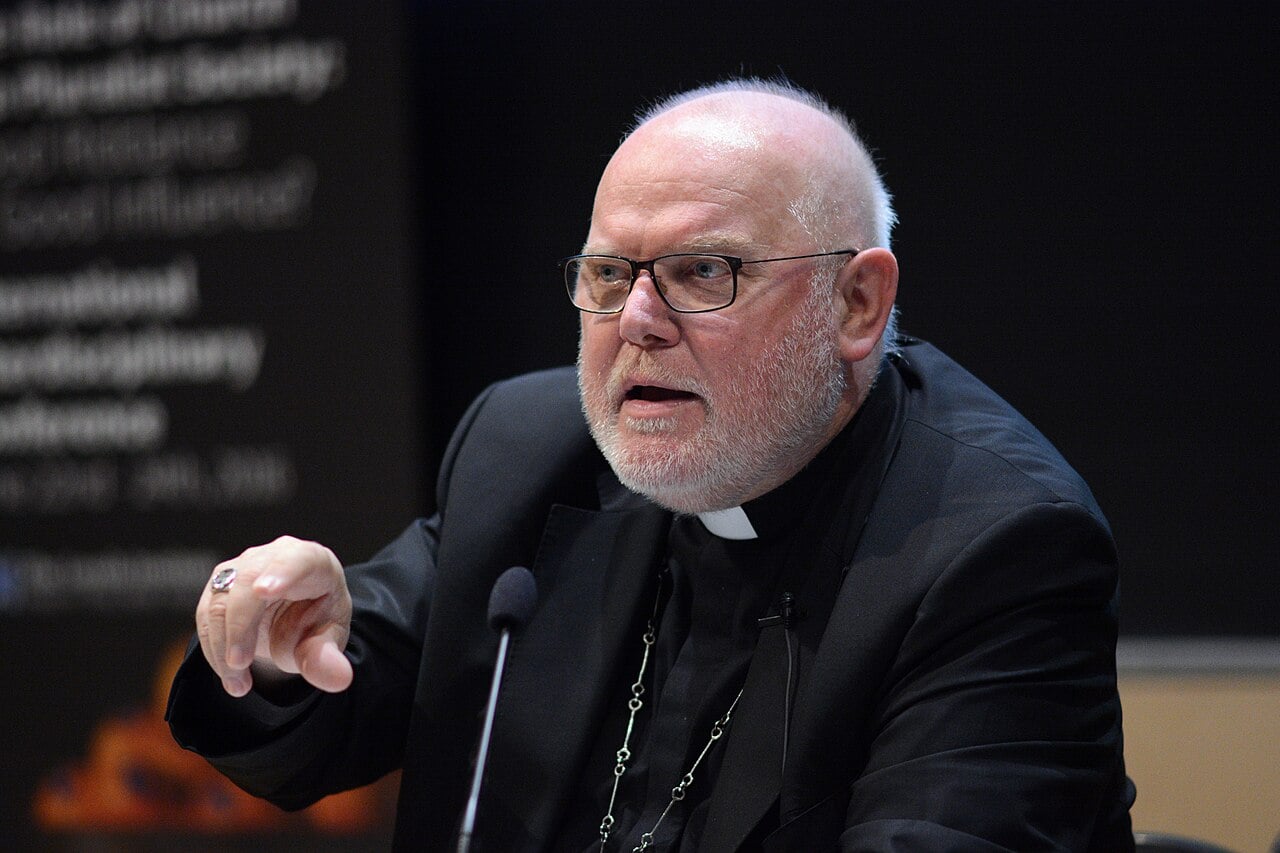
Most notably, and perhaps most tellingly, is Leo’s retention of German rebel Cardinal Reinhard Marx, who has obstinately pursued heterodoxy through the Synodal Path for years. Pro-LGBT New Jersey Cardinal Joseph Tobin and other Francis appointees have found favor amid Leo’s reshuffling as well.
The Council for the Economy is an important body that supervises the economic and administrative affairs of the Roman Curia and institutions dependent upon the Holy See. Its responsibilities include examining and approving its annual budget and financial statements. Personnel matters for the entity are of great significance because they reflect whom the pope considers trustworthy enough to exercise significant authority over the central government of the Church.
In selecting Marx, who oversees the well-heeled German Church, Leo is telegraphing to all that he is not concerned with true restoration in the Church. If he had been, he would have told the rogue German prelate to shape up or ship out. Instead, Marx is being kept for another five-year term after having been appointed by Francis as coordinator of the Council in 2014.
Marx’s retention is difficult to see as a neutral administrative decision. He has been one of the most prominent advocates of the controversial German Synodal Way. As recently as 2026 he promoted a pastoral framework in the Archdiocese of Munich and Freising concerning blessings for couples in irregular situations, including same-sex couples.
This rightly caused resistance even among priests in his diocese and, while it also led to conflict with Rome — which insisted that the Church cannot give a blessing that would imply approval of a homosexual relationship — Leo’s retention suggests that the conflict was merely optics.
Astonishingly, Leo apologist and blind as a bat influencer Mark Lambert took to social media to argue that Marx’s appointment is essentially meaningless. On X, he unironically wondered whether it is a “possibility” that “Leo simply refuses to govern according to our preferred ideological categories.”
“We keep trying to decode Leo through personnel,” he asked. “But perhaps Leo is telling us that appointments are not endorsements. The real test will not be who Leo keeps in office, but what he actually allows them to do.”
This is like saying it is possible that it is not going to rain despite the sky growing dark and water starting to fall from the clouds. At a certain point, you have to question the sanity of some of these commentators who deny reality.
More signs of Francis 2.0
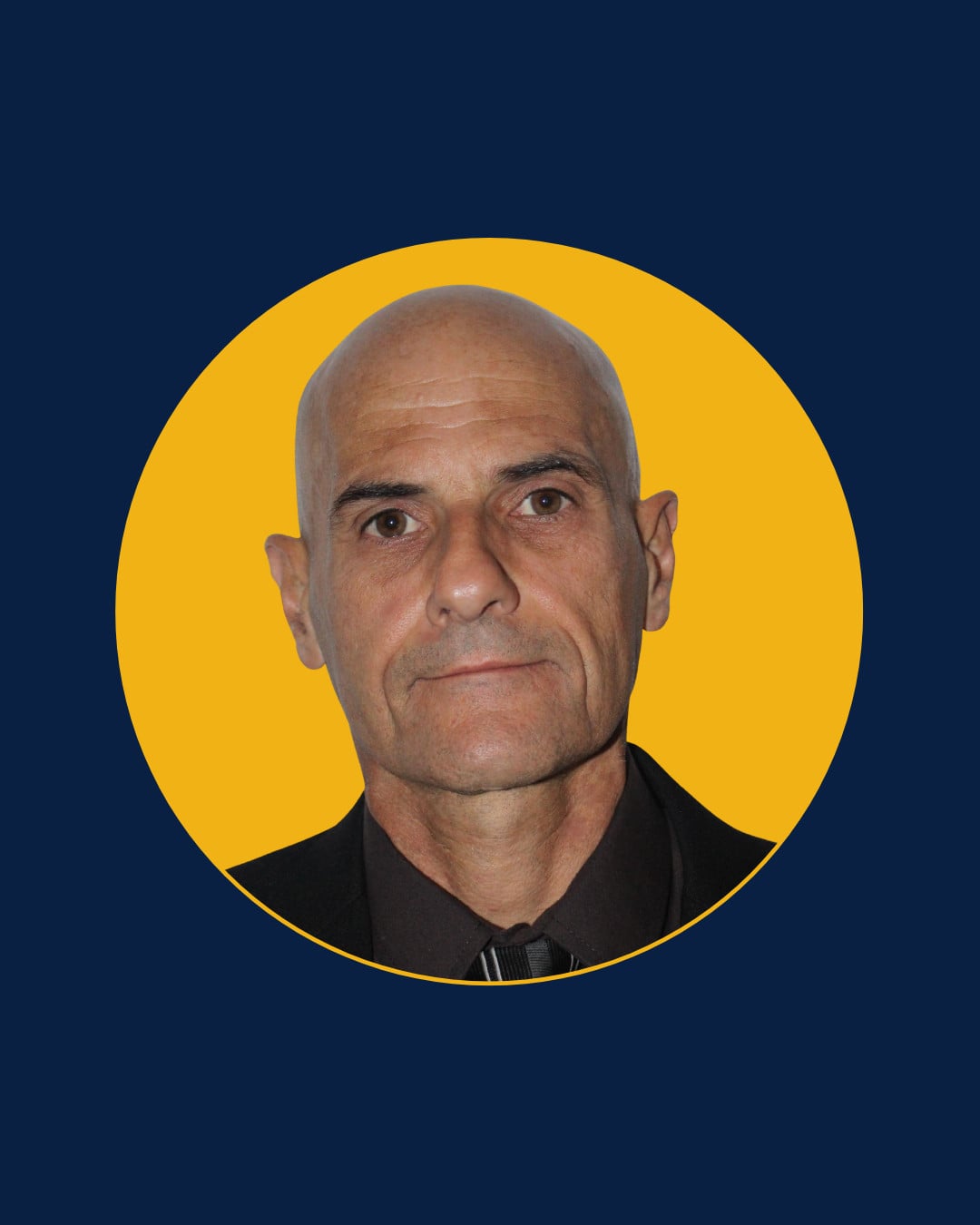
Cardinal Joseph Tobin is another Francis-era refugee who was first appointed to the Council for the Economy in 2020.
The Dispatch
Again, it seems that Leo has no will or desire for a real housecleaning exercise. We are forced to draw the conclusion that he sees these men as beneficial to his pontifical vision.
The same is true of other members whom Leo has retained. Cardinals Odilo Pedro Scherer and Gérald Lacroix, as well as a number of the Council’s existing lay and clerical members, are all Francis “leftovers.”
Some of Leo’s new cardinal appointments — Grzegorz Ryś, Ladislav Nemet, Jean-Paul Vesco, and Roberto Repole — are also a good indication that continuation with Francis and his ideology is the name of the game.
Vesco, it should be noted, has defended an expansive interpretation of Fiducia supplicans and supported the pastoral blessing of homosexual persons, while Nemet has likewise spoken favorably of the German Synodal Way and its convergence with the wider Synod on Synodality.
Placating feminists
In comparing the appointments to the Council for the Economy with some of Leo’s other recent decisions, a distinct pattern emerges.
On August 6, Leo approved fifteen new consultors to the Dicastery for Institutes of Consecrated Life and Societies of Apostolic Life, of whom Sister Patricia Murray, C.J., and Sister Maria Nirmalini, A.C., should be of special interest.
Murray is a former executive secretary of the International Union of Superiors General and has been a prominent advocate of Francis’ understanding of synodality among women religious.
During the 2023 Synod, she argued that controversial questions concerning the diaconate and women’s priesthood should remain part of the discussion and she has also spoken publicly about the experience of LGBT persons in the Church.
Nirmalini is an Indian religious who serves as Superior General of the Apostolic Carmel. She participated in the 2023 Synod and has advocated a liturgical reform characterized by “less emphasis on uniformity and more on creativity” — a statement that should raise the eyebrows of even those with only a nominal concern for traditional liturgical practices.
She furthermore praised Francis’ inclusion of women and his approach to inter-religious dialogue.
Join the Counter-Revolution: Become a monthly donor to Integrity today!
Of course, neither Murray nor Nirmalini has the authority to alter Catholic doctrine by virtue of being a consultor, but appointments are essentially smoke signals. They tell the rest of us which experiences, priorities, and ecclesial perspectives a pope considers valuable enough to bring into the Vatican’s decision-making processes.
The significance of Leo XIV’s personnel decisions cannot be dismissed. Not all of them might be retentions from the Francis pontificate, but most are associated, to varying degrees, with the synodal and pastoral priorities of the preceding pontificate.
Personnel decisions reveal institutional priorities. And based on the evidence available, Leo XIV has not undertaken the systematic restoration that many synodal-trads still wishfully try to convince us is underway. If anything, the evidence increasingly makes the case that Leo is, unquestionably, “Francis II.”