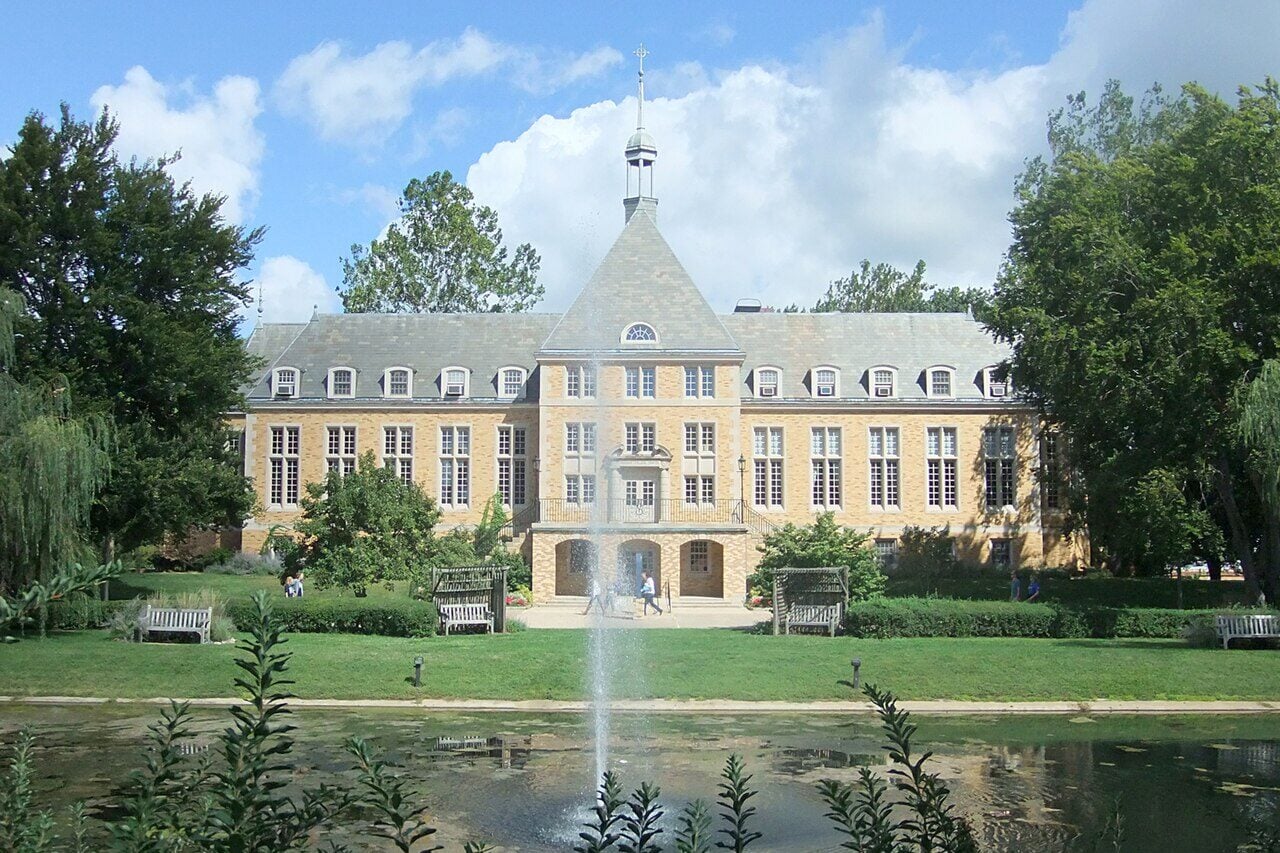
Saint Mary’s College in Notre Dame, Indiana — a sister school of the University of Notre Dame — seems to be fully on board with preparatory indoctrination for the next phase of the postconciliar religion.
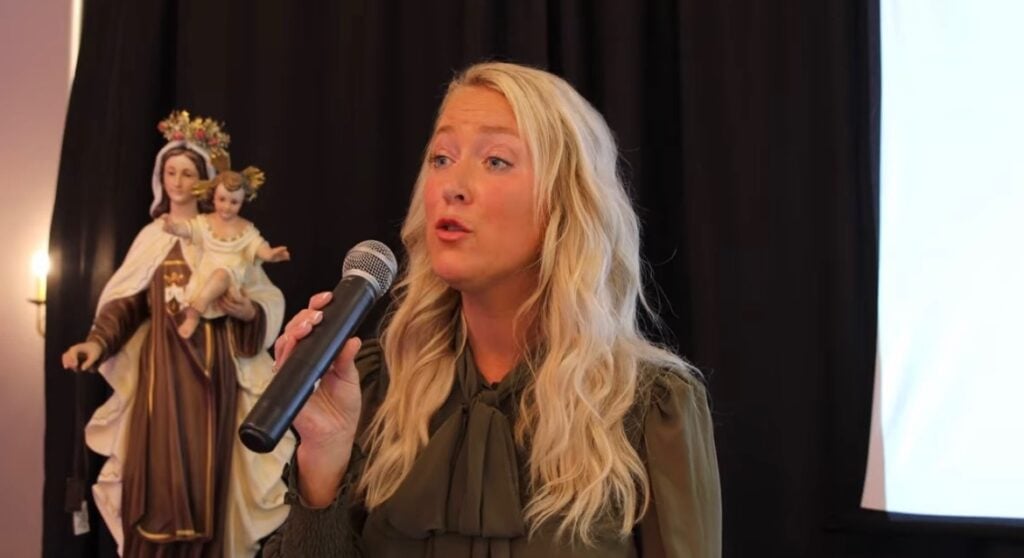
According to the college’s own website, it recently welcomed 27 women for the first summer intensive of PROCLAIM, a 22-month formation program intended to develop Catholic women as “ministers of the Word and preachers in settings permitted by the Catholic Church.”
While claiming to operate within the boundaries of Canon Law, the initiative seems to be an open indication of the direction in which the postconciliar Church is going: a case of “changing hearts,” to borrow Leo XIV’s language, in order to later change dogmas, doctrine, and disciplines.
The fact that the college’s own article states that the event’s organizers “invited and received the support” of the supposedly conservative Bishop Kevin C. Rhoades, Bishop of Fort Wayne-South Bend is evidence that this program is not merely the work of a bunch of radical feminists gone astray, but that it carries episcopal approval.
The program grew out of cooperation between Saint Mary’s and Discerning Deacons and received a remarkable $1.25 million grant from Lilly Endowment to train participants through courses, “preaching circles,” coaching, and practical preaching exercises. The Lily Endowment group is a prominent non-profit organization that has nothing to do with the Catholic Church, though it claims to strive to “deepen and enrich the religious lives of Christians in the United States, principally by supporting efforts that enhance the vitality of congregations.”
Under the current Code of Canon Law, Canon 766 does allow laymen and laywomen to provide remarks in churches or oratories under certain circumstances and subject to the norms of the episcopal conference, but Canon 767 §1 draws the line at the homily of the Mass because it forms part of the liturgy itself and “is reserved to a priest or deacon.”
Furthermore, Cardinal Arinze’s 2004 document Redemptionis Sacramentum states the homily at Mass may “never” be entrusted to a layperson. It also clarifies that previous norms permitting non-ordained faithful to give the homily are abrogated and that the practice is reprobated and cannot acquire the force of custom.
But, as has been observed in recent years across the world, there seems to be a tendency among heterodox bishops to allow what the Vatican forbids until it becomes ordinary practice. It also seems that Rome is less than enthusiastic about enforcing what is “on its books.” In fact, more often than not, it looks the other way because these phenomena and transgressions are actually in line with its nefarious agenda.
A forerunner of female clergy?
The Dispatch
The rhetoric of PROCLAIM program director Lisa Orchen and program associate Claire Lucas is also significant, as they themselves have said that “Once you invite a woman to preach and coach her to do it, there’s no going back for her. Once you see a woman preach, your imagination is forever widened. You can’t unsee it.”
This seems to be in line with the just-push-it-until-it-is-accepted philosophy of practical apostasy that has become a guiding feature of the way the Synodal Church operates. The program therefore appears to be not so much preparation for exceptional canonical circumstances as a more deliberate attempt to change Catholic expectations about who may properly occupy the pulpit.
It is also interesting to consider these developments against the backdrop of the Women’s Ordination Conference, an organization that explicitly campaigns for women to become Catholic deacons, priests, and bishops. The group celebrated its 50th anniversary in 2026 and it continues to press publicly for women priests. Shortly before the 2025 conclave was held, activists released pink smoke in Rome to dramatize their demand for women’s full “equality” in Church governance and ordination. Their goal seems to have come at least partially true as Leo has promoted several women to prominent positions of authority in the Vatican structure.
Another link that needs to be made is to Germany. The “Church” in that country, which for all practical purposes is no longer Catholic, has long been offering a sobering illustration of how quickly boundaries can be challenged in practice.
In 2025, the Catholic Women’s Association of Germany reported that 188 women delivered 220 sermons during its annual women-preachers campaign. In the Diocese of Aachen alone, seven women preached during Eucharistic celebrations.
The German bishops themselves asked Rome for permission to allow commissioned lay Catholics, in exceptional circumstances, to preach in place of the homily at Mass. Rome refused, and in a letter dated June 17, 2026, the Dicastery for Divine Worship and the Discipline of the Sacraments stated that the reservation of the homily to an ordained minister belongs to the sacramental and liturgical structure of the Eucharistic celebration itself and therefore cannot be dispensed from by an indult.
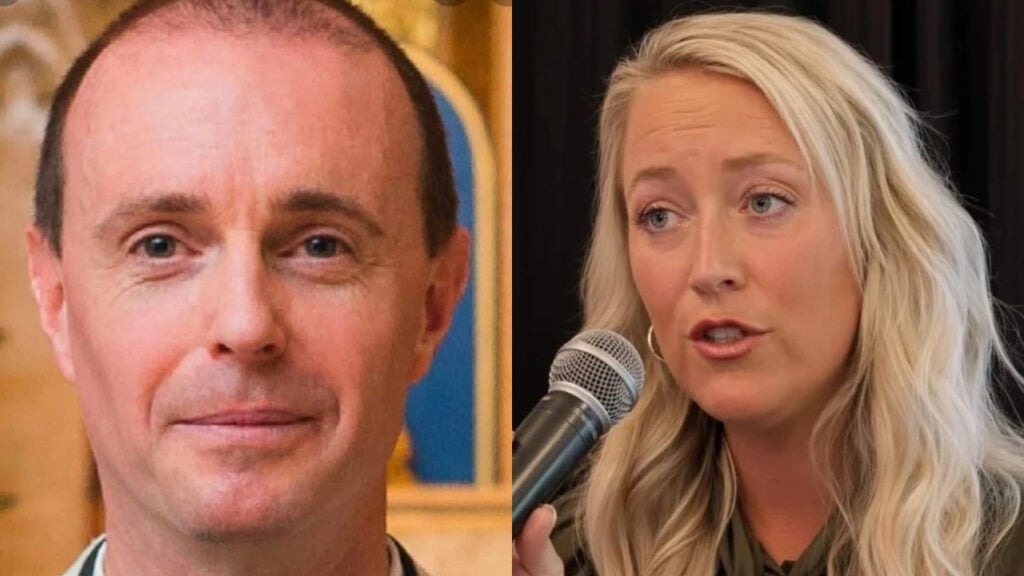
Yet this all seems to be little more than window dressing, because only a month later, on July 22, Auxiliary Bishop Wolfgang Bischof participated in a “dialogue sermon” during Mass in Munich with laywoman Theresia Reischl. St. Michael’s own website lists the event as a “Dialogpredigt” between Bishop Bischof and Dr. Reischl, while the Catholic Herald reported on the incident as an apparent violation of the Vatican prohibition.
The not-so-subtle plan seems to be to allow exceptional lay preaching outside the homily, then to gradually foster the conviction that excluding women from the liturgical homily — and eventually from Holy Orders itself — is inexplicable or unjust.