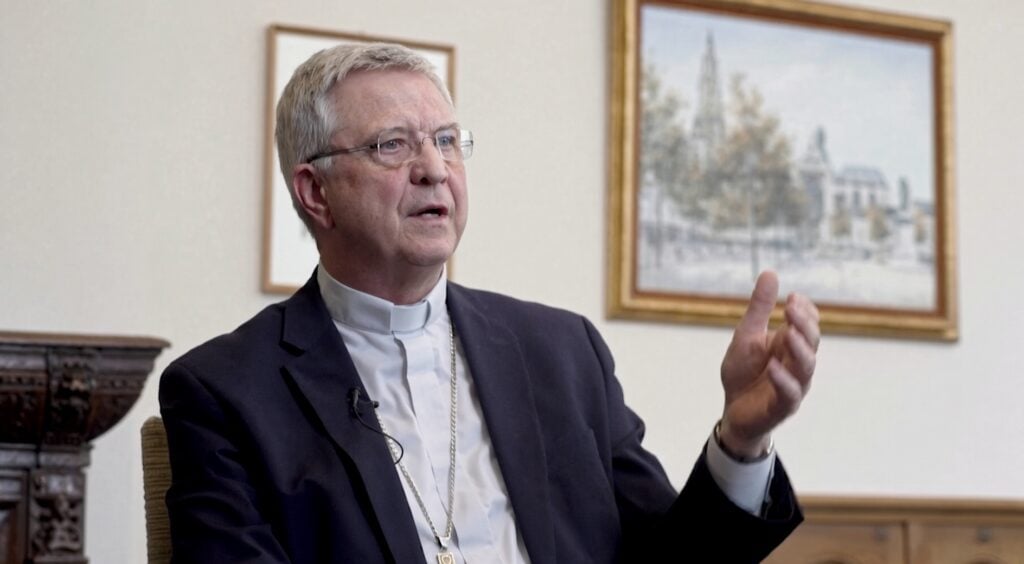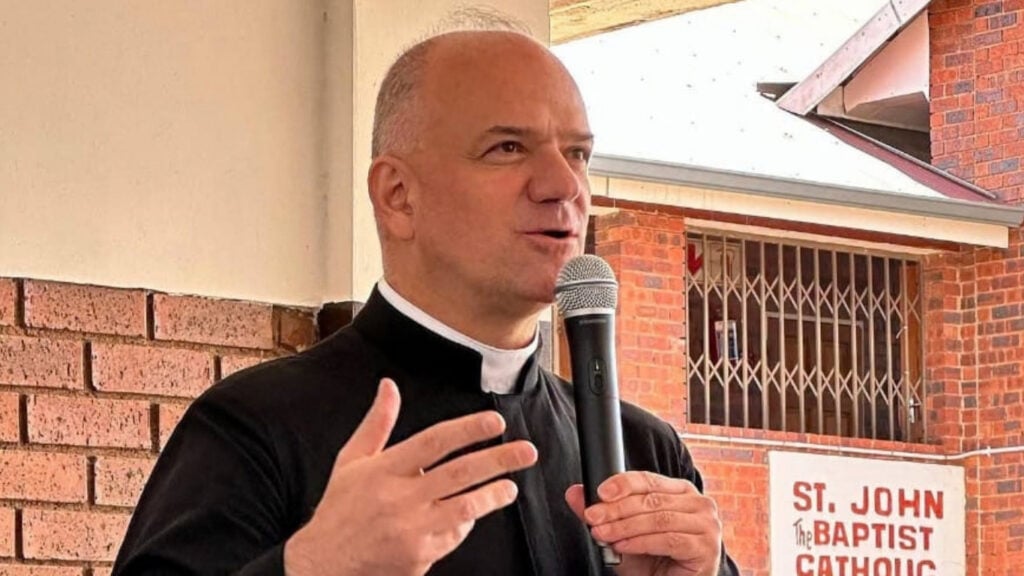
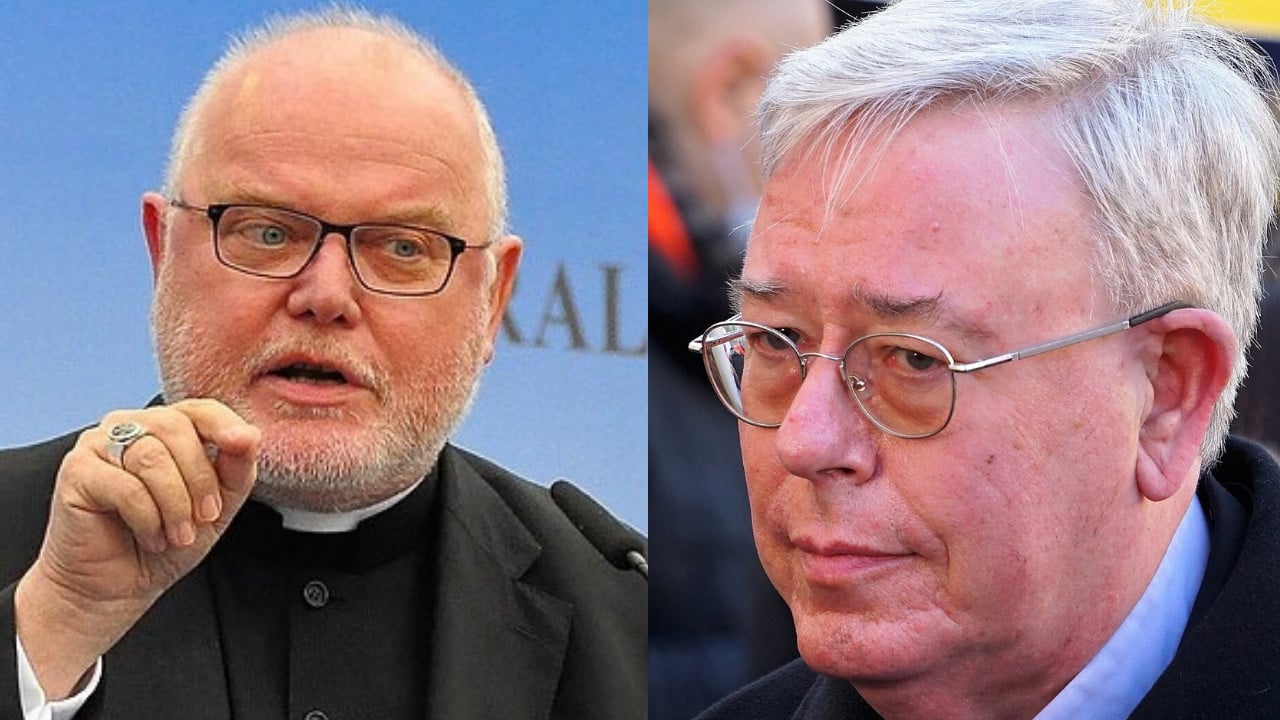
Two of Synodality’s most prominent advocates and pioneers, Cardinal Reinhard Marx and Cardinal Jean-Claude Hollerich, have again defended the liquidation of the Church’s monarchical structure and top-down decision making process.
Marx used an interview celebrating the 30th anniversary of his episcopate to defended Germany’s Synodal Way. Marx, the long-time Archbishop of Munich and Freising who helped launch the process while president of the German Bishops’ Conference, said he had “no doubt” that embarking upon it was been the right decision.
On a separate occasion, Hollerich, Cardinal of Luxembourg and former general relator of the 2023–24 Synod on Synodality, defiantly declared that synodality can no longer be reversed and described the process as a movement away from a Church operating “from above” toward one in which Christians assume responsibility and are heard.
Catholics who stubbornly insist that all is well in the Synodal Church should be concerned about these two heterodox prelates’ candid confession of how they envision the Church’s divinely constituted hierarchy should be transformed into something resembling parliamentary government.
Of all the troubling statements Marx made, and there were many, the most revealing statement concerned the relationship between Rome and the local churches.
“The Church is not built like a pyramid with the Curia in Rome at the top,” he said, but instead consists of local churches which together constitute the universal Church. “Every local church must find its own way.”
Removing any doubt as to what the source of these ideas is, Marx invoked the Second Vatican Council to support of his ecclesiology, while describing the Pope primarily as the “foundation of unity.” Marx also argued that the Pope is “not the autocratic ruler of the Church.”
These statements fly in the face of orthodoxy and contradict Catholic teaching. According to Vatican I the Roman Pontiff possesses “full and supreme power of jurisdiction over the universal Church,” not merely a coordinating role.
The Dispatch
Furthermore, Pius XII taught that Christ entrusted the government of the universal Church to Peter and his successors and warned against conceptions that weaken the Pope’s genuine jurisdiction over the Church (Mystici Corporis Christi, 1943). Yes, the Pope is indeed a visible principle of unity, but he is not just its guarantor. He also possesses a real, supreme and universal governing authority instituted by Christ.
Support Traditional Catholicism: Become a monthly donor to Integrity Magazine today!
Marx also told the interviewer that the German Bishops’ Conference “cannot be the only organ” representing the Church in Germany and called for a common national “resonance space” involving the wider “People of God.”
This once again proves that Rome has opened the synodal Pandora’s Box, and now cannot close it again. In November 2023, Francis expressed concern about steps toward establishing a “Synodal council,” but Marx and his colleagues, despite idolizing Francis, has thus far been ignoring all attempts by the Vatican to rein them in.
Hollerich’s comments dripped with the same arrogance, contained no ambiguity and were more categorical. The Luxemborg prelate said “Synodality can no longer be reversed.”
“We need a Church of Christians, where I as bishop am among the Christians,” he said, explaining that change must be supported by the whole Church or it will cause “conflict and division.”
Hollerich further confirmed that Leo is a supporter of the synodal process, attributing his restrained public language to an attempt to preserve ecclesial unity.
While faithful Catholics wish the Synodal beast could just be taken behind the shed and be shot unceremoniously, the comments by Marx and Hollerich prove that the it remains very much alive, and is going nowhere anytime soon.