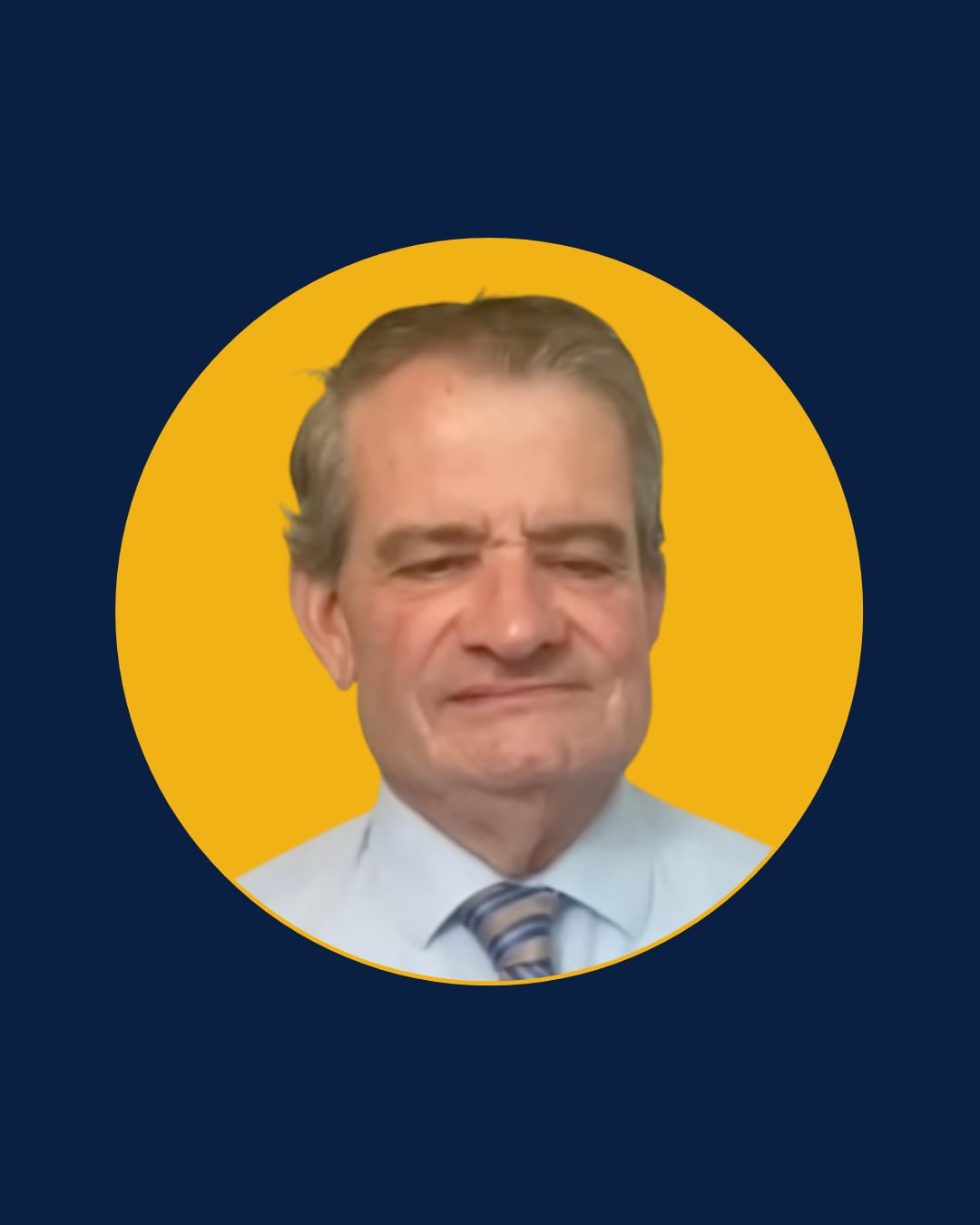
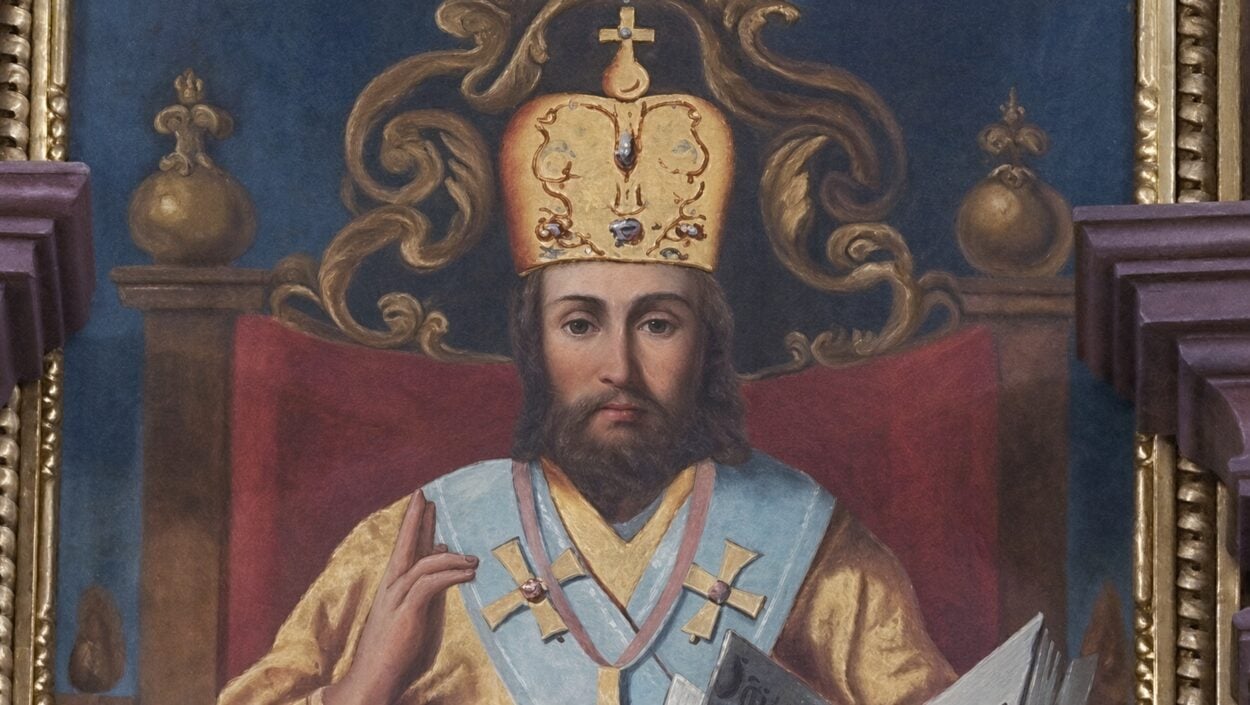
Editor’s note: This speech was delivered by Dr. Peter Chojnowski on Sunday, October 25 to commemorate the Feast of Christ the King at a Catholic Land Movement event. It has been lightly edited from its original format.
“All power on heaven and earth has been given to me by My Father.” These words from the Gospel of St. Matthew were spoken by Our Lord Jesus Christ to His Apostles after His Resurrection and before His Ascension into Heaven. These words are the basis for our celebration of the great Feast of Christ the King today.
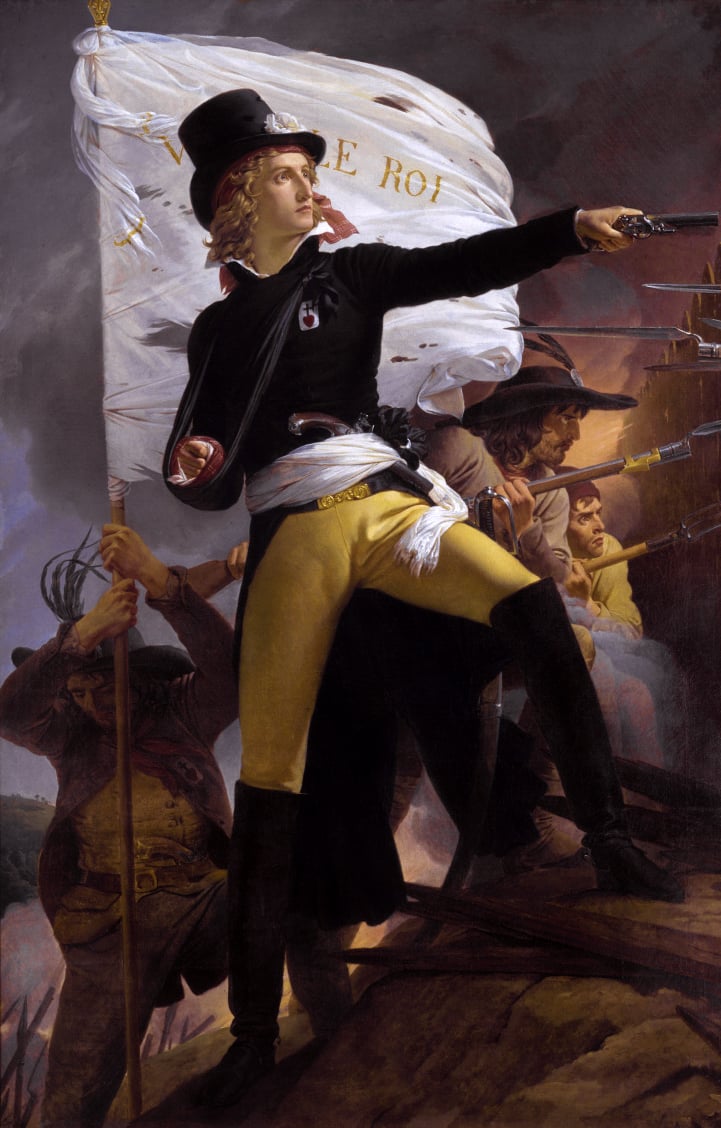
In Quas Primas, the encyclical Pius XI published in 1925 — the year before the great uprising of the Cristeros Army in Mexico — we see the establishment of this great feast penetrate the deepest roots of Our Lord Jesus Christ’s claim to having Kingship over the entire world. Quoting St. Cyril of Alexandria, Pope Pius XI states that “Christ has dominion over all creatures, a dominion not seized by violence or usurped, but his by essence and by nature.” He goes on to explain that:
His kingship is founded upon the ineffable hypostatic union. From this it follows not only that Christ is to be adored by angels and men, but that to Him as man angels and men are subject, and must recognize his empire; by means of the hypostatic union Christ has power over all creatures. But a thought that must give us even greater joy and consolation is this: that Christ is our King by acquired as well as by natural right, for he is our Redeemer. We are no longer our own property, for Christ has purchased us ‘with a great price; our very bodies are the ‘members of Christ.’
It is necessary to emphasize that Pius XI teaches that Christ is our King “by acquired as well as by natural right.” This means that the power Christ has over the world came about through the act of the Father generating and through Our Lord’s own conquest over evil and death on the Cross. But how can this be? How can Our Lord gain absolute sovereignty over the world without our permission? Pope Pius XI was writing in 1925, a century and a half after the proclamation of the principle of popular sovereignty and of “power residing with the people.” How can he say that Christ the King is ruler and sovereign over all men when He has not asked our permission?
Defend the Kingship of Christ: Donate to Integrity today!
This feast is a cosmic proclamation that Christ has not asked our permission. The reason that he has not asked our permission is because he possesses all power and sovereignty by right — by right of nature and by right of conquest. It is His right, in other words, stemming from His very being as the Only Begotten of the Eternal Father, through Whom all things were made and without Whom nothing was made. He does not have to ask our permission to exercise a right that is His by nature and by conquest.
But how does this apply to us, those of us who are engaged in the Catholic Social Movement, even the Catholic Land Movement? Why do we wait for permission to do what is within our right to do? Jean Ousset, in his famous book Action: A Manual for the Reconstruction of Christendom, asks precisely this question.
Before Ousset, the great champion of Catholic Action in post-World War II France, speaks about the right that is involved in Catholic Action, he speaks about the necessity of Catholics acting in the social, political, and economic order. His words:
There is no more subtle and heinous a perversion than a self-satisfied orthodoxy that is indifferent as to whether truth is fruitful or whether evil is triumphant. A wholly cerebral and speculative orthodoxy is not enough. To be really and vitally orthodox, one needs not only intellectual orthodoxy but, also, what may be termed orthodoxy of the will. And this is manifested principally by a normal readiness for both zeal and indignation.
Cardinal Alfredo Ottaviani in his book The Church and the City, says something similar:
The frequency and power of crime have blunted Christian sensibility, even, alas, among Christians, not only as men, but as Christians, they do not leap to their feet. How can they feel themselves to be Christians if they are insensitive to the wounds which are being inflicted on Christianity.
Both Ottaviani and Ousset are affirming that Catholic doctrine of political and social action is an expression of the Natural and Divine Law. Now, a moral and social doctrine is never purely speculative. Why? Because in itself, a moral principle presupposes the action that it governs.
The Dispatch
In his book, Ousset cite the great apostle of North Africa, Fr. Charles de Foucauld (1858–1916), who said: “When I entered religious life, I thought that it was gentleness and humility that I should have to preach. In the course of time, I began to see that what is most lacking is dignity and intrepidity.”
Ousset further states that we must create an elite from our natural aristocracy, which can provide the Church and the Christian Social Order with a thinking and arguing force that is flexible and maneuverable. There must, in other words, be a mobilization of elites who are called upon to defend moral and intellectual truth and to radiate it.
Support Catholic Action: Donate to Integrity Magazine today!
So Catholics need to embody orthodoxy in social action, but do we have a right to do it? What if we, as laymen, are not given “permission” to do it? What if we wait for permission, but it never comes?
In this regard, Jean Ousset is blunt. The clergy cannot serve as an obstacle to the layman taking up his natural and Christian duty to overcome injustice and defend what is sacred and good, whether in his family, community, or nation. Ousset states bluntly, “an ecclesiastical mandate is unnecessary to allow a layman to exercise a right, still less to accomplish an elementary duty of his life as a layman, such as to marry, to bring up children, practice a profession, play his part as a citizen, or serve his country in a Christian fashion.” He goes on:
We look with regret upon the general phenomenon of laymen waiting for the clergy to formulate or officially mandate from the pulpit courses of action for the rectification of injustices in the civil, social, and economic orders.
Our Lord Jesus Christ, King of Kings and Lord of Lords, did not ask our permission to excise His Rights over the World of Men. So neither do we need to ask permission to exercise our inherent natural and divine law right to work for the true and the good in the concrete circumstances of our social and political world.
Indeed, it was Pope Leo XIII, with his foundational social and economic encyclical Rerum Novarum written in 1891, who first pointed out that the just economic order that the Church puts forward — the one that stands opposed to be the errors of Liberal Capitalism and Socialist Communism — is based not on the things which men are allowed, but the things which are man’s right. Man’s two primal instincts, the instincts of self-preservation and propagation of the species, are the basis for the rights that stem from the need to fulfill those basic needs and desires. That all men should have such rights and desires is the idea behind the Distributive Society.
So what does man have a right to do? What does Leo forbid him to ask permission for? Leo tells us in Rerum Novarum:
No human law can abolish the natural and original right of marriage, nor in any way limit the chief and principal purpose of marriage ordained by God’s authority from the beginning: ‘Increase and multiply.’ Hence we have the family, the “society” of a man’s house – a society very small, one must admit, but nonetheless a true society, and one older than any State. Consequently, it has rights and duties peculiar to itself which are quite independent of the State…
It is a most sacred law of nature that a father should provide food and all necessaries for those whom he has begotten; and, similarly, it is natural that he should wish that his children, who carry on, so to speak, and continue his personality, should be by him provided with all that is needful to enable them to keep themselves decently from want and misery amid the uncertainties of this mortal life. Now, in no other way can a father effect this except by the ownership of productive property, which he can transmit to his children by inheritance (emphasis added).
Where in that quote do you hear the word “permission”?
So here we are, gathered together as friends, upholding the Social Royalty of Our Lord Jesus Christ and honoring the memory and the hopes of the Cristeros of Mexico and the French of Action Francaise who 100 years ago were so cruelly betrayed as they tried to realize the hope of the encyclical Quas Primas.
Let your recent renewal of the Catholic Land Movement bring the Social Royalty of Christ down to the very roots of our own existence and that of our community. We don’t have to ask permission to be truly human, we don’t have to ask permission to be truly Catholic, and we don’t have to ask permission to reclaim the land itself as our own.