Editor’s Note: This essay is reprinted from the Sanctifica’s Substack. It is the first in a series of articles on Fr. Vincent McNabb (1868–1943). Slight editorial changes have been made from the original for stylistic reasons.
A man’s legacy is rarely his own, but what posterity makes of it.
I was only 23 when I was banned from being an editor on Wikipedia for providing a quote describing a man whose reputation was being sullied by those who wanted to have him on their side in their war against the Catholic Faith.
“God knows, how much I have striven and prayed to mend the shattered unity of Christendom,” is how the quote from whom this series of essays is dedicated, Father Vincent McNabb, O.P., reads.
What cost me my editorial powers was when I added the rest of the quotation: “but never at the cost of shattering the unity of Faith, and therefore of Christ.”
Who is Fr. Vincent McNabb?
As an editor for many years, I was happy to give it all away to protect the identity of my new favorite Catholic priest, nay, my new historical spiritual father, from manipulation and false accusations.
Fr. McNabb is often remembered along with two giants of his age — G.K. Chesterton and Hilaire Belloc. These far-more famous men are not without their controversies, but Belloc and Chesterton are beloved. They cut a stunning scene across any bookshelf or social media biography. How many times, for instance, have I seen a traditionalist thumping his Chesterton or Belloc book alongside his Penguin Classic edition of St. Thomas’ Summa, I fail to count!
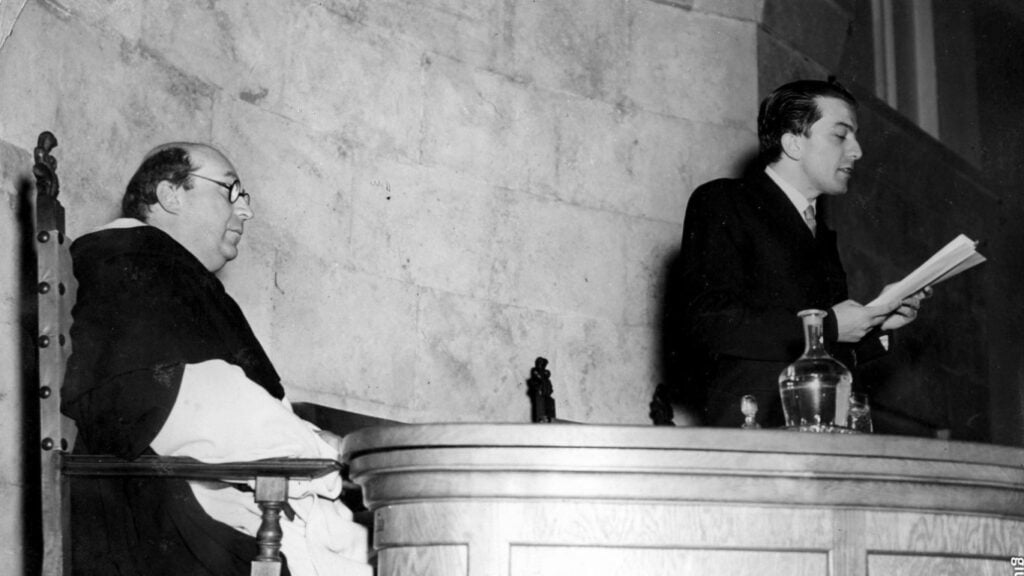
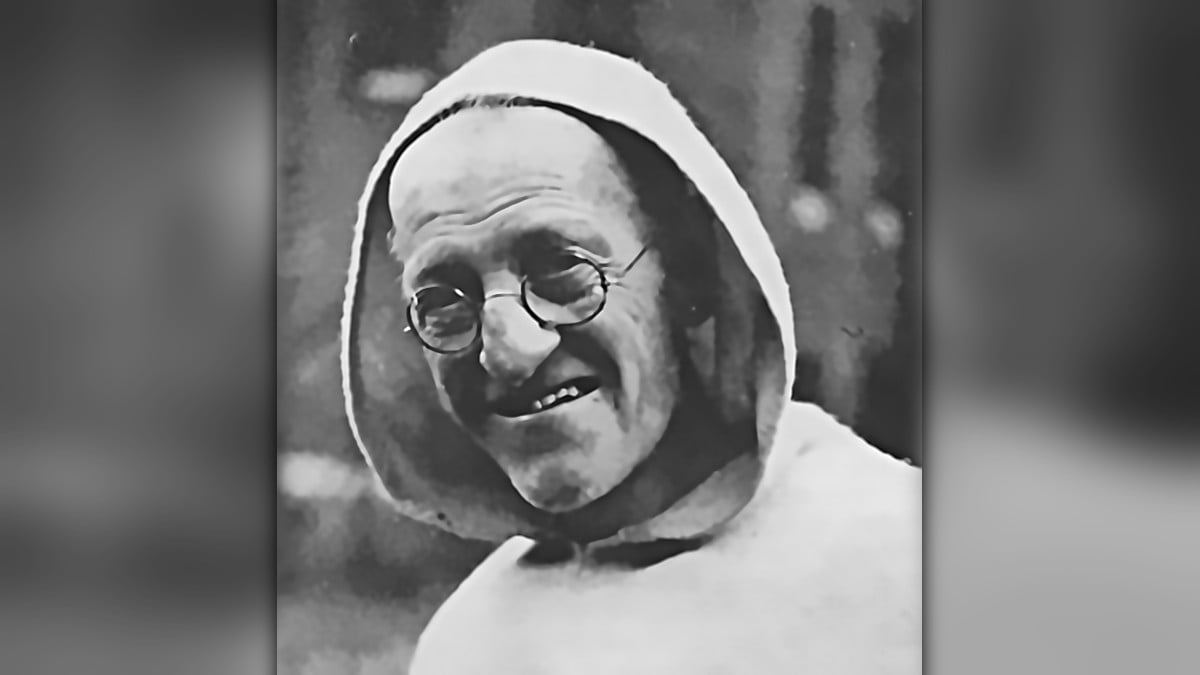
Fr. McNabb was a man, a Dominican, who kindly confronted Protestants, atheists, skeptics, communists, capitalists, all, with the unabashed truths of the Catholic faith. He was a man who was described as a 13th-century monk living in the 20th century, a man who proudly defended the Church’s social teachings against the world, and yet half of his image — what little is advertised of it — is tarnished as a proto-ecumenist.
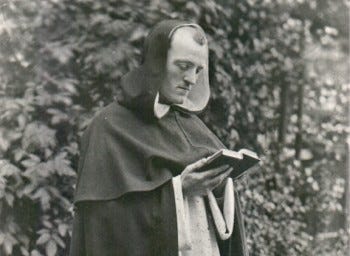
Fr. McNabb, who was the spiritual father and, in many way, thought leader of Belloc and Chesterton. He spoke on many of the same topics, and far more profoundly than they. He spoke on government, Distributism, social justice, apologetics, and offered cultural critiques. From the pulpit of many churches and chapels in England to the streets of its cities and towns, Fr. McNabb breathed fiery faith, political solutions, and Catholic Action long before Catholic Action was even popularly described as such. In the words of Chesterton himself:
I am nervous about writing here what I really think of Father Vincent McNabb, but I will say briefly and firmly that he is one of the few great men I have met in my life: that he is great in many ways — mentally and morally and mystically and practically and that next to nobody nowadays has ever heard of him. But there is a further development which has already made a considerable difference, and that also is an interesting criticism for our time and of the type of effort needed to affect it, for at least nobody who ever met or saw or heard Father McNabb has ever forgotten him.
The Dispatch
That remark was written during Father McNabb’s lifetime, in 1935. Even then, the “great” man was fast disappearing into the monochromatic mundanity which typified the decades preceding the Second Vatican Council.
Encountering McNabb’s writings
I discovered Fr. McNabb while delving into the economic principles of Distributism in the works of Belloc and Chesterton. Yet he was only mentioned briefly, similar to how a later figure, Fr. John Hugo, would only be mentioned alongside Dorothy Day as an advisor.
I read a collection of Fr. McNabb’s essays titled “The Church and the Land.” They were good, some rather dated due to them discussing issues of yesteryears, but some of his essays stuck with me. Several months after that, I discovered a biography of him in a vast library. I was seated at the desk, my eyes wandering over the covers hungrily, wishing to ingest all the words at once like a glutton on Christmas Eve, when I spied a blue book with huge letters: FATHER VINCENT MCNABB O.P. “The PORTRAIT OF A GREAT DOMINICAN,” by Ferdinand Valentine, O.P.
Here was Chesterton and Belloc’s advisor, friend, priest-peer! I had to read it. And sure enough, in the time I spent with it for those several weeks consuming it in the dark of a chapel, or in the dim light of my room, or outside in the wind on the wooden bench, I became enraptured. What opened my eyes about this man was not chiefly his political or social thoughts — those were wonderful, yes — but his spirituality was a balm for my soul. This man, in my estimation, in the time I’ve come to know him, admire him, and study him and his works, was an extrovert and an introvert. He was:
- An Intuitive and a Sensor.
- A Feeler and a Thinker.
- A Perceiver and a Judger.
Yes, Fr. McNabb, the day I first read the opening chapter, became my priest. After finishing the biography, I hunted the library shelves, one by one, devouring the books of devotion and theology written by his own hand. I was swept away.
Diving deeper
I began wondering why Fr. McNabb wasn’t popular except outside of niche Distributist political groups, and even within them, why he was largely unengaged with. I scoured the internet far and wide for any document, article, or forum with his name on it. The Traditionalists — the few who spoke of him at least — called him either a kook or a communist (which shocked me at first, but then I came to realize why, but more on that in later articles).
When Liberal Catholics, also known as Modernists, spoke of him, they displayed a sanitized version of him that made me ill at ease. The man whom I had read biographies about, as well as his own journal entries and spiritual writings, was described by Liberals and Modernists as a pioneer of post-conciliar ecumenism. At this, I felt tremulous with anger and fear. Had my new hero been a trojan horse to sneak Vatican II rockets behind my spiritual defenses? I could not stand the thought of it.
I soon started digging back into his books, his articles, and his defense of the Church against the modern world. Confusingly, even his Wikipedia article supported the claims of the Modernists. What was I to do except read more of his works? And that is what I did.
After much reading, research, and comparison of firsthand sources, I found that Fr. McNabb was largely forgotten, and what remained had been misappropriated, unjustly, by liturgical and theological crazies who couldn’t even accurately quote the man to support their own cause. I felt victorious — at least to myself — in knowing his honor, virtue, and orthodoxy were unimpeachable.
Support Integrity today by becoming a monthly donor!
Having won the battle on Wikipedia with only my editing powers receiving mortal wounds, I felt now that Fr. McNabb’s reputation and history were good, holy, and potent. I could now spread his teachings and writings to the world, which badly needs his insights. I was born too late to experience this great man in the flesh, but I had at least the science of history on my side.