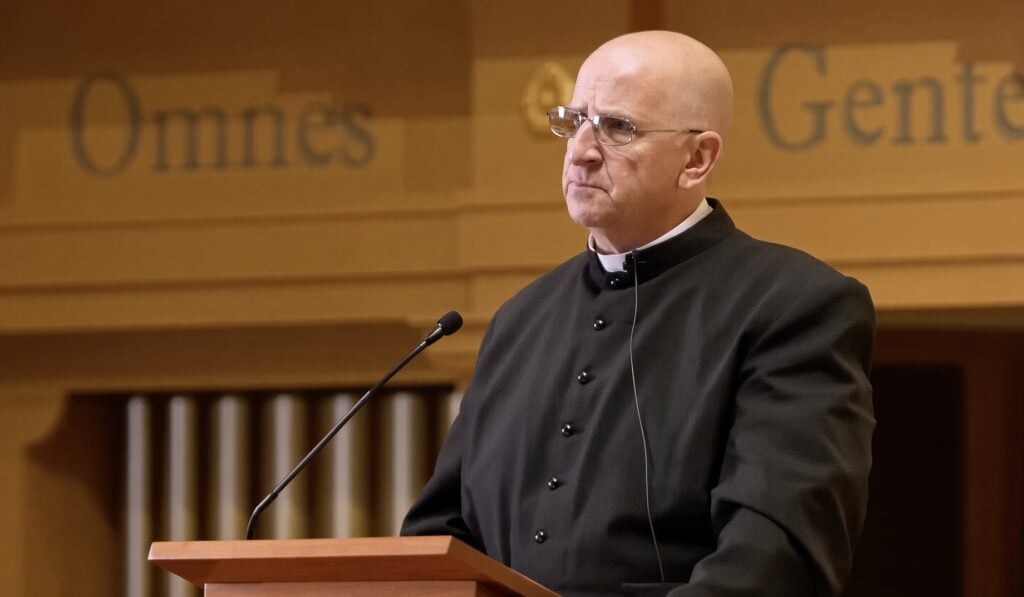
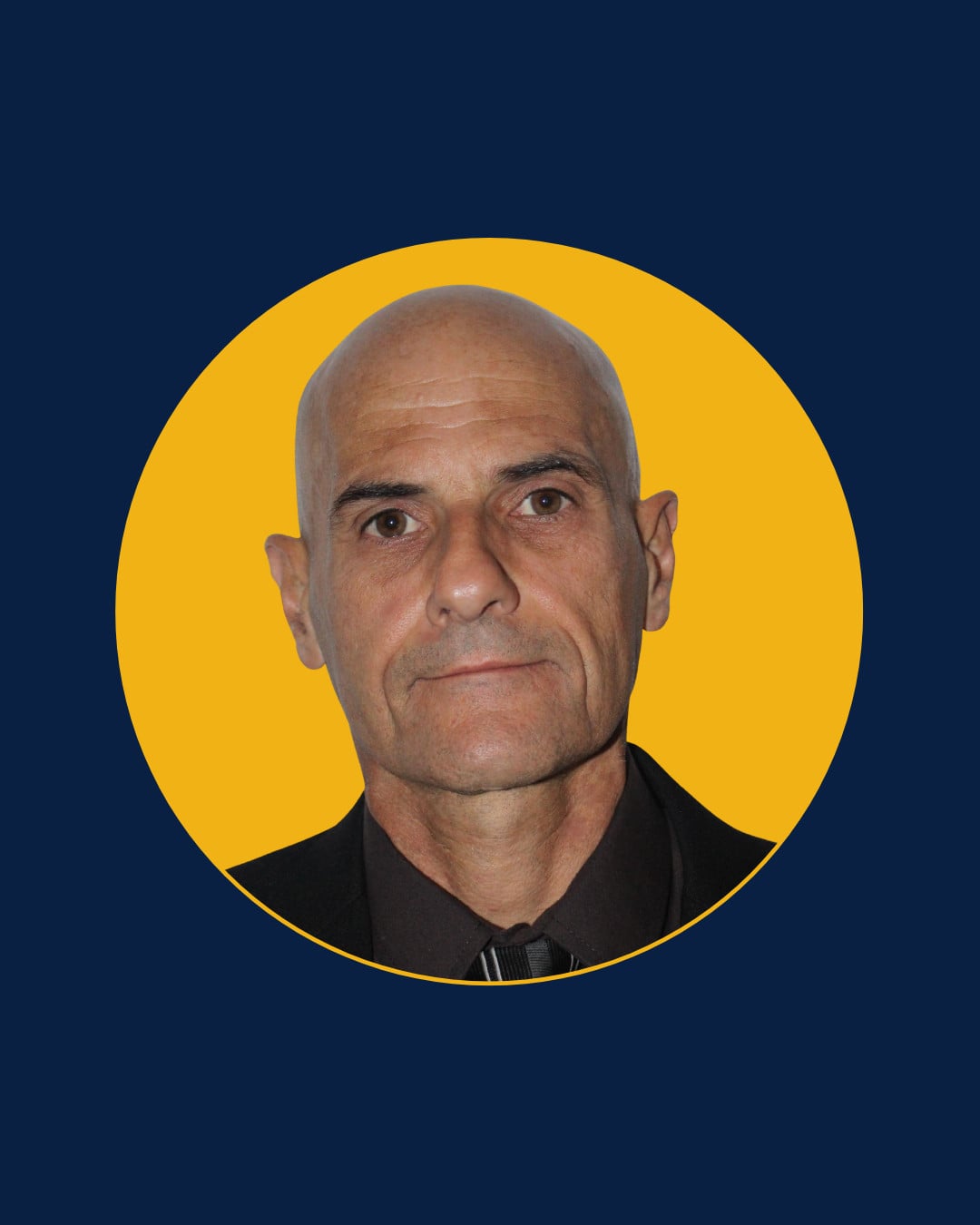

Leo XIV sure knows how to pick them. The latest scandal involves president of the Pontifical Academy for Life, Archbishop Renzo Pegoraro.
Using what seems to be some kind of convoluted lesser-of-two-evils argument, he suggested earlier this week that Catholics could morally support an “imperfect” law regulating assisted suicide if doing so prevented the adoption of a more permissive law.
Pegoraro made the remarks, which are incompatible with the perennial teaching of the Catholic Church, in an interview with Avvenire following the approval of assisted-suicide legislation by the regional council of Veneto.
On the one hand, Pegoraro, whom Leo XIV appointed president of the Pontifical Academy for Life in May 2025, expressed what seemed to be strong opposition to assisted suicide. He stated that “there is no right to assisted suicide,” while insisting that doctors must never cause death or cooperate in suicide and arguing that medicine must continue caring for patients when it can no longer cure them.
Strangely, he then began undermining his own position when he discussed possible national legislation.
“From the Catholic perspective,” he said, it would be necessary to consider whether a proposed measure constituted an “imperfect law” to which it would nevertheless be morally permissible to give assent, since Parliament might otherwise enact substantially more permissive legislation harmful to the dignity of the sick and the value of human life.
In Evangelium Vitae, an admittedly post-conciliar document, John Paul II taught that a law permitting euthanasia is intrinsically unjust and that it is never licit to support or vote for such a law. He did, however, identify a narrowly defined circumstance in which a legislator may support a more restrictive proposal when a permissive law is already in force or ready to be voted on and the proposal would limit its harmful effects.
The Dispatch
This “caveat,” though, is not permission to choose a supposedly “lesser evil” by positively establishing assisted suicide in law, but rather provides for limiting the damage of an unjust legal regime that cannot presently be completely abolished.
Pegoraro acknowledged that in Italy assisted suicide remains a criminal offenee and that it is not evident that Parliament needs to enact a national law. This therefore negates the provisions provided for in Evangelium Vitae as well as Pegoraro’s “lesser-of-two-evils” argument.
Join the Counter-Revolution: Donate to Integrity today!
Even more recently, despite its rapid descent into immorality, the Conciliar/Synodal Church’s Congregation for the Doctrine of the Faith stated in its 2020 letter Samaritanus Bonus that euthanasia is intrinsically evil and that, where euthanasia or assisted suicide is legalized, formal or immediate material cooperation must be excluded. Samaritanus Bonus further declared that there is “no right to suicide nor to euthanasia” and that Christians have a grave obligation not to collaborate formally in practices contrary to the law of God.
For Catholics who reject the post-conciliar institution, the matter remains clear even in the absence of the aforementioned documents. The traditional Catholic principle that a good end cannot justify an evil means long predates Vatican II.
In Romans 3:8, St. Paul condemned the maxim, “Let us do evil, that there may come good,” a principle that was affirmed by St. Thomas, who taught (I-II, Q. 79) that the evil of sin may not be done so that good may result.
In Casti Connubii (1930), Pope Pius XI emphasized the same doctrine when he declared (no. 61) that “no difficulty can arise that justifies the putting aside of the law of God which forbids all acts intrinsically evil.”
Traditionally, Catholic theology has repeatedly distinguished between doing evil and permitting or tolerating an evil that one cannot prevent.
With so many instances of the principle being plainly taught, both before and after Vatican II, Pegoraro’s confusing statements either mask the fact that he actually condones the practice of euthanasia or, alternatively, demonstrate that he is ill-qualified to steer the academy supposedly tasked with advancing the protection of life.