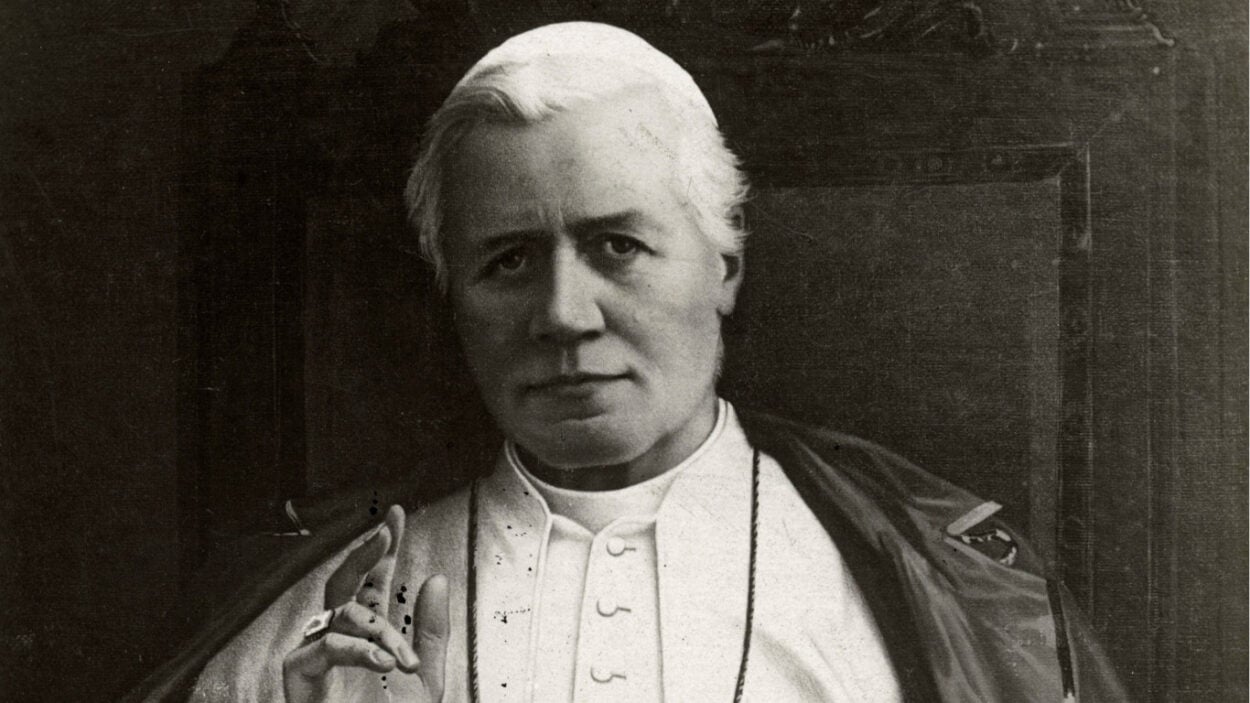
The pontificate of St. Pius X presented Catholics with two complementary commands: restore the Social Reign of Jesus Christ and resist every attempt to replace it with a humanitarian counterfeit.
These two duties were treated with particular force and beauty in Il Fermo Proposito (1905), his great instruction on Catholic Action, and Notre Charge Apostolique (1910), his condemnation of the errors of the Sillon (“the Furrow” or “The Path”).
His Holiness’ instructions and warnings in these two documents are as relevant for Catholics today as they were then, if not more so, for we find ourselves increasingly waging war not only against the world, but also against a “Church” that has become exactly that: a dogma-less humanitarian imposter
Read side by side, these seminal works form a coherent vision calling Catholics not to retreat before the dechristianization of society but to challenge it head on.
The saintly pope and enemy of Modernism called on Catholics to organize, teach, act, and struggle lawfully for the restoration of Christian civilization. At the same time, he placed upon us the responsibility to recognize the seductive alternative that was already appearing on the horizon then and which now seems to have come into demonic fullness: a universal fraternity detached from Catholic dogma, supernatural faith, and the authority of the Church, one built on the ruins of the Catholic social order.
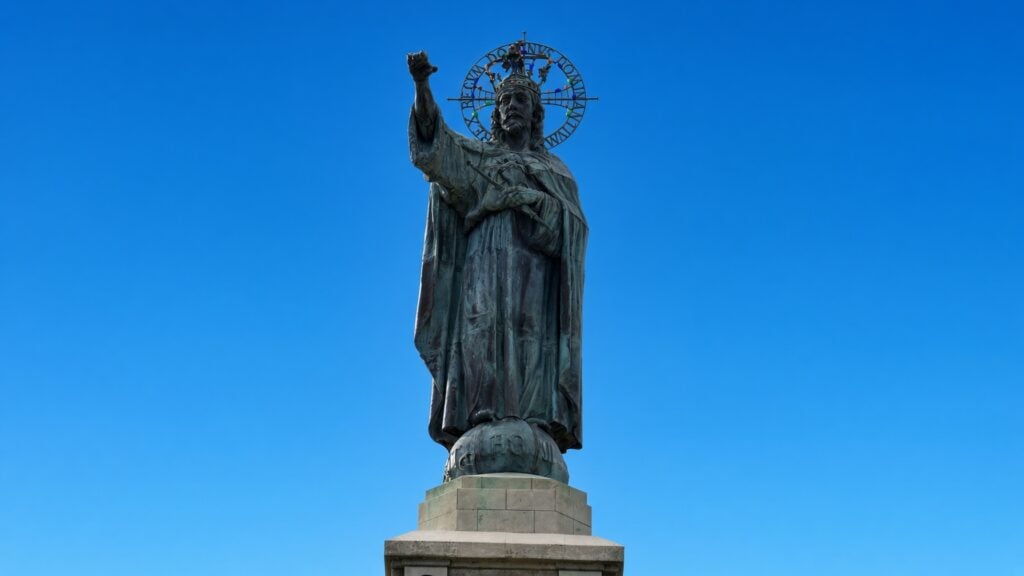
Instaurare omnia in Christo — “to restore all things in Christ” — was the starting point of St. Pius X’s pontifical program. His vision of Catholic Action was not conceived as a hobby for enthusiasts but a duty to fulfill.
The Pope previously known as Giuseppe Melchiorre Sarto called this immense field the work of restoring the Kingdom of God “in individuals, families, and society” through “the propagation of revealed truth,” Christian virtue, and works of mercy (Il Fermo Proposito, §3).
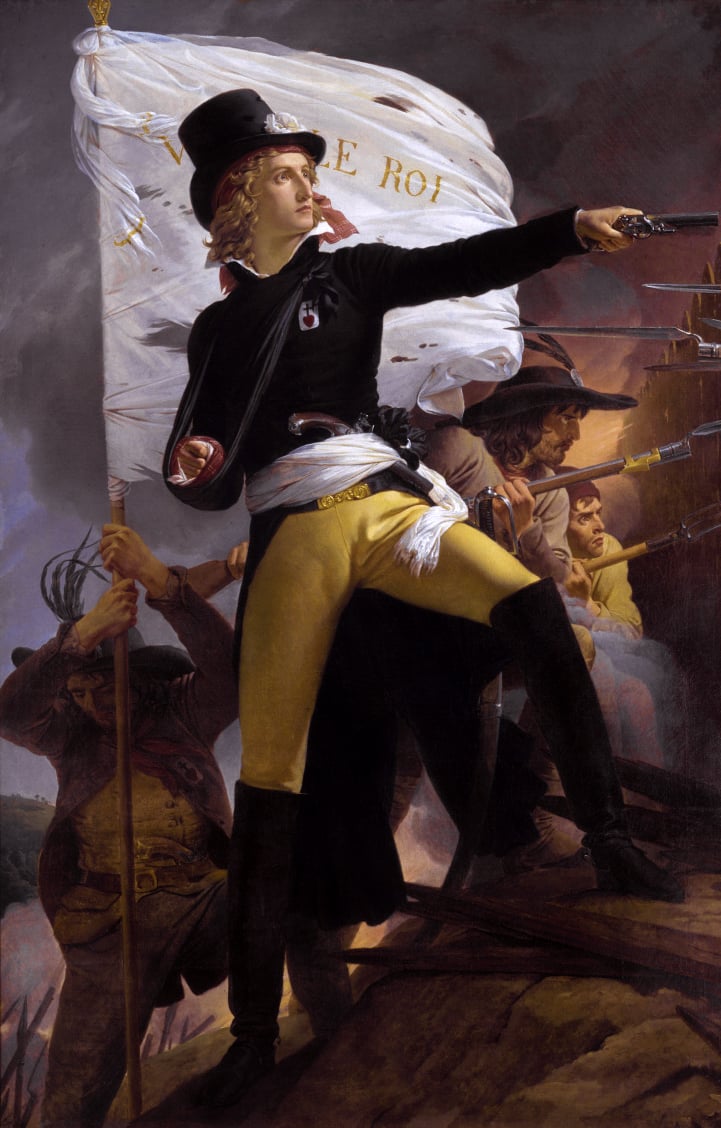
It was a call, in other words, to a Catholicism of battle, sweat, and blood that could not be confined to the sacristy, because Christ’s kingship could not be confined there.
Rejecting the notion of a civilization religiously neutral in its foundations, Pius X declared that “the civilization of the world is Christian” and that “the more completely Christian it is, the more true, more lasting and more productive of genuine fruit it is.”
“The further it draws away from the Christian ideal, the more seriously the social order is endangered,” he warned (§4).
The practical order
What does Catholic Action look like in practice Never one to fall victim to ambiguity, Pius X praised those “chosen bands of Catholics who aim to unite all their forces in combating anti-Christian civilization by every just and lawful means” (§7).
He called Catholics to construct a new order, saying, “they seek to restore Jesus Christ to the family, the school and society” (§7). This means an obligation to influence legislation, defend the rights of the Church, assist workers and the poor, form public opinion, and bring Catholic principles into social life.
While Catholic Action is definitively militant in character, it is not a call to violence or revolutionary agitation, but to the organized action of Catholics refusing to surrender society to anti-Christian principles, most notably Liberalism. The discerning Catholic reader would agree that this is clearly also the solution for our time if we want to conquer the apostate Church and fallen modern civilization. And not only for the political domain, but for the ecclesial sphere where Catholics must seek to tear down the false system imposed on them by the Conciliar/Synodal Church.
Pius X therefore called on Catholics to be “firm in faith, solidly instructed in religious matters, truly submissive to the Church” (§11) and to be “active, intelligent, disciplined and organized against all erroneous doctrine” (§12).
The Dispatch
Instead of soggy-brained post-conciliar “social justice” initiatives, real Catholic Action begins with supernatural formation in orthodoxy, proceeds to public action, and insists that one cannot restore Christ to society while compromising His truth. The latter reality excludes the post-conciliar wreck from this noble crusade.
St. Pius X blessed Christendom with another gift during his reign. Notre Charge Apostolique showed precisely why such uncompromising formation was necessary.
This letter was a response to the Sillon, a French social movement founded in 1894 by Marc Sangnier that aimed to reconcile Catholicism with socialism and the ideals of the French Revolution.
While Pius X acknowledged the generosity of the movement, which had attracted many Catholics to it, he recognized that it had been corrupted. At the very opening of his letter, he warned that its errors were presented in “dynamic language” that concealed “vague notions and ambiguous expressions” beneath “emotional and high-sounding words,” and explicitly placed the danger in the lineage of “the Revolution and Liberalism” (§1).
Join the Counter-Revolution: Click here to become a one-time or monthly donor!
The Sillon’s most damning mistake was that, while it started with good intentions, it ended up pursuing a false conception of fraternity in which Catholics, Protestants, and Jews could work toward the same aims by putting their religious differences aside.
Pius X would have none of this, writing that “Catholic doctrine tells us that the primary duty of charity does not lie in the toleration of false ideas, however sincere they may be,” nor in indifference toward religious error (§22). According to him, authentic fraternity required a higher ideal in which “all minds must be united in the knowledge of Truth, all wills united in morality, and all hearts in the love of God and His Son Jesus Christ” (§23).
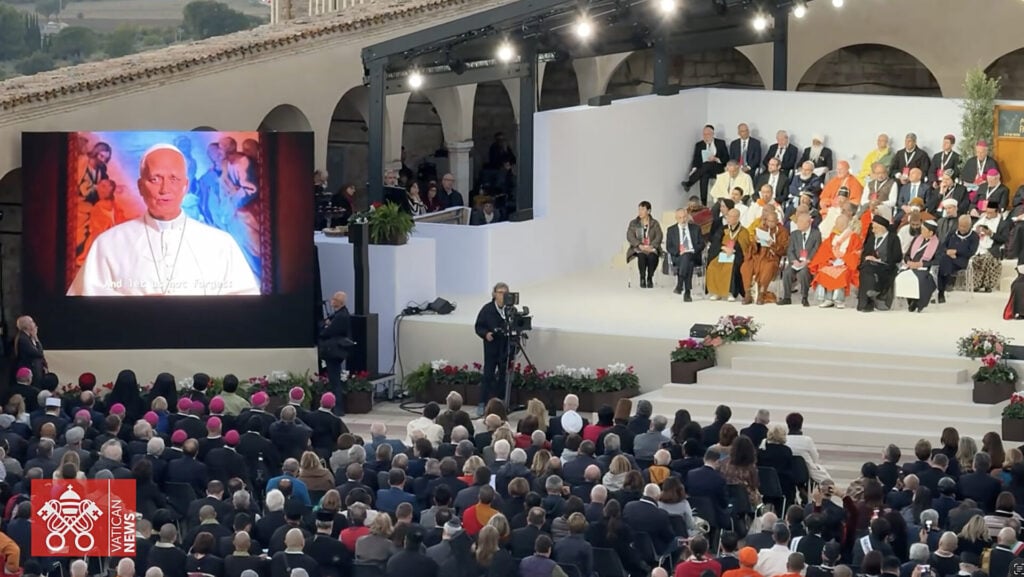
We thus encounter the same conflict that Catholicism has with the Synodal Church: the former insists on the unity of mankind in Christ and His truth, while the latter campaigns for the exact opposite. The post-conciliar church’s religion of neo-humanitarianism proposes unity by treating doctrinal differences as secondary to a supposedly higher human solidarity and “infinite dignity.”
St. Pius X lamented the Sillon’s increasing association of Catholics with “Protestants and free-thinkers” in a common social enterprise (§35), and one can be sure what he would have thought about the current status quo’s ecumenical scandals.
Of the Sillon leaders’ vision of a democratic fraternity in which men of different religions — or none — could labor together while retaining their respective convictions, Pius X asked a devastating question: what had become of the Catholic character of such an enterprise? The Sillon’s new construction, he wrote, would be “neither Catholic, nor Protestant, nor Jewish”; its religion would become something “more universal than the Catholic Church” (§35).
The letter reached a dramatic climax when the Pope sorrowfully asked, “What has become of the Catholicism of the Sillon?” (§40). His answer contains one of the most prophetic warnings of his pontificate: the Sillon had become “a miserable affluent of the great movement of apostasy being organized in every country for the establishment of a universal Church” (§40).
Applicable to the Synodal Church
While His Holiness was writing to the Sillon in the early 20th century, he might as well have been describing the current Synodal imposter in Rome when he characterized it as possessing “neither dogmas, nor hierarchy, neither discipline for the mind, nor curb for the passions” and appealing instead to “freedom and human dignity” (§40).
The antidote to the fraudulent universality of that time, and to the tyrants in the Vatican persecuting Catholics today, remains the same: Catholic Action.
Pius X rightly pointed out that despair, withdrawal, or accommodation was not the correct Catholic response when he wrote in Il Fermo Proposito that “this fact is no reason to lose courage” (§6).
The right response to the crisis is for Catholics to labor for the restoration of Christ’s rights over souls and society while refusing to exchange supernatural unity for sentimental fraternity. “To restore all things in Christ” does not mean some things in Christ.
No, Catholic Action means carrying Christ into the family, school, and society; defending His Church; proclaiming revealed truth; and resisting the opposing forces of Satan wherever they might be found: in the world or in the counterfeit church in Rome.