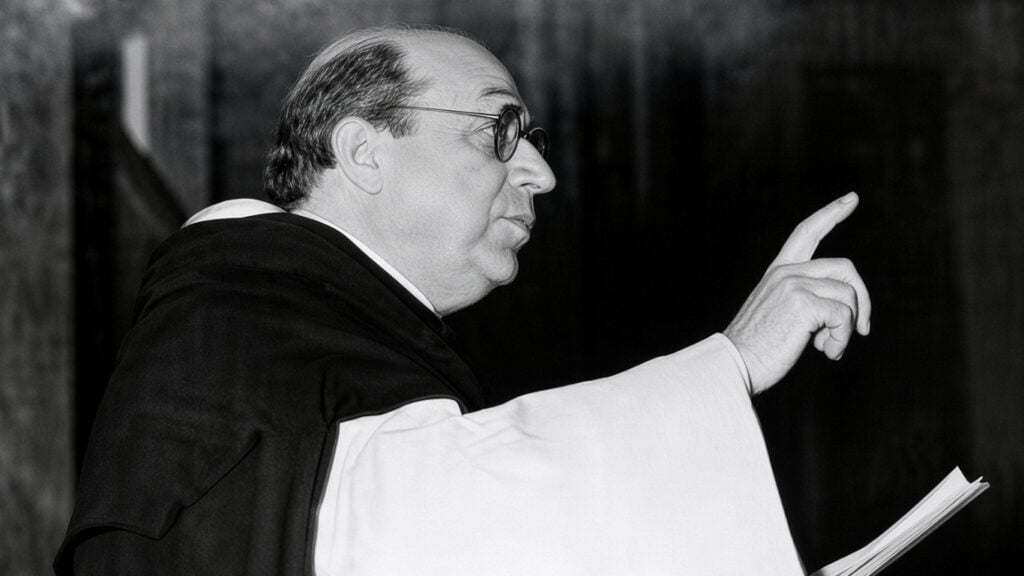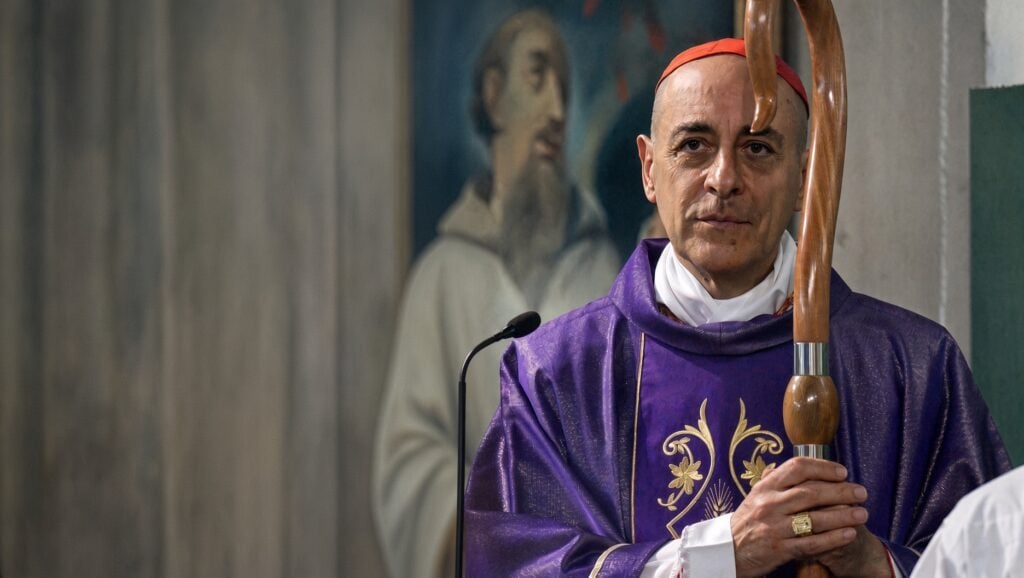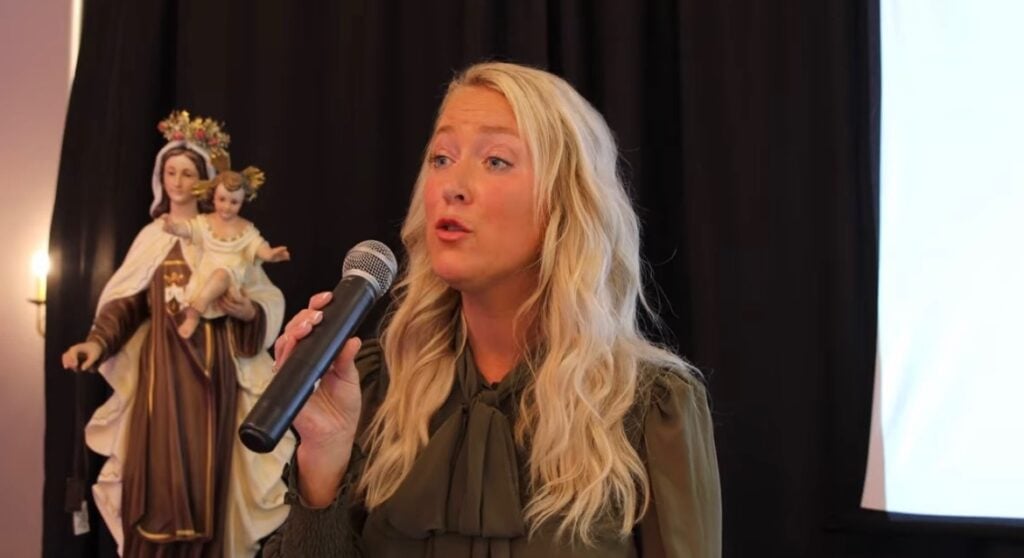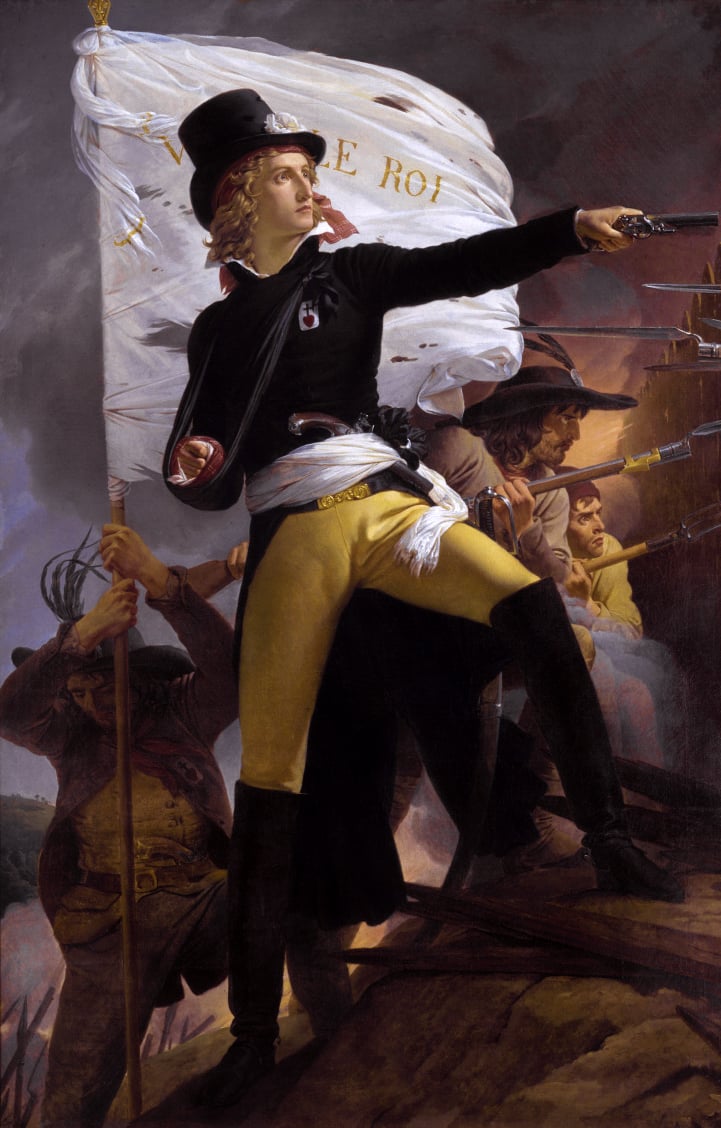

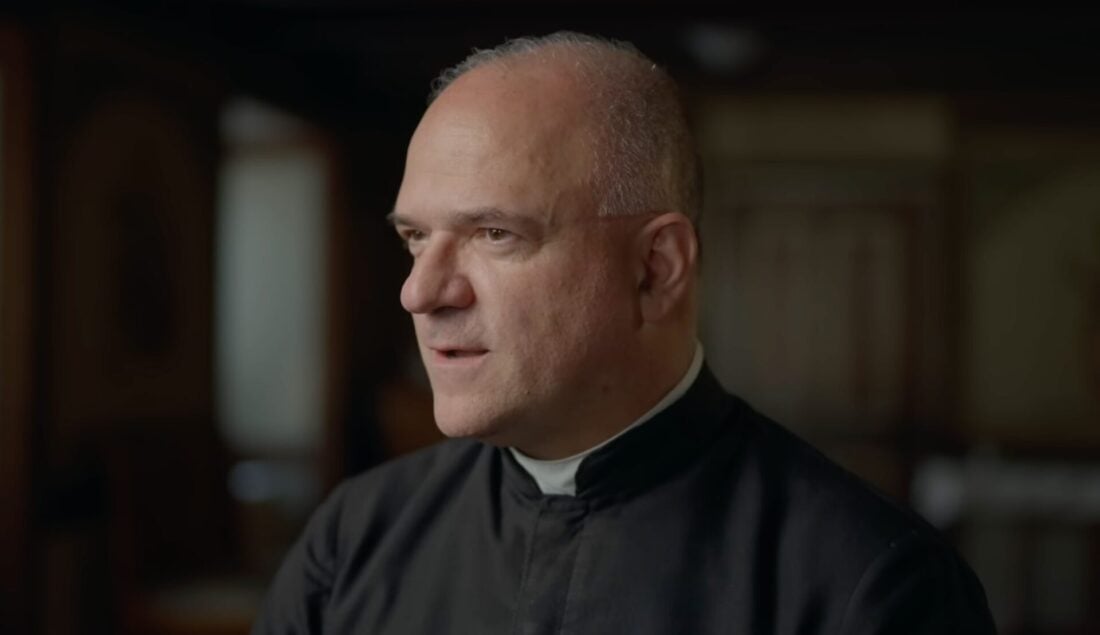
Sunday marked the release of the first installment of Traditio: For the Love of the Church, a new three-part documentary produced in collaboration with the Society of Saint Pius X (SSPX). It is being promoted as the largest and most ambitious film project in the Society’s history.
Filmed over a period of two years across multiple countries and continents, the project seeks to present the life, apostolic work, and priestly mission of the SSPX as it exists today: global, established, and increasingly confident.
Across more than four hours of film, Traditio promises viewers an extensive look into seminary formation, missionary activity, liturgical practice, and the worldwide expansion of the Society’s efforts.
The brainchild of “two young students” — the identities of whom oddly seem to not be public knowledge — the documentary was produced in conjunction with the SSPX’s General House. One of the students told an audience at the film’s premiere in May that they did not want it to engage in “theological polemics or polemics of church politics” but only to present the life and work of SSPX clergy.
A global apostolate
The scale of the production says something. This is no longer a movement presenting itself merely as an emergency response to a temporary crisis. The imagery being presented is one of permanence: seminaries, schools, missions, parishes, pilgrimages, families, and institutions built over decades. The message being sent is clear, whatever the canonical situation may be, the Society intends to demonstrate that it is a worldwide reality.
For decades, traditional Catholics have watched the post-conciliar landscape with growing concern: collapsing Mass attendance, shrinking seminaries, disappearing religious orders, doctrinal confusion, and liturgical experimentation that transformed Catholic life throughout much of the world.
Against this background, footage of packed churches, cassocks, thriving seminaries, and traditional liturgical life naturally carry rhetorical force. But beneath the cinematography and production quality lies several important issues the Society needs to address.
Resistance yes, but questions remain
The SSPX has staked out a position that appears increasingly difficult to explain coherently. On the one hand, Rome is recognized and its authority acknowledged, while on the other it is routinely ignored and frequently resisted.
The Society habitually refers to Leo as the “Holy Father” and seeks his approval (at least indirectly through Bishop Athanasius Schneider) for their upcoming consecrations all while criticizing and rejecting outright his and his predecessor’s encyclicals, disciplinary decisions, reforms, liturgical legislation, ecumenical programs, and pastoral directives.
Undoubtedly, such resistance is necessary in this time of apostasy as Modernism flows from the Vatican daily, but the question that naturally emerges is: is it fitting to ask for the imprimatur of a man who does not outwardly profess the Catholic faith? What, moreover, does “attachment” to the “successor of St. Peter” mean if practical resistance to him is permanent?
The Society has presented its position as a temporary necessity during extraordinary circumstances, but more than a half century of perpetual disobedience has become its own theological system, one that does not appear to align with what the popes of old taught on how Catholics ought to behave toward the Vicar of Christ.
In his famous 1864 document Quanta Cura, Pope Pius IX said he could not “pass over in silence the audacity of those who, not enduring sound doctrine, contend that … assent and obedience may be refused to those judgments and decrees of the Apostolic See … so only it does not touch the dogmata of faith and morals.”
In 1870, Pius declared that “all those who glory in the title of Catholic must not only be united to him in matters of faith and dogmatic truth, but also be submissive to him in matters of liturgy and discipline.”
If modern ecclesiastical authorities have genuinely promoted — as the SSPX correctly argues they have — harmful doctrines, dangerous pastoral innovations, “Protestantized” liturgical rites, “Modernist errors,” and ecumenical practices incompatible with Catholic tradition, then continuously insisting upon “profound attachment” to “the Holy Father” not only begins to appear contradictory but should compel the Society to question whether these men are legitimate Church authorities in the first place.
A shift in messaging
Even critics of the Society will generally acknowledge that its priests and faithful have spent decades preserving traditional liturgy, catechesis, sacramental life, religious formation, and Catholic education. All this the documentary highlights admirably. In doing so, it is in keeping with the Society’s “branding” campaign over the past 15 years to focus more on the beauty of Tradition and on what the Society offers the Church rather than primarily the condemnation of the errors coming from the Vatican.
But this leaves out the other half of the equation: the doctrinal reasons for the Society’s existence.
In 1976, Archbishop Lefebvre declared: “This Conciliar Church is a schismatic Church, because it breaks with the Catholic Church of all time. It has its new dogmas, its new priesthood, its new institutions, its new worship — already condemned by the Church in many official and definitive documents.” He also said “to whatever extent Pope, Bishops, priests, or faithful adhere to this new Church, they separate themselves from the Catholic Church.”
The Dispatch
Has Leo not proven that he fully adheres to these “new dogmas”? Has he not shown that he has “separated” himself from the Catholic Church and is now a part of the “Conciliar Church?”
Archbishop Lefebvre reiterated his views in his 1991 book Spiritual Journey. In it, he accused the “current Roman authorities, since John XXIII and Paul VI” of having “made themselves active collaborators of international Jewish Freemasonry and of world socialism.” He also stated that it is “a strict duty for every priest wanting to remain Catholic to separate himself from this Conciliar Church for as long as it does not rediscover the Tradition of the Church and of the Catholic Faith.”
One can’t help but notice that this sort of tough talk has been absent from the many public statements issued by the SSPX and their chief ally Bishop Schneider in recent months. The collective message being sent now is not that Leo is head of a schismatic church or a promoter of Jewish Freemasonry, but that the SSPX is only wanting to serve the Church by helping souls in need, and that Leo should be pastoral to them and treat them in the same way he does when he meets with Anglicans and others.
“If we come to be declared excommunicated and schismatic, this would not mean that we seek such a sanction or rejoice in it, for it would be objectively unjust,” Fr. Davide Pagliarani, the current SSPX Superior General, has said.
Compare that to what the SSPX superiors declared after the 1988 excommunications: “To be publicly associated with this sanction which is inflicted upon the six Catholic Bishops, Defenders of the Faith in its integrity and wholeness, would be for us a mark of honor and a sign of orthodoxy before the faithful. They have indeed a strict right to know that the priests who serve them are not in communion with a counterfeit church.”
While it is true that Archbishop Lefebvre attempted to avoid carrying out the consecrations against the wishes of John Paul II by seeking a deal with Cardinal Ratzinger in the 1980s, he admitted in 1991 that, “I think I can reply that I have gone further than I ought to have gone.”
This confession alone throws cold water on the arguments made by those who continue to insist the Society should exhaust diplomatic options with Rome and seek Leo’s approval for July 1, or some other arrangement.
No practical accord
Archbishop Lefebvre’s most mature thought on the matter was that recourse to the conciliar authorities was not needed. “Hence we should have no hesitation or fear, hesitation such as, ‘Why should we be going on our own? After all, why not join Rome, why not join the pope?’ Yes, if Rome and the pope were in line with Tradition, if they were carrying on the work of all the popes of the 19th and the first half of the 20th century, of course,” he said after the consecrations.
The Society’s leaders heeded that wisdom in the ensuing years. In 1991, Bishop Tissier — assisted by Bishops de Galarreta and Williamson — consecrated Fr. Licínio Rangel as the successor of Bishop Antonio de Castro Mayer for the Diocese of Campos, Brazil. There is no evidence that they asked the Vatican for permission to do so.
When the priests of Campos made an agreement with the Vatican in 2003, Bishop Fellay denounced the capitulation, stating that it was tantamount to putting Tradition in an “ecumenical zoo.” This was in keeping with Archbishop Lefebvre’s remark one year after the ’88 consecrations that to “re-enter this Conciliar Church in order, supposedly, to make it Catholic … is a complete illusion. It is not the subjects that make the superiors, but the superiors who make the subjects.”
At its 2006 General Chapter, the SSPX officially embraced the position that talks with the Vatican were for doctrinal reasons only. “The contacts made from time to time with the authorities in Rome have no other purpose than to help them embrace once again that Tradition which the Church cannot repudiate without losing her identity. The purpose is not just to benefit the Society, nor to arrive at some merely practical impossible agreement.”
That policy was done away with in the early 2010s by Bishop Fellay whilst he was Superior General. He said Rome had sufficiently changed its perspective toward the Society and that a new posture was needed. The dramatic shift caused intense internal debates that have lasted to the present day. Not only did Bishop de Galarreta but Bishops Williamson and Tissier express opposition, both privately and publicly.
“This project of ‘officialization’ of the SSPX leaves me indifferent,” Tissier said during an interview in 2012. “This status that is proposed to us, of a personal prelature, analogous to that of Opus Dei, is a status for a state of peace. But we are currently in a state of war in the Church. It would be a contradiction to wish to ‘regularize the war.’ … the irregularity is not ours. It is that of Rome.”
On New Year’s Day in 2015, Tissier pushed back again, boldly stating in a sermon that “bad friends” were seeking the “normalization” of the SSPX with the “Conciliar Church.”
The SSPX can be a leader for the Counter-Revolution
Traditio deserves to be praised for highlighting the Society’s many admirable priests. Their tireless efforts to bring the Gospel to all corners of the earth while the Novus Ordo hierarchy refuses to do so should be applauded.
But something more is needed right now. For decades, the men who have worn the white papal vestments have waged war on Catholic doctrine and liturgy. They have held prayer meetings with heretics and schismatics. They have brought pagan idols into the Vatican, destroyed religious life, installed unworthy men into positions of power, and have partnered with the global Deep State.
These same “Vicars of Christ” proudly declare that they are “one” with Anglicans, Lutherans, and Orthodox. They teach that Jews don’t need to convert to the Catholic faith in order to be saved. They promote the “infinite dignity” of man and support “healthy pluralism” in the civil sphere.
What this moment calls for is a full-on, public denunciation of these men and the false religion they are spreading in the name of Jesus Christ. The SSPX’s leaders should recognize that the Vatican is not interested in their concerns with the Second Vatican Council. They should not make future attempts at a practical accord. Instead, they should “shake the dust off” their feet (Mt. 10:14) and, following in the footsteps of Archbishop Lefebvre, denounce Leo as the head of the Conciliar Church and accuse him of being in schism with the great popes of the past. They should also declare that it is he — not they — who is “canonically irregular” with the Catholic Church, while stating that it would be an honor to be “excommunicated” by men like him who do not preach the Gospel.
Time will surely tell whether the Society will embrace its roots, take up this important mission, and become what it should be for the Counter-Revolutionary movement. We can only pray that it will do so sooner rather than later, and that it will extend an olive branch to other Traditionalists who have been fighting for the faith since the Modernist coup at the Second Vatican Council.