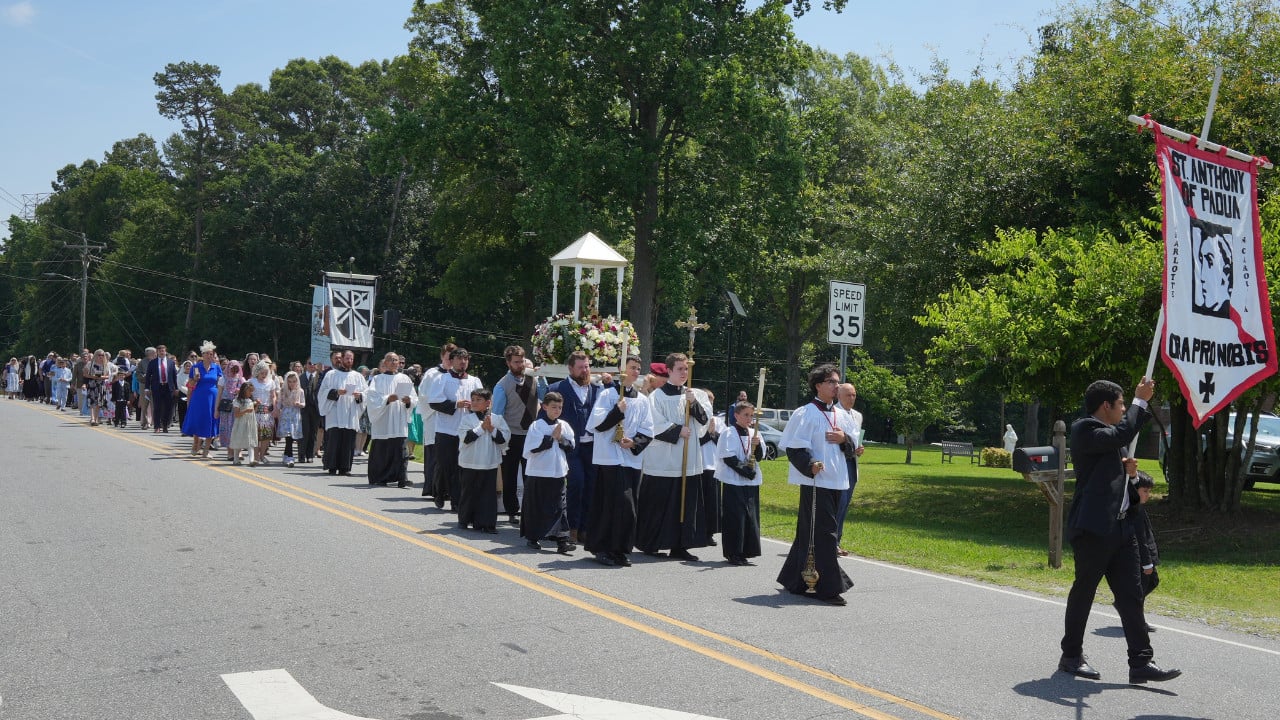
Just days after the Vatican declared the Society of St. Pius X (SSPX) to be in schism, the Society’s largest congregation in North Carolina completed one of the most significant milestones in its history: the purchase of more than 26 acres of land near the city of Charlotte for what is envisioned as a major new complex.
For St. Anthony’s Chapel in Mount Holly, the timing was coincidental rather than calculated. Project manager Jim DePiante, who has been involved with the SSPX in the Charlotte area since the early 1980s, and whose parents helped establish what would become St. Anthony’s, had just returned from the consecrations in Écône in time to finalize the land purchase.
“The timing was inadvertent,” DePiante told Integrity Magazine, noting that the closing date had been set before the consecrations were announced.
Nevertheless, he believes the convergence of the two events has taken on a providential significance.
“The message is clear, and it is one of tremendous hope,” DePiante said. “We have new bishops, which will ensure that we will have new priests. And we have a new property on which we will build a new residence in which those priests will live and a new church in which they will offer us the sacraments. We are determined, and we are undeterred.”
The newly acquired property in Iron Station, located approximately ten minutes north of the existing chapel, is intended to become a permanent Catholic campus featuring a large church, classrooms, residences for priests and teaching sisters, a cemetery, and a school. The first phase consists of a multipurpose building containing a larger chapel, classrooms, offices, and meeting facilities before construction begins on a permanent church capable of seating approximately 600 worshippers.
The project comes at one of the most consequential moments in the Society’s history.
Enjoying Integrity? Click Here To Donate Today!
Following the consecration of four bishops without papal mandate on July 1, Leo XIV declared the act schismatic and announced excommunications on the newly consecrated bishops, as well as SSPX clergy and laity who “formally adhere” to the Society. The SSPX has since initiated a canonical appeal seeking reconsideration of the decree, which some say is dubious.
The controversy marks the most serious rupture between Rome and the Society since Archbishop Marcel Lefebvre consecrated four bishops without papal approval in 1988.
While Pope Benedict XVI lifted those earlier excommunications in 2009 in an effort to foster reconciliation, the Society was never granted full regularization. More recently, Francis extended limited faculties to SSPX priests for confessions and marriages, even while broader canonical questions remained unresolved.
For DePiante, however, the present crisis is viewed within a much longer historical perspective.
“We have work to do; it is God’s work, and we will weather this crisis just like we weathered 1988 and just like we weathered the storm at Écône,” he said. “One hundred years from now, there will be millions who will have found the Mass, the sacraments and the Faith through the priests who will have come to reside at Saint Anthony’s at Iron Station.”
The Charlotte expansion also cannot be separated from another controversy unfolding closer to home.
Since the publication of Traditionis Custodes in 2021, restrictions on the Traditional Latin Mass have steadily intensified throughout the Catholic world. In the Diocese of Charlotte, Bishop Michael Martin’s decision to suppress the remaining parish-based Traditional Latin Masses and consolidate them into a single chapel in Mooresville provoked widespread criticism among traditional Catholics.
Many argued that the move effectively marginalized the traditional faithful by relocating them to a chapel that offers only Mass, without the broader sacramental and parish life previously available in diocesan churches.
DePiante believes those developments have directly affected St. Anthony’s.
The Dispatch
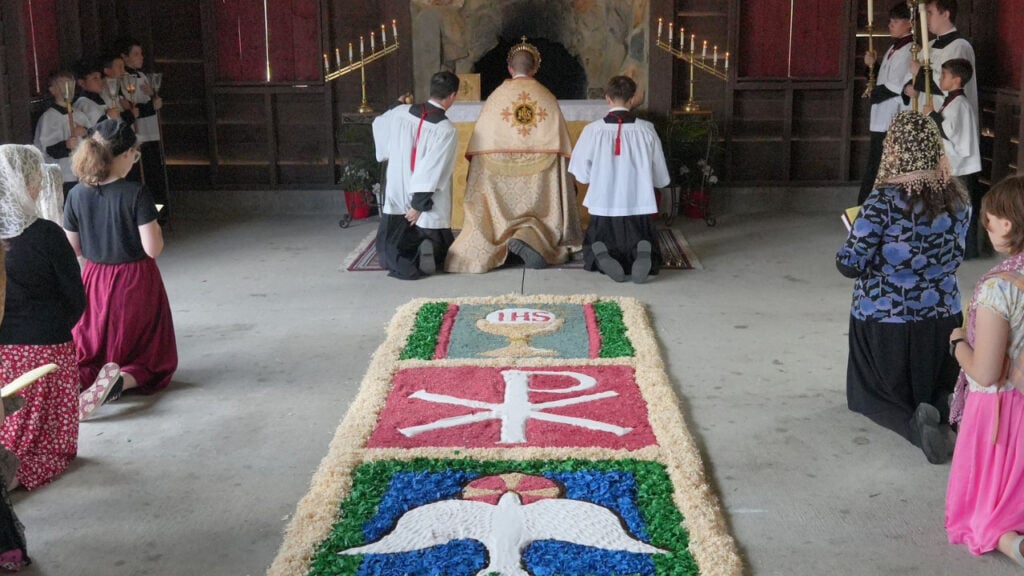
“We have seen steady growth over the years,” he said. “The rate of growth picked up during the COVID lockdowns, when Saint Anthony’s kept its doors open while diocesan parishes closed. We saw another jump after Traditionis Custodes, and another increase after the diocese ended the Traditional Latin Mass in all diocesan churches.”
The congregation also reports a sharp increase in online inquiries and newsletter subscriptions in recent months. Attendance figures reflect that growth. A chapel that once served approximately 150 faithful now accommodates roughly 500 laity attending two overflowing Sunday Masses.
Asked whether diocesan restrictions have driven Catholics toward the SSPX, DePiante answered unequivocally.
“It is certainly happening in our diocese,” he said. “Many have just given up hope … and some few have come to us, as refugees, looking for a home.”
He added that the new property is intended to accommodate what he expects will be continued growth.
“We have taken on the enormous burden of buying land and building new to accommodate the many spiritual refugees who will come to us looking for a home. We cannot and will not turn them away.”
The long-term vision extends well beyond constructing a larger church.
According to DePiante, the Iron Station property is intended to become a complete Catholic center offering traditional catechesis, support for homeschooling families, spiritual fellowship, a school, convent, priests’ residence and cemetery.
More significantly, he hopes the complex will eventually become an SSPX priory serving the entire Carolinas region.
“We pray that God will provide us with priests to fill that priory and thus be positioned to travel throughout the Carolinas bringing to the faithful the fullness of Catholic life,” he said.
He also envisions St. Anthony’s becoming a missionary center from which priests will travel across North and South Carolina administering the traditional sacraments.
Despite renewed tensions with Rome, DePiante rejects any characterization of the community as rebellious.
“There is nothing rebellious in us,” he said. “We simply want to live Catholic lives as Catholics have always done, rejecting the novelties of the post-Vatican II era.”
Rather than defining themselves by opposition, he said, members see themselves as preserving what generations of Catholics handed down: the traditional Mass, the sacraments, devotion to the Blessed Virgin Mary and the saints, and the continuity of Catholic life.
“We are filled with supernatural hope,” he commented. “We rejoice in what the future holds for us, for our children, and for our children’s children.”
Read More: Archbishop Viganò endorses SSPX’s canonical appeal: What happens next?
Whether viewed as a symbol of perseverance or of widening separation from Rome, the Iron Station project represents far more than another church building. It stands at the intersection of two defining developments shaping traditional Catholicism today: the SSPX’s renewed canonical conflict with the Holy See and the increasingly restrictive treatment of the Traditional Latin Mass within diocesan life.
For supporters of the Society, those developments have only strengthened their resolve. As construction planning begins in Iron Station, St. Anthony’s is proceeding on the assumption that the future of traditional Catholic life in the Carolinas will require not only new churches, but enduring institutions capable of serving generations yet to come.