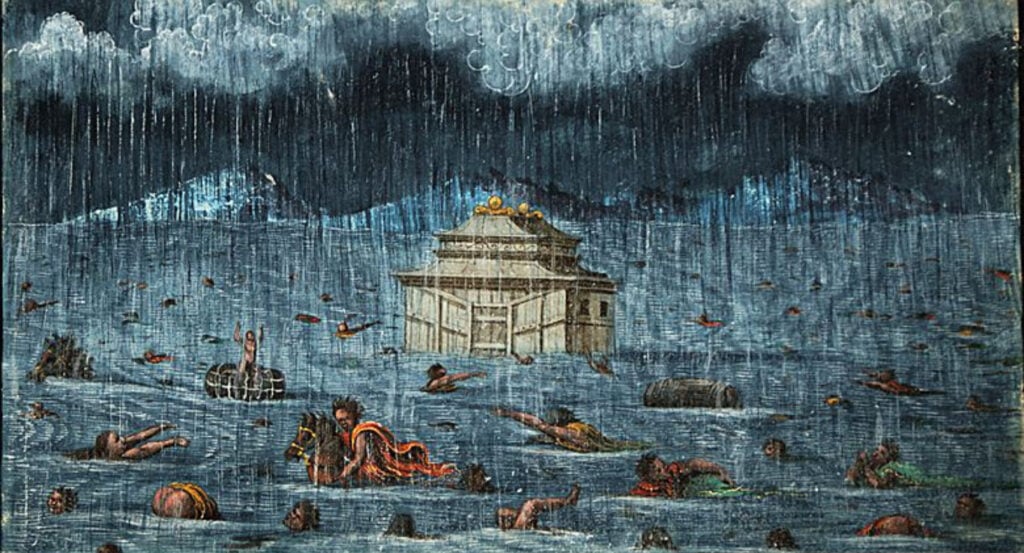

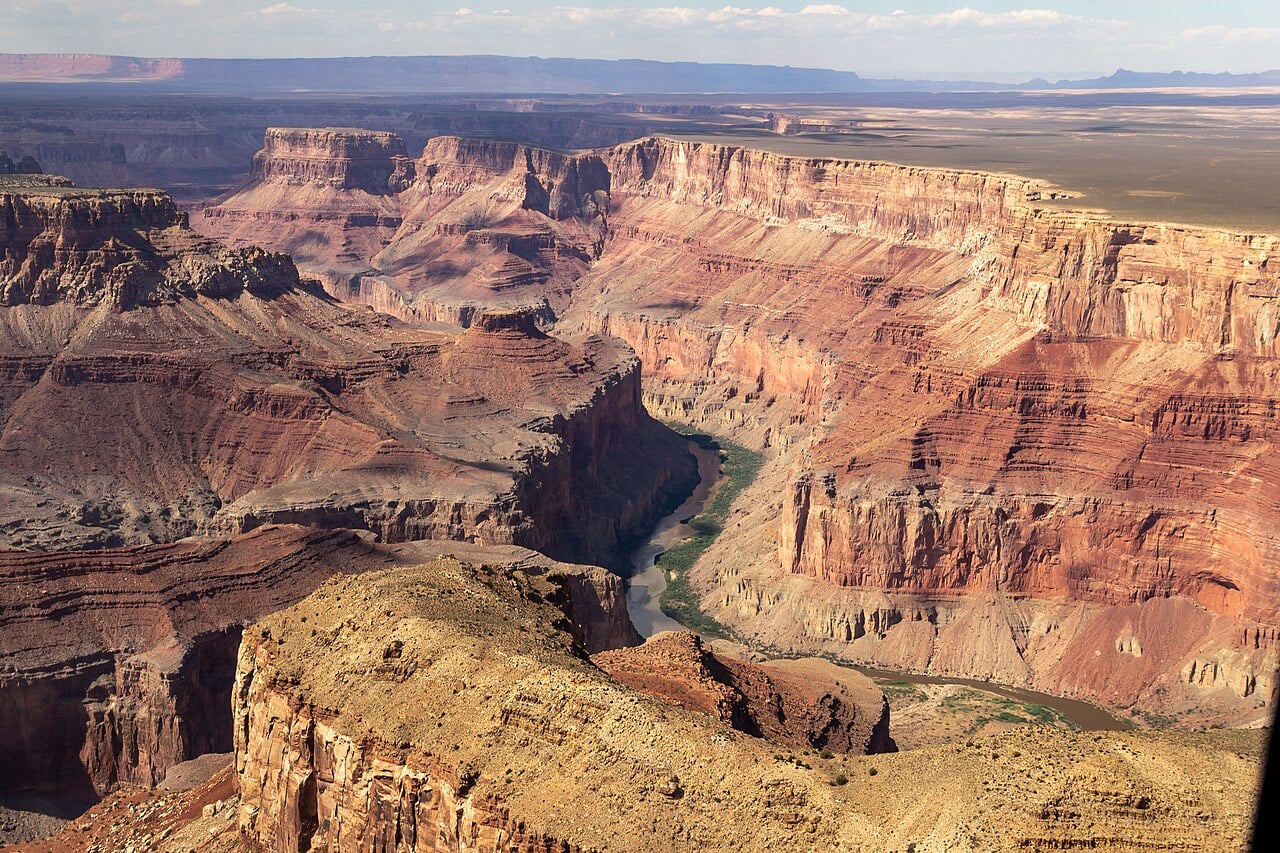
When one looks at various exposures of rock — the technical term being outcrops — they will notice that it has a layered appearance. There are three categories of rocks, all of which provide evidence of a great flood.
The first is igneous, that is, fiery rock. This category of rocks consists of rocks that were once in a molten state but are now solid. The molten material underground is termed magma, but if it breaks out to the surface, it’s termed lava.
Lava, depending on its composition and temperature, can come out as thick, tarry, taffy-like blobs. At the other extreme, it can be so runny that it can race downhill like an automobile. As lava cools, it freezes solid, but that freezing can be in stages because it is analogous to vegetable beef stew: it has a variety of minerals, and some of it freezes (crystallizes) earlier than others, just like carrots cook more quickly than beef cubes.
Lava, if it is full of gas, can fountain or even explode, and produces assorted solid fragments called tephra that fall out of the air. So, igneous rock outcrops will reveal a solid, unlayered mass of material if what is exposed is congealed (frozen) magma or hot lava.
The second category of rocks is metamorphic, that is, transformed rocks. These are produced by heat and/or pressure applied to igneous rocks or sedimentary rocks, but not to the point of fully melting.
Metamorphic rocks have a squeezed appearance, often wrinkly and deformed, and with minerals unique to metamorphism. They are also common, but again they are not the majority of surface rocks on the Earth. A very common example of a metamorphic rock is marble.
Many of the precious metal deposits all over the American West and throughout Mexico are the result of metamorphism produce by hot fluids escaping from subterranean magma. We will discuss this more in a future essay on what the actual flood did to the Earth’s geology.
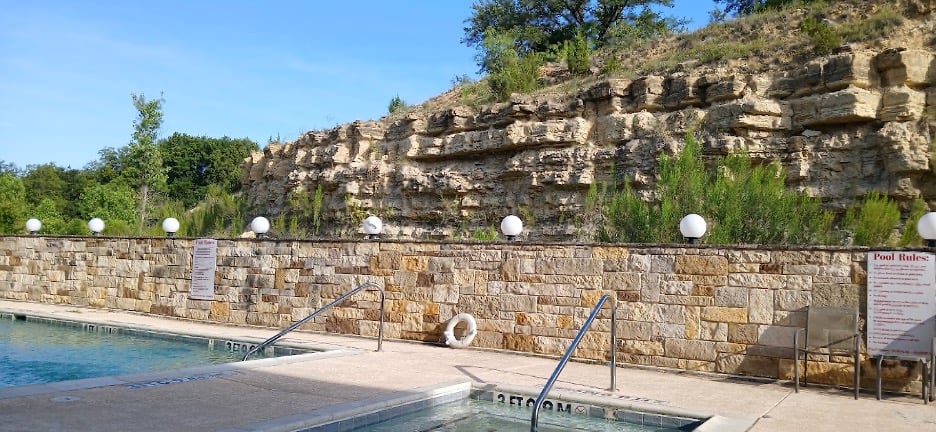
The third and by far the most common category of surface rocks, the category directly pertinent to this essay, is sedimentary rocks — sediment, i.e., fragments.
The Dispatch
These rocks are mostly water-deposited particles of mud (shale), sand (sandstone), gravel (conglomerate and breccia), or calcium carbonate (limestone) — a very small fraction is deposited by wind. The particles in each of these are cemented together mostly by calcium carbonate, silica, or iron hydroxide.
Watch: Catholics Should Reject Evolution And Embrace Creationism End The Global Flood
Among the sedimentary rocks are also deposits of salt (sodium chloride), gypsum (calcium sulfate, the stuff used for plaster and drywall), and coal (majorly transformed plant material). It is in sedimentary rocks that fossils occur (being extremely rare in the other two categories).
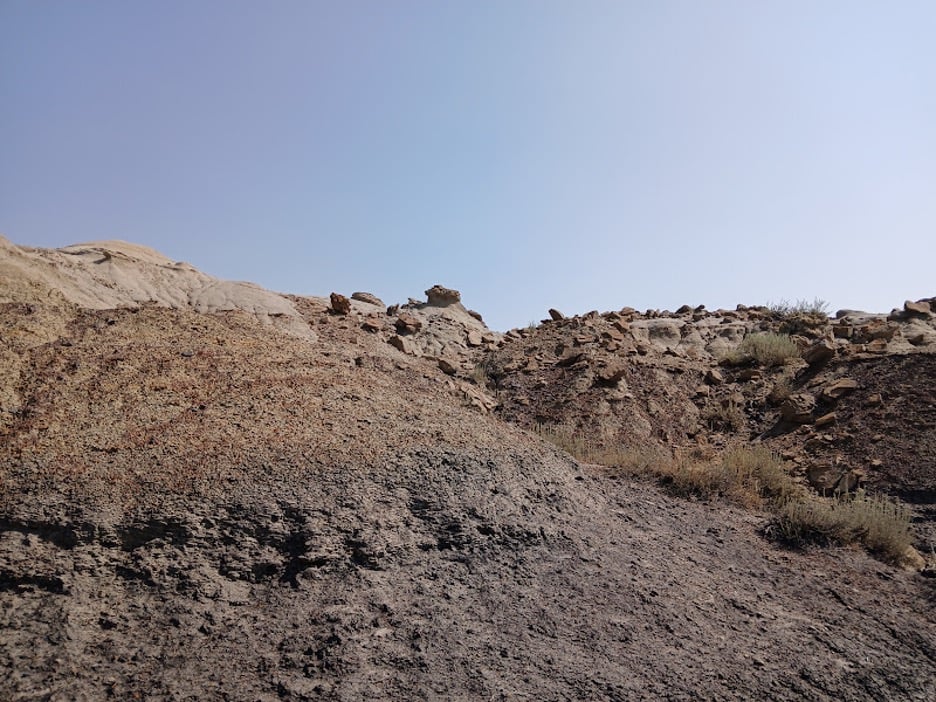
Having traveled to about thirty states, and having lived in a Midwestern state, the author can attest to the ubiquitousness of sedimentary rocks. They occur with a dreary monotony compared to the more exciting igneous or metamorphic ones. Sedimentary rocks are common to see while driving Interstate 70 Westward from Baltimore, while driving through Maryland’s Northern suburbs, and throughout Pennsylvania, Ohio, Indiana, Missouri, Kansas, and into Eastern Colorado. Similar rock formations can be seen in Asia, Africa, and Australia, and in other directions across North America. To ask a question that will be answered in an upcoming article that is pertinent to this current article (see here and here for previous essays): Where did all that dirt come from?
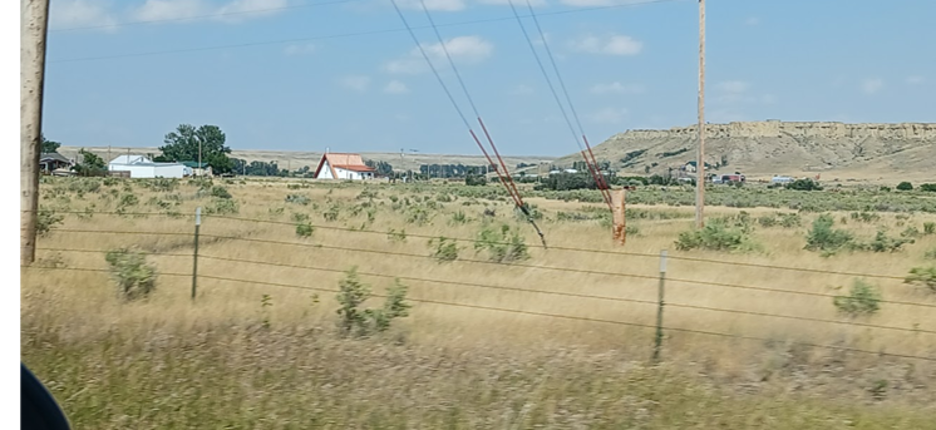
What is peculiar about sedimentary rocks is they are persistently horizontal; they often look like a vast, layered sheet cake. There are exceptions in Pennsylvania’s and Colorado’s mountains, of course, where the layers are deformed and faulted/cracked, but this occurs only in those areas, where the land surface is as disrupted-looking as the underlying rock layers. Otherwise, sedimentary rocks are horizontal.
At the same time, when looking at most sedimentary rock landscape, there are very few areas that have truly horizontal surface terrain, and most landscapes are undulating with stream and river valleys scattered about.
Today’s watercourses reveal an underwater continental shelf extending from the shore. However, this shelf is very narrow compared to the continent that it is an extension of. This raises another question: how did such a vast, enormous covering of horizontal sediment layers in North America (and on other continents) come to be, especially with very little evidence within the layers of the abundant watercourses on the surface of the present-day continents?
Obviously, the process(es) that emplaced North America’s vast covering of mostly horizontal sediment is not one that we witness today. It appears that something much bigger had occurred.