
Even though modern man speaks incessantly of his obsession with freedom, a quick gauge of the current moral implosion — both in the post-conciliar Church and in secular society — reveals that it is nothing more or less than a sinful pursuit of unbridled licentiousness.
Daily Catholics are bombarded with campaigns that call for ever-increasing freedom of conscience, freedom of religion, freedom of expression, freedom of sexuality, freedom to define oneself, and even freedom to determine the circumstances of one’s own death, as if freedom in itself were man’s end and purpose.
Both our political and ecclesiastical vocabularies create the erroneous idea that liberty means an ever-expanding sphere in which the individual chooses for himself.
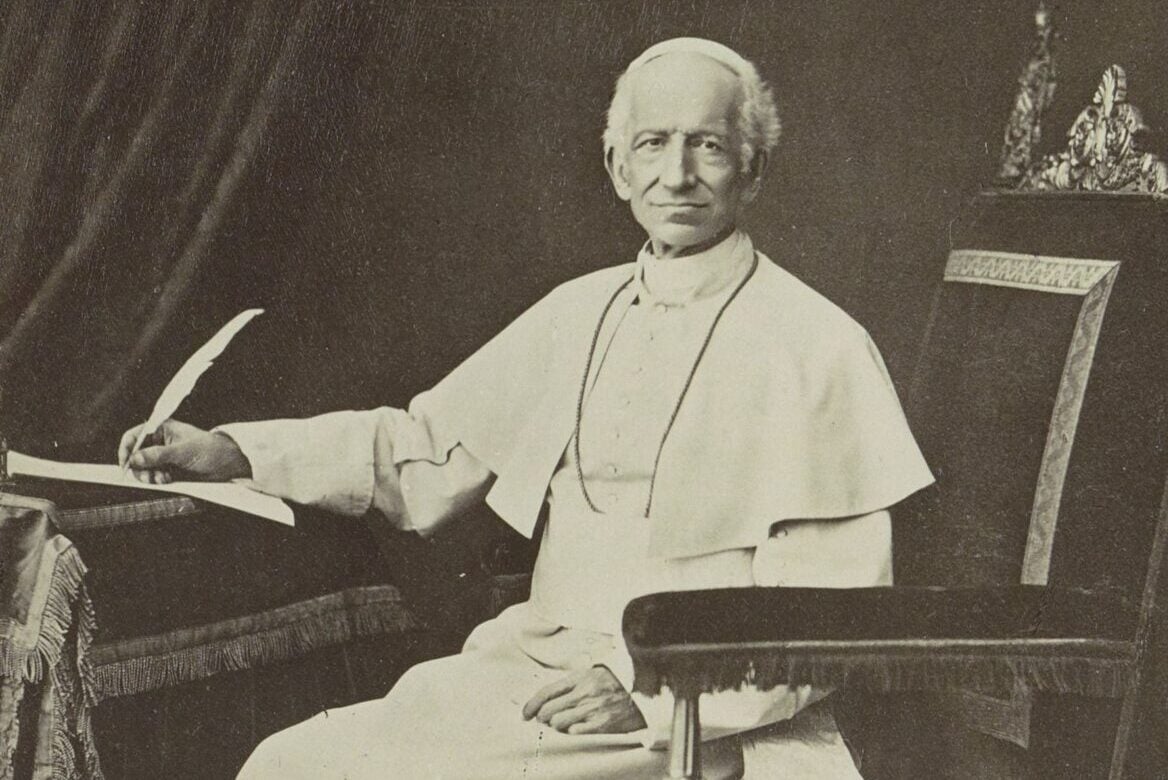
This could, of course, not be further from Catholic truth, and one would be hard-pressed to find a more eloquent and richer treatment of the subject than in Pope Leo XIII’s Libertas Praestantissimum (1888).
In this encyclical, liberty is recognized as a magnificent gift and described as “the highest of natural endowments,” giving man the dignity of being “in the hand of his counsel” [LP 1].
By no means does this magnificent gift imply some kind of free-for-all, however, as Leo XIII is quick to point out that precisely because man is free, his choices have an eternal seriousness, because “on the use that is made of liberty the highest good and the greatest evil alike depend” [LP 1].
For our age, therefore, the first lesson of Libertas is that freedom is not the power to make good and evil for ourselves, but the power to choose the good.
Difference between liberty and license
Because freedom depends upon truth, Leo explains that the will does not operate in a vacuum. The intellect first needs to apprehend something as good before the will chooses it. Consequently, “the end, or object, both of the rational will and of its liberty is that good only which is in conformity with reason” [LP 5].
The good pope goes on to explain, however, that because our intellect and will are fallen and imperfect, we can mistake an apparent good for a real one. Sin is therefore a corruption of liberty.
When man acts according to right reason, Leo says, he acts freely; but when he sins, he acts “in opposition to reason” and becomes the victim of error because “Whosoever committeth sin is the slave of sin” [LP 6].
This, of course, overturns the blue-haired “woke” folk’s understanding of liberty. A man is not most free because nothing prevents him from choosing evil, but he is most free when reason, virtue, law, and grace enable him readily to choose what is truly good. Hence his ultimate and non-negotiable need for the Catholic Church and its faith if he wishes to experience true liberty.
“Nothing more foolish can be uttered or conceived,” Leo XIII writes, than the claim that because man is naturally free, he must therefore be exempt from law [LP 7].
More bad news for the God-hating progressives both in the state and in the postconciliar Church is that behind every legitimate human law stands the natural law, behind the natural law stands the eternal law, and behind the eternal law stands God Himself, who is “the Creator and Ruler of all the world” [LP 8].
Neither majorities nor governments can manufacture morality in isolation from conformity to God’s law. Because civil society did not create human nature, it cannot create from nothing the distinction between good and evil. Human laws are just insofar as they apply the higher law to the common good.
Thus, Leo XIII draws the stunning — but surely unpopular for modern man — conclusion that “the eternal law of God is the sole standard and rule of human liberty” [LP 10], not only for individuals but for civil society itself.
The Dispatch
True social liberty does not, therefore, consist in “every man doing what he pleases” [LP 10], but in arranging society so that men can more readily conform themselves to the eternal law.
This is where the tension between contemporary society and the apostate postconciliar church on the one hand, and the perennial Catholic Church and its truths on the other, reaches a point of conflict. There are literally thousands of examples that illustrate this.
In Canada, for example, medical assistance in dying has been legally available since 2016 and is administered within the health system as a form of end-of-life “care.” In Britain, Parliament is also considering a Terminally Ill Adults (End of Life) Bill that would permit eligible adults to receive assistance to end their lives, with its second reading scheduled for September 11, 2026.
From the perspective of Libertas, the fundamental question is not so much whether a parliamentary majority can authorize such an act, but whether the act conforms to the objective moral law. The majority cannot transform evil into good simply by voting. This, of course, also goes to the very heart of the flawed system of democracy: the tyranny of the masses.
Help promote Catholic social teaching: Donate to Integrity Magazine today!
Leo XIII also warns against making “the collective reason of the community” the supreme standard, so that “all right and all duty reside in the majority” [LP 15]. Once law is severed from the divine and natural law, he warns, it is placed “at the mercy of a majority” [LP 16], a road ultimately leading not to liberty but to tyranny.
Synodality is, of course, the Trojan horse for this very principle in the Church, as the aim is for “truth” to be decided by vote. This will be the final collapse of morality and doctrine in the postconciliar Church.
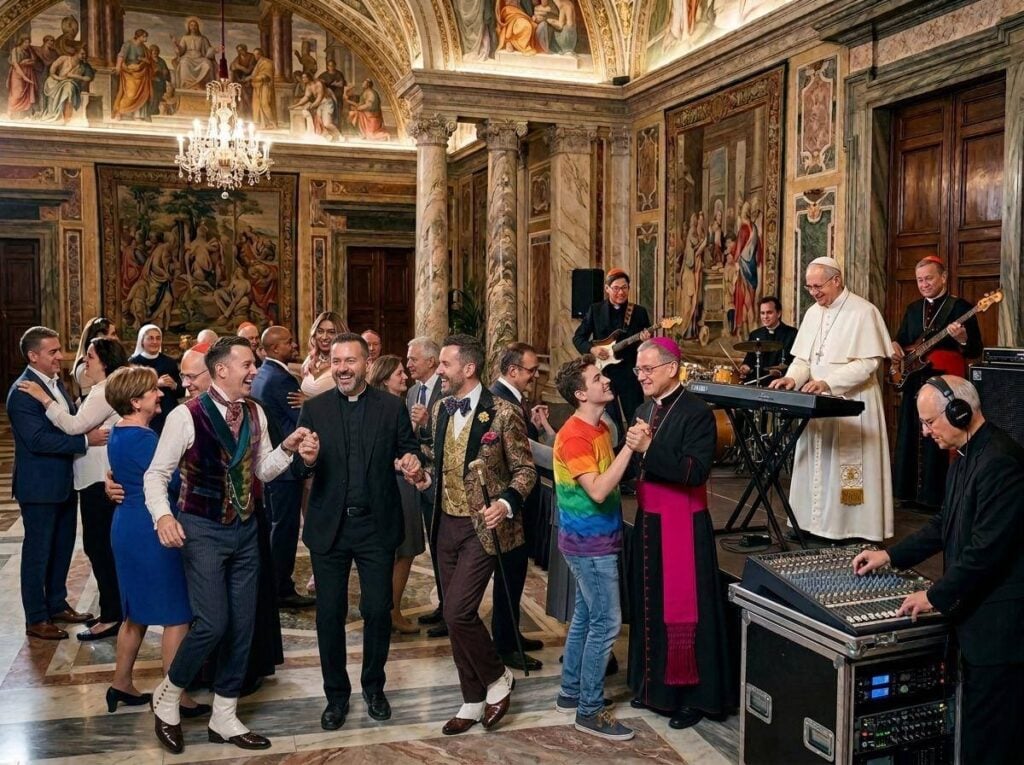
Consider, as another example of merely painting a Catholic veneer over something evil, developments associated with the German Synodal Way. Its 2023 decision on blessing ceremonies proposed ecclesial recognition and accompaniment for couples outside sacramental marriage and called for appropriate blessing celebrations to be developed. In 2025, a joint body of the German Bishops’ Conference and the Central Committee of German Catholics issued pastoral guidance encouraging blessings for divorced-and-remarried couples and couples of differing sexual identities and orientations.
According to Leo XIII, pastoral practice cannot make truth subordinate to autonomy, experience, or social acceptance. The Church’s task is to form choice according to truth, not to “accompany” and condone mortally sinful choices.
Libertas points out that in faith and morals God made the Church a participant in His teaching authority and that she consequently must preserve both natural and supernatural truth rather than allow teaching to become “an instrument of corruption” [LP 21], which of course we constantly see in the Synodal Church.
Elsewhere in the document, Leo XIII addresses what has become almost a doctrine of both so-called progressive Catholicism and the woke religion of “tolerance.” He rightly shows that tolerating an evil is not the same as declaring that evil a good or, worse, a right.
The Church may tolerate what conflicts with truth or justice, he notes, “for the sake of avoiding some greater evil, or of obtaining or preserving some greater good” [LP 33], but “the more a State is driven to tolerate evil, the further is it from perfection” [LP 33].
According to this definition, almost all modern states are decomposing in their imperfection, as they have become little more than evil-sanctioning institutions. While prudence may require toleration, it does not give error a positive moral right to become truth.
For Leo XIII, the characteristic error of liberalism lies exactly in its refusal to maintain that distinction, in that it begins by demanding tolerance and ends by making “no apparent distinction between truth and error, honesty and dishonesty” [LP 34].
Leo XIII summarizes his argument by teaching that man is wholly subject to God and that liberty apart from submission to the Divine Will is ultimately unintelligible. To reject that authority is not to become freer, but to abuse freedom. Freedom is not liberation from truth, nature, authority, morality, or God, but liberation from everything that prevents us from attaining the good for which God created us.
Leo XIII’s encyclical thus gives Catholics of yore and of today a simple test by which to judge both secular modernity and so-called ecclesiastical renewal: Does this “liberty” make it easier for man to obey God and attain his final end — or does it merely enlarge the territory in which he may say, “I will not serve”?

.jpg)