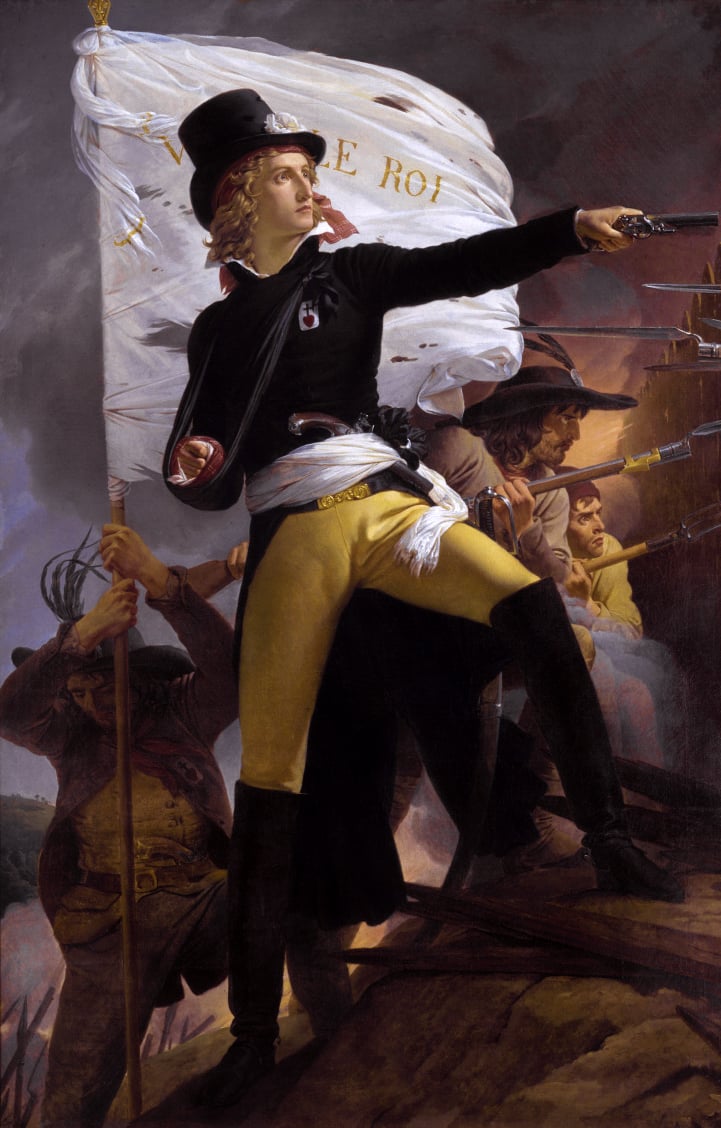

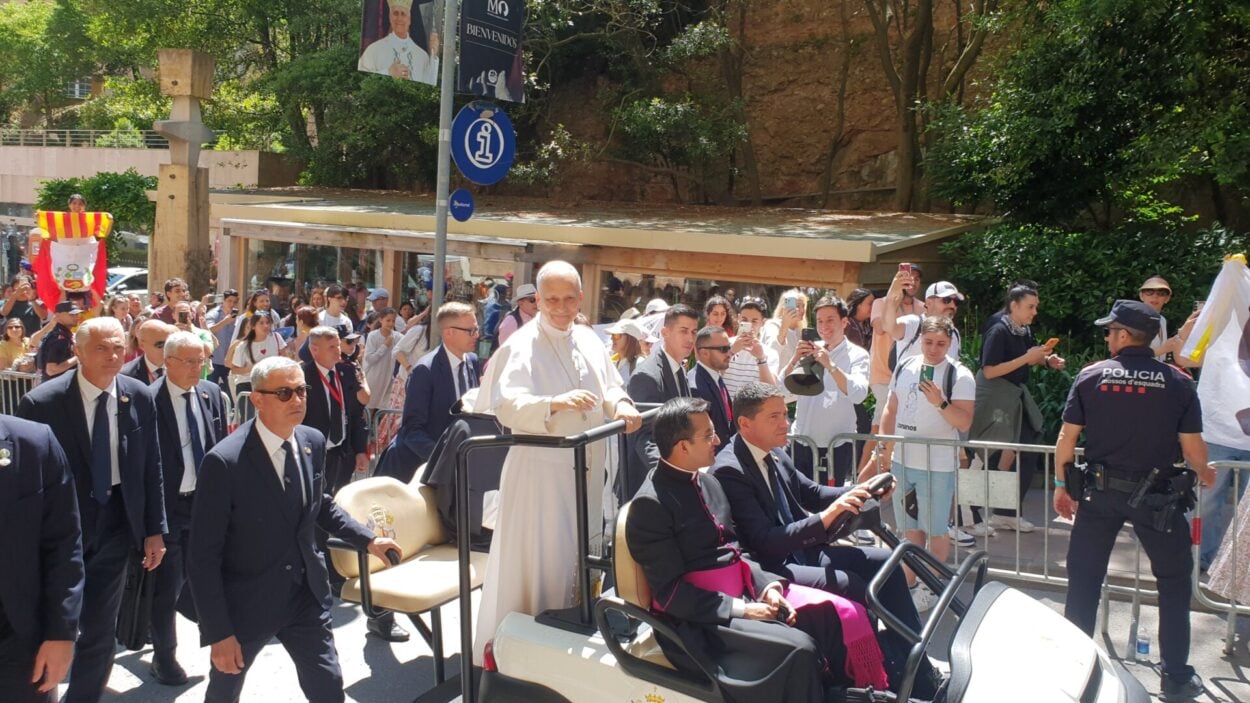
In the post-conciliar epoch, but most especially during the reigns of Jorge Bergoglio and his protégé Leo XIV, it has become clear that the aim of the religion they adhere to is the establishment of a temporal utopia with man at its center and god.
During his general audience on September 16, Leo gave yet another catechesis on Gaudium et Spes, continuing his lamentable fixation with Vatican II. In his remarks, Leo extolled the dignity of man and adjacent concepts.
While mentioning the usual themes of social justice and the common good, Leo’s concluding statement was especially erroneous, and even dangerous. “For the future of humanity depends on each person’s commitment to collaborate with God and with their brothers and sisters in building a more humane world.” Let us examine this comment in light of past papal teachings and the Gospel itself.
Gaudium et Spes is officially known as the Council’s Pastoral Constitution on the Church in the Modern World. In truth, it is the foundational document of the Church’s capitulation to the modern world.
Setting aside for a moment the fact that Holy Mother Church has ever taught that Catholics should promote justice, charity, and the temporal common good, the problem with Leo’s remarks and those of his immediate predecessors is that they seek the construction of a “more humane world” as something where Christ is not king over the social sphere and as a governing horizon of human progress on every conceivable occasion.
This is in direct contradiction of perennial Catholic teaching, which recognizes that genuine human improvement must principally be supernatural. Said another way, you cannot have a truly “humane world” without a more thoroughly Catholic world, and that means a political, economic, and civil order that is submitted to Church teaching.
Join the Counter-Revolution: Become a supporter of Integrity today!
Our Lord Jesus Christ Himself established the guiding principle for all mankind when he said: “Seek ye therefore first the kingdom of God, and his justice, and all these things shall be added unto you” (Matt. 6:33, Douay-Rheims). He also stated: “For what doth it profit a man, if he gain the whole world, and suffer the loss of his own soul?” (Matt. 16:26),
From these two verses, and of course the whole of Scripture, we can see that a society could become wealthier, healthier, more equal, technologically advanced, and materially secure while its members become spiritually worse. Not only would this not be a more “humane world” in a Catholic sense, but often this type of society becomes the very reason for man’s corruption and eventual downfall.
In 1951, American priest Fr. Francis Connell explained how the temporal and supernatural domains overlap with one another.
“The fact that the primary object of the state is to promote the temporal happiness of the citizens offers no argument that the state is bound only by the natural law. For the temporal is not identical with the natural,” he wrote in an essay for the American Ecclesiastical Review. “A person cannot have true temporal happiness … unless he enjoys supernatural blessings; and consequently, if the state is concerned with the temporal welfare of its citizens, it will have some concern for their supernatural happiness in this world.”
The Dispatch
St. Thomas Aquinas taught the same. The “final and perfect happiness can consist in nothing else than the vision of the Divine Essence,” he said in the Summa Theologiae, I-II, q. 3, a. 8. St. Thomas also explains that man cannot attain his end by his merely natural powers because supernatural beatitude exceeds the capacity of created nature and requires divine assistance (Summa Theologiae, I-II, q. 5, a. 5). As such, man’s supreme improvement does not consist primarily in better social circumstances but in greater participation in divine life through sanctifying grace, faith, hope, charity, the sacraments, virtue, perseverance, and ultimately the Beatific Vision.
What did the Popes prior to Vatican II teach?
Pope Leo XIII gave Catholics a good example when, even while vigorously defending workers against injustice in Rerum Novarum, he insisted that “God has not created us for the perishable and transitory things of earth, but for things heavenly and everlasting.” He further illuminated the fact that this world is given to us “as a place of exile, and not as our abiding place.”
Leo XIV, on the other hand, seems to want to reduce these glorious truths of Catholic social teaching to a program aimed at making earthly existence more agreeable and economically robust.
Elsewhere in Rerum Novarum, Leo XIII affirms that “all the striving of men will be vain if they leave out the Church” and that “religion and the good of his soul must be kept in mind.”
Leo XIII also contradicts his modernist namesake’s utopian project centered on man with his document Immortale Dei, where he teaches the Church has for her “immediate and natural purpose” the “saving of souls and securing our happiness in heaven.” This leaves no doubt that Christian civilization is a temporal byproduct of supernatural Christianity, not a substitute for it.
Leo’s successor, St. Pope Pius X, made this principle even more explicit when he condemned the errors of the Sillon in Notre Charge Apostolique. The Sillon movement sought social fraternity and an improved civilization similar to what Leo XIV is speaking about. “There is no true civilization without a moral civilization, and no true moral civilization without the true religion,” he wrote.
This contrasts well with Leo XIV’s futile campaign in which he seeks civilization repaired while treating submission to the Catholic faith as a secondary, and even unnecessary, obligation.
St. Pius X’s successor, Pius XI, also applied perennial Catholic teachings to social questions. In Quas Primas, he taught that the disorders afflicting nations arose because men had “thrust Jesus Christ and his holy law out of their lives” in both private and public. His remedy was not human solidarity or Masonic fraternity, but rather that “Men must look for the peace of Christ in the Kingdom of Christ.”
Leo XIV has thus taken legitimate Catholic pursuits of feeding the hungry, protecting the weak, promoting justice, and building up the temporal good and separated them from true Catholic social teaching, doctrine, and ultimately Jesus Christ. Instead, he is trying to resurrect them in the name of a Masonic world order under the approving gaze of Antichristic globalists.
The Church’s primary and fundamental mandate is to make men more Catholic, not more humane. Leo should take note that Christ did not say without Him mankind could only construct a somewhat less humane society, but “without me you can do nothing” (John 15:5, Douay-Rheims).