
On Friday, September 25, Leo XIV will be visiting France, where he will remain for three days.
Included in his itinerary are numerous stops: a visit to the Élysée Palace, a meeting with UNESCO officials and the diplomatic corps, a visit to the Provincial Synodal Assembly, an interreligious gathering, and a conference devoted to European peace and unity.
In all fairness, he will also pray at the grotto of the Shrine of Our Lady of Lourdes, meet with the contemplative sisters of a local Carmelite monastery, and offer a Novus Ordo mass at St. Stephen’s Cathedral. However, these almost seem to serve the purpose of window-dressing.
The same picture emerges when Leo crosses the Atlantic in November for his journey through Uruguay, Argentina, and Peru. Again, Masses and Marian shrines — most notably Our Lady of Luján — are included; appearances, after all, have to be maintained. But the governing thread running through the official program is unmistakably that of the post-conciliar Church.
Throughout Leo’s trips, we see a repeated emphasis on meetings with civil leaders and the diplomatic corps; the worlds of secular education and labor; “leaders of Christian communities and religious traditions;” synodal teams and pastoral councils; youth gatherings; social communities; “the challenges and hopes for the future of the Peruvian people;” and talking with representatives of the Amazonian peoples.
But what if Leo’s itinerary were crafted around a more traditional conception of the Papacy? What if the question was, “Where does the Vicar of Christ most need to stand?” instead of, “Where can the Pope make his contribution to the concerns of the secular, international community?”
What if Leo XIV was traditional?
Let us imagine, for a moment, an itinerary for an alternative universe in which Leo was less informed by the globalist-liberal preoccupations of the post-conciliar Church and more by the instincts of Catholic Tradition.
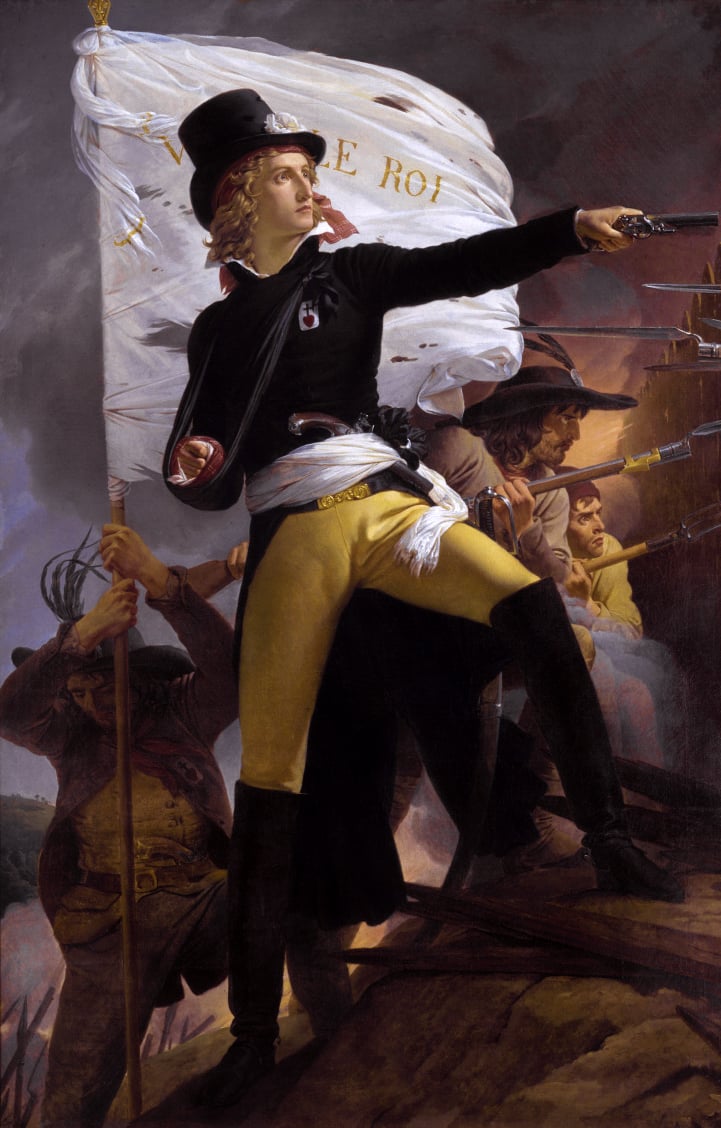
In France, just such a journey might begin in the Vendée, where he could kneel where Catholic peasants once rose beneath banners of the Sacred Heart against the wicked Revolution — a revolution that did not merely remake France’s government and turn the eldest daughter of the Church into a godless whore, but whose Liberal principles ultimately spread like a cancer throughout the world and the Church.
From the Vendée, he could proceed to Compiègne to remind Catholics of the divinely inspired courage that is much needed today, as the very nature of society becomes increasingly and tyrannically anti-Christian. There, he could honor the Carmelite nuns who mounted the scaffold during the Reign of Terror while singing the praises of God.
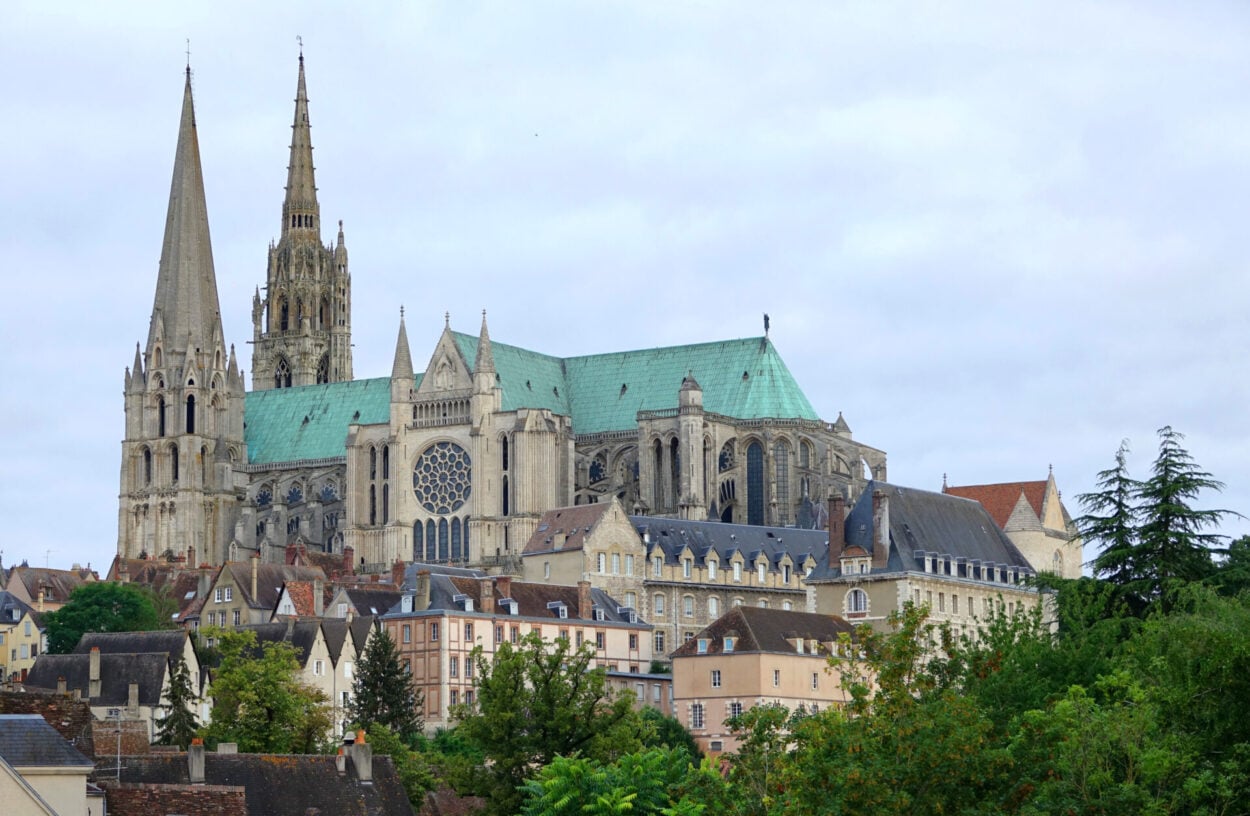
In an act of genuine reconciliation and healing of the wounds within the Church, he could then walk with the pilgrims to Chartres, celebrate the Traditional Mass, and show his solidarity with a civilization that once understood that society could and must publicly acknowledge Christ as its King. He could use the occasion to communicate an uncomfortable truth to the leaders of France and Europe: the continent was not born in 1789. Before that date, it possessed a long and glorious Catholic history that stood in stark contrast to the Enlightenment’s conception of the emancipation of man.
The Dispatch
From Chartres, he could fly to Benue State in Nigeria to celebrate a Requiem Mass for Christians whose villages have suffered repeated and barbaric attacks — violence that some Nigerian and international observers have described as genocidal. Perhaps Leo would be reminded that, while he and his colleagues deliberate in air-conditioned conference halls about how the Synodal Church can accommodate the spirit of the age, there are actual Catholics in the “real world” who continue to experience, at great cost, that the world hates them because it first hated their Master.
From Nigeria, while still on the continent, he could travel to eastern Congo, where Catholics have been slaughtered by Islamist militants, and then to Cabo Delgado in Mozambique, where Christian communities and missions have endured insurgent violence by ISIS. Rather than praying over pieces of glaciers, he could tell Catholics — and the world — that martyrdom is not a relic of primitive Christianity, but something to which every Christian must be prepared to bear witness.
After this, instead of misleading Catholics every other week with yet another celebration of Nostra Aetate, Leo might consider traveling to the lands where Christianity was born.
Imagine Leo kneeling with the tiny Catholic flock of Holy Family Parish, visiting Taybeh, one of Palestine’s remaining Christian villages, then the embattled Christian villages of southern Lebanon, and finally Damascus.
He could remind the West that Christianity is not a European ideology exported to the Middle East. It is a universal religion which began in the ancient near east. Long before Paris existed as a Catholic city, the believers of Antioch had already adopted the name “Christians.”
How, then, about a stopover in Armenia, a people who suffered one of the most vicious annihilations of Christians in modern history during the Armenian genocide of 1915–1916, in which an estimated 1.5 million Armenians lost their lives? He could also draw attention to the persecution and displacement of Armenian Christians that have continued into our own time.
How glorious it would be to see this “Traditional Leo” send a message to Catholics about the immense value of perseverance and clinging relentlessly to the Faith by visiting Nagasaki? Japan’s hidden Christians endured centuries in which the visible structures of Catholic life were almost non-existent. They had no protection, no guidance from a bishops’ conference, and, for many generations, not even priests or the sacraments. Yet the Faith survived through perhaps the purest form of Tradition: they refused to surrender the deposit of faith and faithfully handed it on. For doing so, or so it seems, Masonic forces dropped an atomic bomb on them in 1945.
Join the Counter-Revolution: Donate to Integrity today!
One of the penultimate destinations for a traditionalist Pope could be China’s great Marian Shrine at Sheshan, as a symbolic gesture communicating to China’s underground Catholics, persecuted faithful, and imprisoned clergy that Rome has not capitulated to the Communist god and that their communion with the Church is not merely an administrative technicality.
Leo should then turn westward and seek entrance into Nicaragua, where restrictions on Catholic life remain severe. The United State Commision International Religious Freedom reported in 2026 that thousands of religious processions and acts of piety had been prohibited, public Stations of the Cross restricted, clergy driven into exile and ordinations obstructed in several dioceses.
And finally, where should this imaginary papal pilgrimage end? Not at the United Nations, but at Fátima. There, he would repent of his predecessors of having made idols of synodality, sustainability, fraternity, and the “brotherhood of mankind,” and ask Our Lady for the grace to preach once again, boldly and without embarrassment, about sin, hell, conversion, judgement, penance, reparation, the Rosary, the Immaculate Heart, and Christ the King, while calling on the bishops of the Church to once and for all properly consecrate Russia as She asked for.
_(2).jpg)