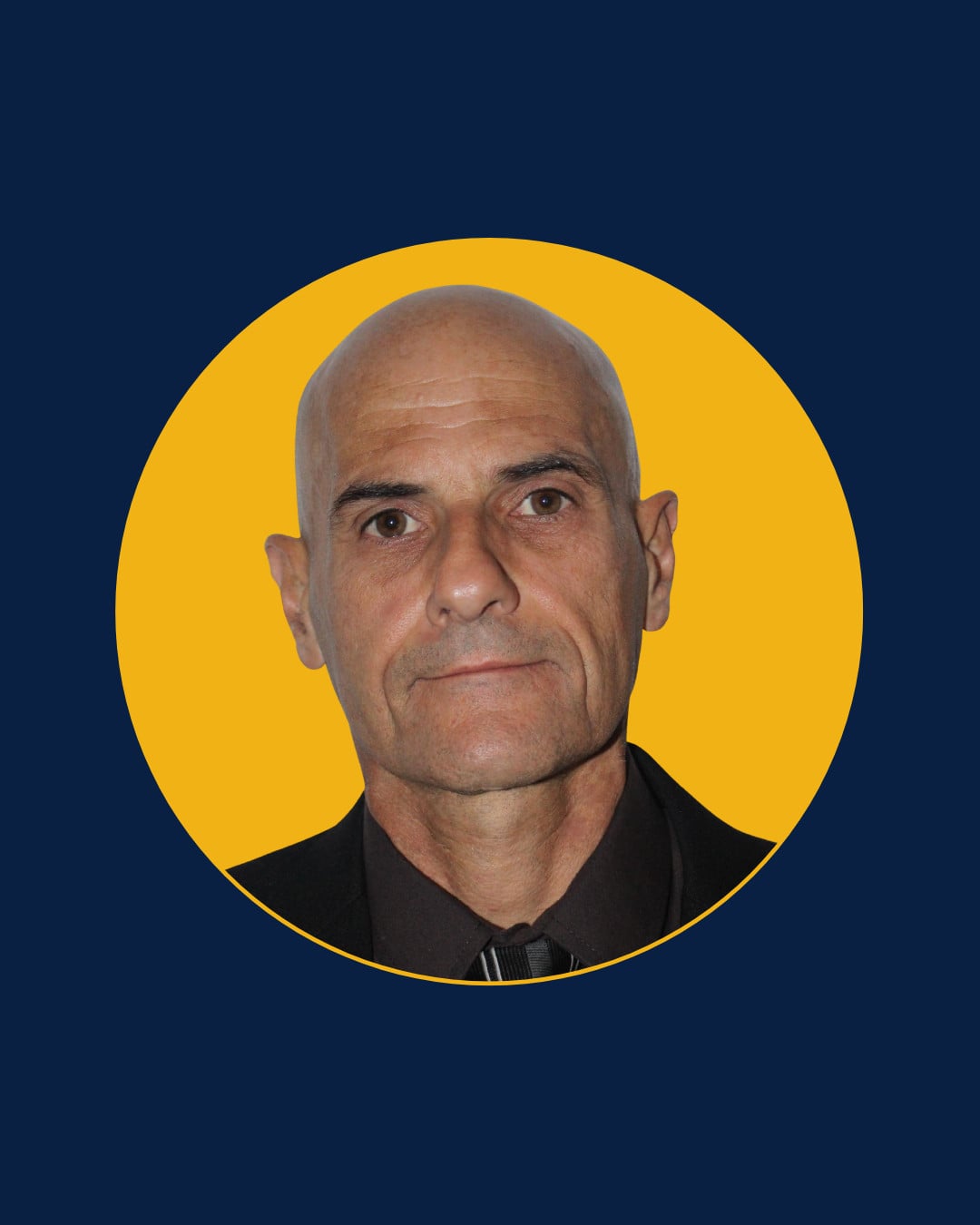
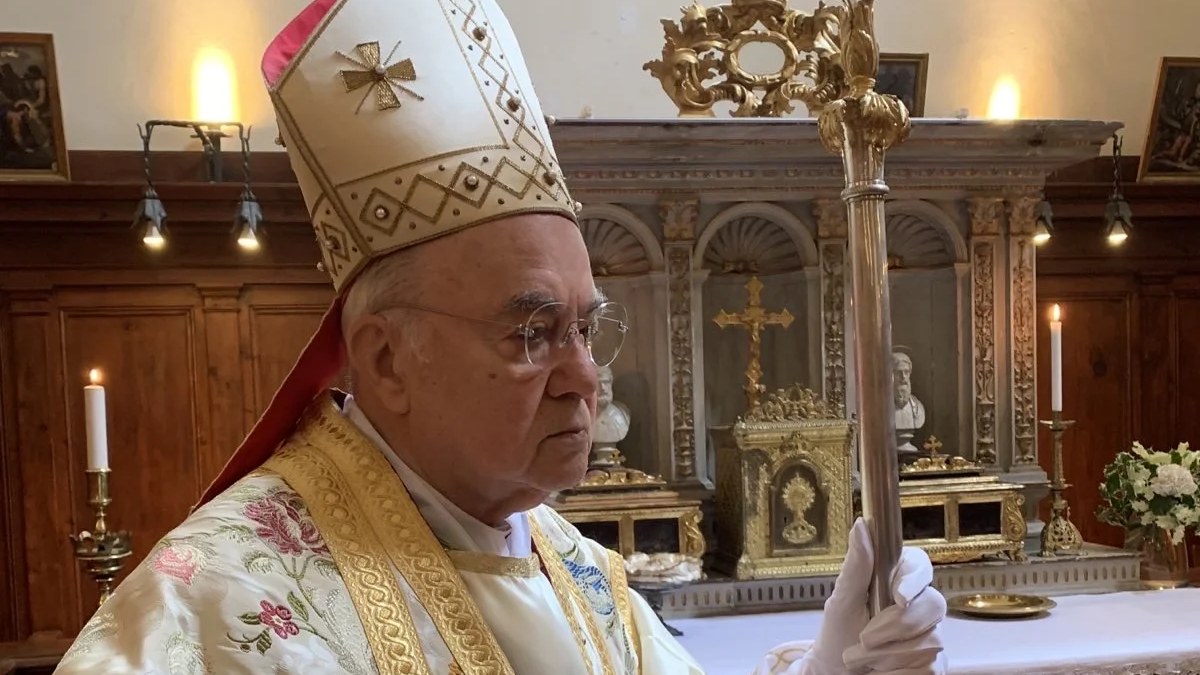
On November 14, embattled and “excommunicated” Archbishop Carlo Maria Viganò delivered a virtual address to a peace congress held in Artstetten, Austria.
In attendance was host and key noble figure, Prince Leo von Hohenberg, a descendant of Archduke Franz Ferdinand. Representatives from various European royal and noble houses, as well as political figures and military representatives were present as well.
Unlike his clerical counterparts, who never miss an opportunity to grovel before leftist international elites, Archbishop Viganò sent a message that reminds the world of what the Catholic Church’s voice truly sounds like when commenting on global affairs.
While His Excellency’s video was titled Pro aris et focis (“for altars and hearths”), the actual address he delivered to the congress was titled “With the Sword of Truth and the Shield of Prayer.”
“I speak to you because what is unfolding is not merely a series of accidental crises, but a planned dissolution occurring at every level — international, national, civil, and religious,” the good archbishop, 85, warned. “It is a systematic ruin of institutions, an erasure of the past, an immediate emergency, and a future state of enslavement, all being constructed before our very eyes, with the complicity of those who ought to be our guardians.”
Viganò then explained that the present international situation is not the result of isolated errors or historical inevitabilities, but the logical consequence of permanent destabilization:
Supranational institutions — foremost among them the UN and the European Union — fuel conflicts, prolong hostilities, and redraw borders and alliances, not to defend peoples and their sovereignty, but to weaken them, burden them with debt, and subordinate them to supranational powers.
The economy is wielded as a weapon; health, energy, and food crises are used as levers; demographic pressure and orchestrated migration flows serve as instruments for the irreversible transformation of societies. What is presented as a necessity or as progress is, in essence, a project aimed at the dissolution of nations and their institutions.
His Excellency then pointed out that the crisis is not merely economic or military, but that the family is also under attack, with the differences between genders being erased, authority in homes undermined, and education being replaced with indoctrination.
The Dispatch
“The past — historical memory, Christian roots, and national identities — is being dismantled, because a people without a memory is easier to tyrannize,” he lamented.
The Synodal Church’s complicity in the dissolution
Viganò then accused Leo, whom he call “Robert Prevost,” of being an “active collaborator” of the dissolution project, arguing that his actions are no longer “just a question of personal errors or questionable pastoral choices: it is a capital schism, in which the one who ought to be the principle of unity separates himself from what the Papacy is by its nature, according to the perennial Magisterium and in particular according to the First Vatican Council.”
His Excellency again highlighted the fact that the Synodal Church is actively participating in Agenda 2030 and that it “adopts its language and objectives, and blesses processes that contradict revealed Truth in the name of dialogue and inclusion. It promotes a multilateralism that dissolves the sovereignty of nations, an ecumenism that hollows out the mission of the Roman Catholic Church, and a ‘synodality’ that replaces divine authority with human consensus.”
A duty that must be fulfilled
Archbishop Viganò then praised the different Royal Houses for their service to the Catholic Church and Christendom throughout the ages, recalling three historical incidents to underscore his point.
“In 732, at Poitiers, Charles Martel halted the advance of the Saracens. In 1571, at Lepanto, the Holy League, convened by Saint Pius V and entrusted to the Holy Rosary, shattered Ottoman naval power. In 1683, beneath the walls of Vienna, John Sobieski and the princes of the Empire liberated the besieged city,” he said. “Three dates, signifying three different times Europe was saved, because its leaders knew for whom they were fighting: not for an abstract world order, but for the Faith, for their homelands, for the altar, and for the hearth.”
Before concluding, His Excellency told the attendees that they were not being asked to reenact the Battle of Lepanto but “to be what your forebears were: a sword of Truth and a shield of fidelity. You are asked not to ratify error, not to countenance falsehood, and not to take pleasure in injustice. You are asked to defend the institutions that still remain, to safeguard the memory of the past against its systematic dissolution, and to oppose the manufactured crisis and the servitude that is being prepared.”
Archbishop Viganò also used the occasion to remind his audience of the responsibility that accompanies authority and nobility, which he said is “not defined by what one possesses, but by what one transmits; not by the rights one claims, but by the example one offers; not by the past one celebrates, but by the virtues one renews: fidelity to the Faith and to the Holy Church, moral example, and service to the common good.”
He then called on the esteemed audience to financially support, “many young men who feel called to the service of the Most High — in fidelity to the Catholic Tradition, and thus outside the structures of today’s official Church — [but who] are unable to cover the expenses of their own formation.”
Finally, His Excellency asked the audience to “stand firm and hold fast to the traditions that you have learned” and invoked Our Lady, Queen of Peace and of the Holy Rosary, who has “time and again come to the aid of her children in peril.”