


While there is an immense need to demonstrate the historical reality and universal nature of the Great Flood via Sacred Scripture, Sacred Tradition, and anthropology, sometimes there is nothing like a single slab of rock to convince persons that the Evolution paradigm with which they had been brainwashed through education, entertainment, and sermons at church, is a colossal lie, and that the Great Flood is most definitely within the realm of possibility.
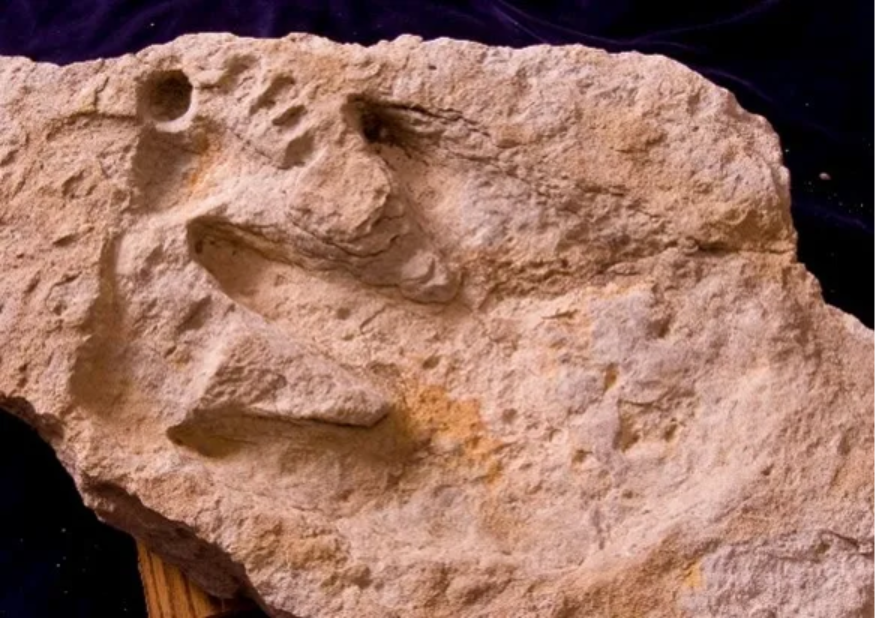
The slab of limestone posted above features the famous Alvis Delk print, which is named after its late finder, Mr. Alvis Delk (1935–2014). He discovered it on the banks of a tributary stream of the Paluxy River several miles upstream from the town of Glen Rose, Texas, about seventy miles southwest of the Dallas-Fort Worth International Airport.
Given the occasional torrential rain that occurs in that part of the world, it is not unusual to find a sizable slab of limestone on a creek bank after a heavy storm. The sharp gradient of the Paluxy watershed encourages flooding, and the abundance of platforms of flat, barren limestone along the banks make for favorable locations for deposits of large, horizontally-shaped rocks when the flood abates.
The Delk print contains an imprint of a human foot and a clawed foot of an Acrocanthosaurus, which is a Tyrannosaurus Rex-type dinosaur. The rock is a grainy limestone, and the prints thereon feature the pushed up mud around the toes and claws that would occur if a human and dinosaur each walked upon coarse mud of a semisoft consistency.
The Delk slab is on display at the Creation Evidence Museum of Texas upstream from Glen Rose proper, and the author has seen it up close and personal multiple times over the years, with the director of the museum removing the display case so the author could personally probe around the rock and prints with his fingers. There are no signs of carving. The foot is roughly a men’s size eight. CT scans have revealed compression of the grains under each of the footprints.
The author has taken part in four public excavations on the south bank of the Paluxy several miles upstream from the Creation Evidence Museum to seek human prints in the field. The various layers of limestone alternating with marl (a crumbly limestone and clay mix) are replete with dinosaur prints. The firm limestone alternates with the softer marl underneath.
The Dispatch
In 2023, a dig took place on the surface of a limestone slab on the Paluxy. Because a Texas law forbids washing mud into rivers with hoses, the roughly five dozen persons who spent almost four mornings that year clearing several inches of mud off the platform by hand had to receive help from a front-end loader to remove the mud.
Several dozen possible footprint candidates were found among the many divots and depressions peppering the hard limestone surface at the location. These candidates were covered with buckets.
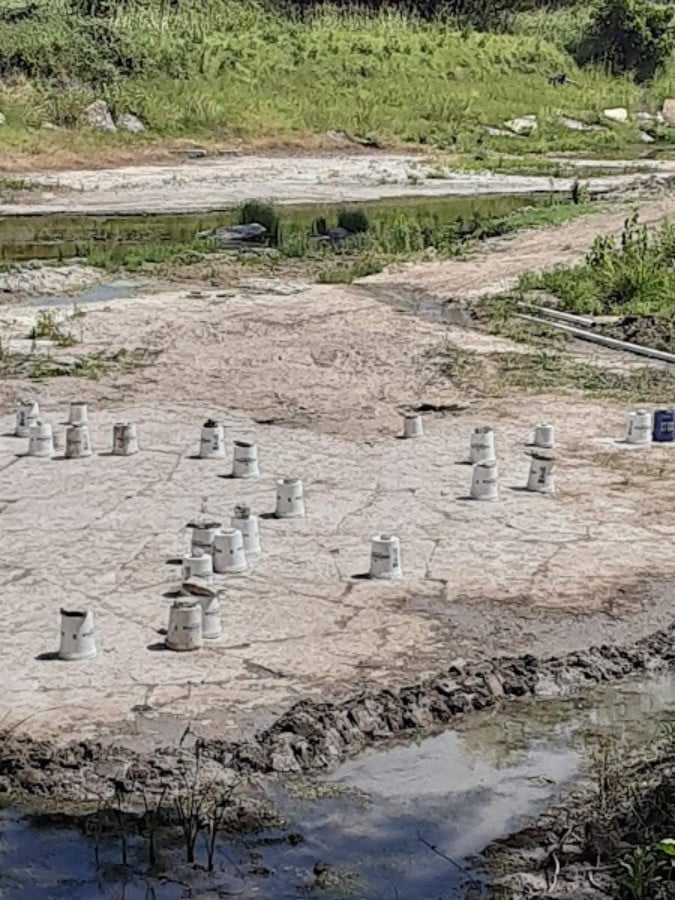
Being the sole geologist in the cohort, the author was asked to evaluate the depressions for possible print authenticity, which totaled nearly a half dozen in total. All but one was deep, while each had the characteristic distorted figure eight outline of a human footprint. The one remaining print is shared below in the ambient light of that particular morning:
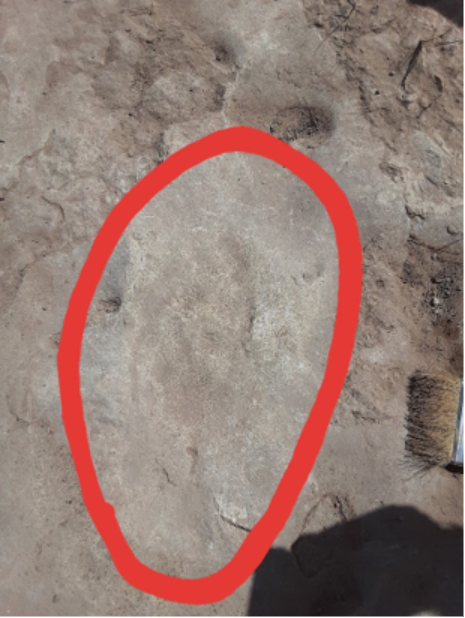
Another image is presented below with contrast enhancement.
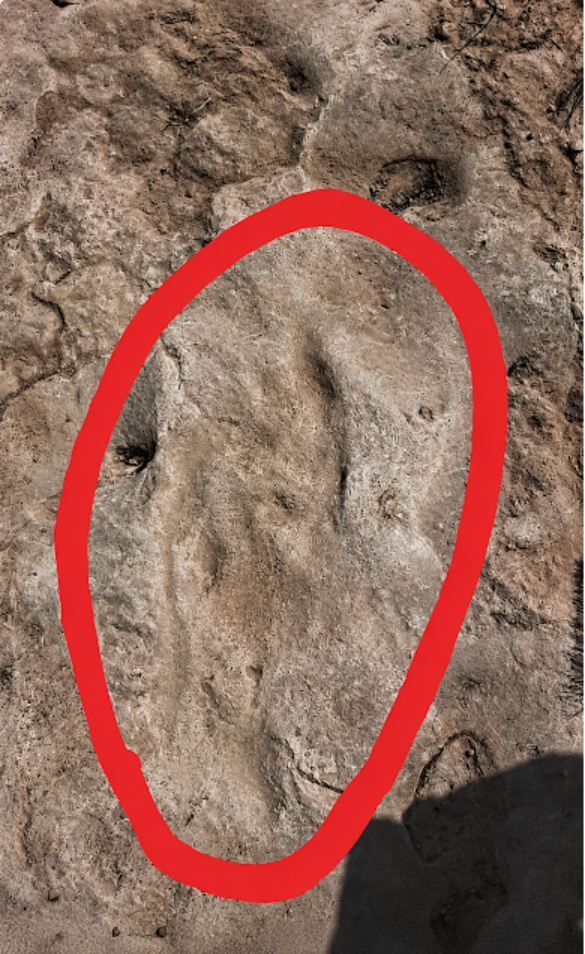
According to evolutionist thinking, this particular stack of limestone is of the Lower Cretaceous Period, which is the age that follows the dinosaur-rich Jurassic Period, and is considered to be over 100 million years old.
The presence of human footprints upon this specific layer as well as upon the adjacent strata above and below, with dinosaur prints upon the same layers, indicates that humans and dinosaurs undoubtedly existed at the same time. This data point thus casts doubt upon the current prevailing theory and belief that dinosaurs and humanity are separated by a vast gulf of time. In fact, they were contemporaries. This, in turn, indicates that the age of our Earth is nowhere near as old as is often maintained.