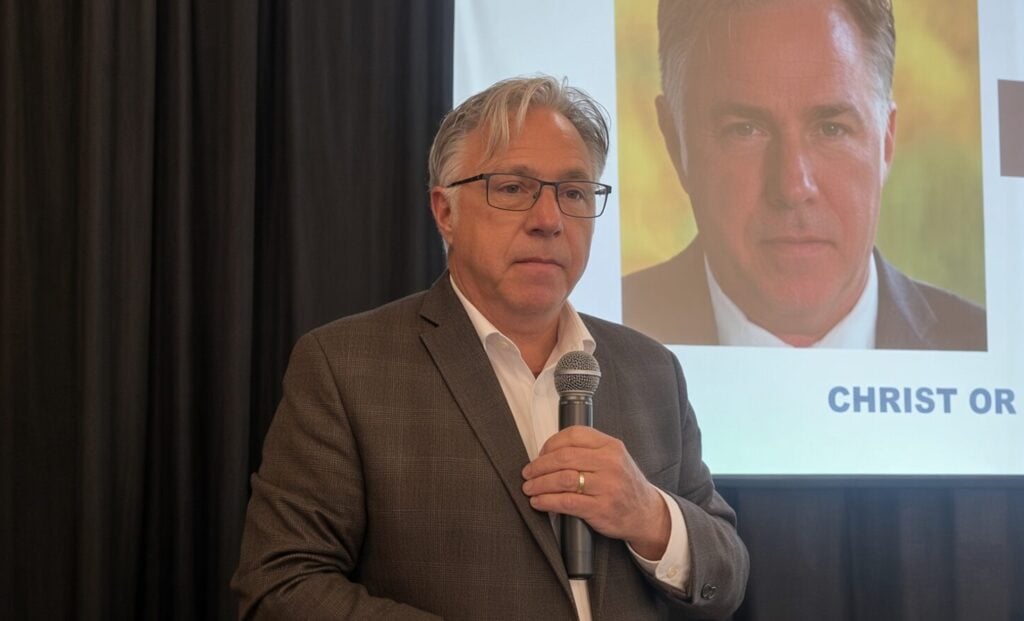

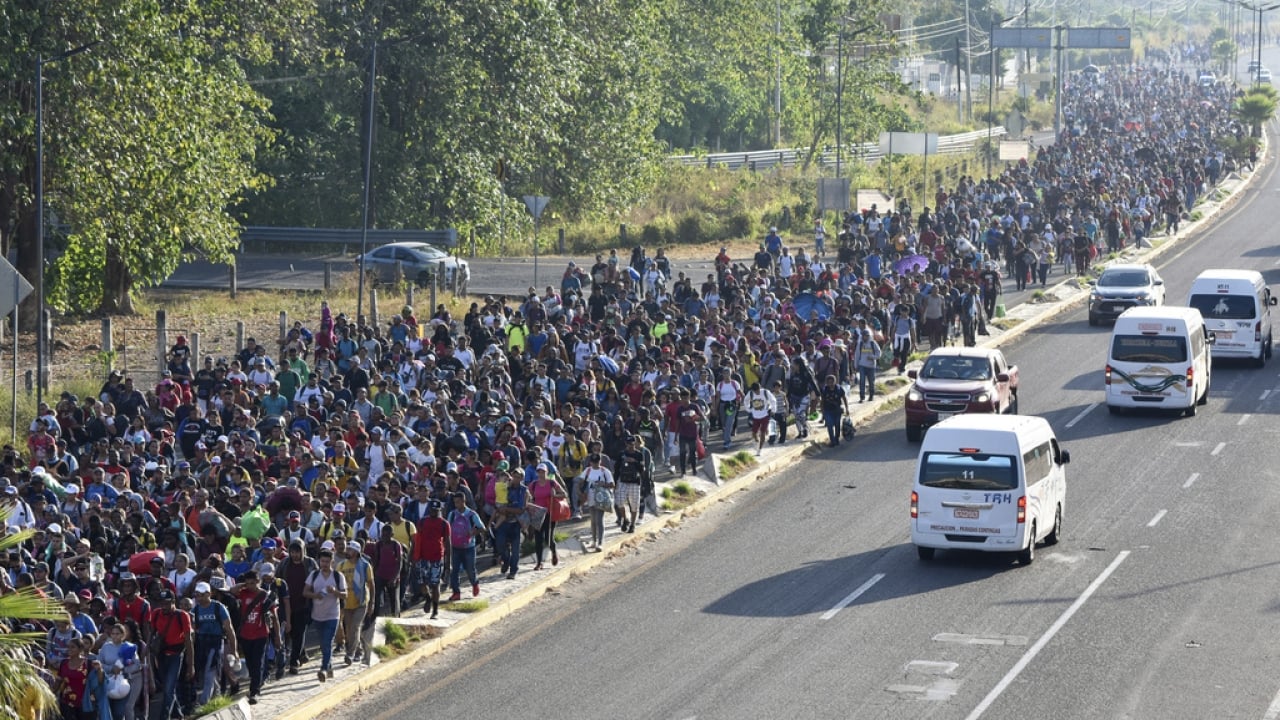
On the so-called World Day of Migrants and Refugees, Auxiliary Bishop Cristiano Barbosa of Boston used tear-jerking emotional manipulation to once again push what amounts to a globalist open-borders agenda.
The latest attempt by the United States Conference of Catholic Bishops (USCCB) to lay a guilt trip on the American people came in the form of a short video in which Barbosa melodramatically exclaimed that “the migrant child at the border, the child in the shelter, the child in our parish, the child afraid that a parent may not come home, the child who simply wants to be safe, loved, and welcomed,” all “carries the face of Christ.”
Setting aside the shameless way prelates like Barbosa smuggle in their man-worshipping ideology of “infinite human dignity” at every turn, the question that now needs asking is: When will the USCCB devote comparable pastoral attention to American citizens and their legitimate claims upon a government that maintains its historical cultural identity, enforces its immigration laws, protects national sovereignty, and secures its borders?
Barbosa, like a true bleeding-heart liberal, carried on his video about the fears of migrant families concerning separation and uncertainty over whether they belong, but he failed to say anything about a nation’s legitimate authority to determine who enters its territory. He was also conveniently silent about the rule of law, the responsibilities of migrants toward their receiving country, and the particular obligations governments have toward their own citizens.
Barbosa appeared to be taking a leaf out of the ideological playbook of Leo XIV, whose message for the 112th World Day of Migrants and Refugees had a similarly imbalanced humanitarian emphasis.
While the plight of migrant and refugee children, including victims of war, poverty, violence, trafficking and exploitation, certainly demands a Christian response, solutions should go beyond merely attempting to remedy the symptoms. There is also a substantial difference between small numbers of legitimate refugees and migrants entering a country and wholesale mass immigration which fundamentally and irrevocably changes a country’s character.
What does the Church actually teach?
The impression sometimes given by conciliar clergy is that the claims of migrants stand on one side and concerns about sovereignty, security and borders on the other — as though the latter were merely political considerations rather than legitimate demands of Catholic social teaching.
Unlike the virtue-signaling, one-sided version of post-conciliar Catholicism, the pre-conciliar magisterium presents a fuller picture.
Pope Leo XIII taught that government exists to safeguard the political community and those entrusted to its authority. In Rerum Novarum (1891), he states: “Rulers should, nevertheless, anxiously safeguard the community and all its members.”
He underscored this with a remarkably strong statement about the government’s responsibility, saying: “The conservation thereof is so emphatically the business of the supreme power, that the safety of the commonwealth is not only the first law, but it is a government’s whole reason of existence.” He then went further, commenting that “whenever the general interest or any particular class suffers, or is threatened with harm, which can in no other way be met or prevented, the public authority must step in to deal with it.”
The Dispatch
Leo XIII specifically includes “peace and good order” among the interests civil authority must protect, a principle that also has implications for immigration. In other words, the state cannot merely be an administrator of universal humanitarian obligations; it must also govern the concrete political community whose safety and common good have been entrusted to it.
Elsewhere, in his encyclical Immortale Dei (1885), Leo XIII approached the question from another direction when he described legitimate political liberty as that which “protects the State from foreign interference.” He stated: “Government should, moreover, be administered for the well-being of the citizens, because they who govern others possess authority solely for the welfare of the State.”
Join the Counter-Revolution: Become a supporter of Integrity today!
In Summi Pontificatus (1939), Pius XII weighed in on the matter by reiterating the state’s responsibility for its national community, describing its function as being to: “Control, aid and direct the private and individual activities of national life that they converge harmoniously towards the common good.”
While Pius XII’s Exsul Familia strongly defended refugees and migrants and presented the Holy Family’s flight into Egypt as the “archetype of every refugee family,” maintaining secure borders and national sovereignty does not, in itself, cut against Catholic charity.
Ironically, on paper at least, the USCCB’s own explanation of Catholic immigration teaching states plainly that “a country has the right to regulate its borders and to control immigration,” and that “no country is bound to accept all those who wish to resettle there.”
If Catholic teaching recognizes both obligations, why do American Catholics hear so much about one and comparatively little about the other?
What about the American child, family and citizen?
Barbosa asks Catholics to see Christ in the migrant child, but he also needs to ask: What about the American child whose parents are concerned about crime and public disorder? What about working families concerned about housing, schools and public resources? What about border communities that bear burdens distant communities may not experience in the same way? What about the massive demographic replacement that has been underway in the U.S. for decades? Surely, citizens who raise such concerns do not automatically lack Christian compassion.
The American child, family, community, and citizen who ask the government to enforce immigration laws have dignity, too, and that needs preserving. Yet this seems to be of little concern to the USCCB.
The American Catholic is waiting in vain for their bishops to explain that enforcement of immigration law is not inherently contrary to Catholic teaching, that newcomers have obligations to the country that welcomes them, and that the government’s first responsibility is toward their own citizens.
The bishops seem to be proactively setting up a false dichotomy, forcing Americans to choose between compassion and sovereignty. This has been going on for decades, with next to none of them urging the government to halt immigration to a significant degree.
What is needed instead of this false choice is for shepherds to return to the true Catholic tradition that insists upon both charity and order, mercy and justice, the dignity of the stranger, and the legitimate common good of the nation that receives him.