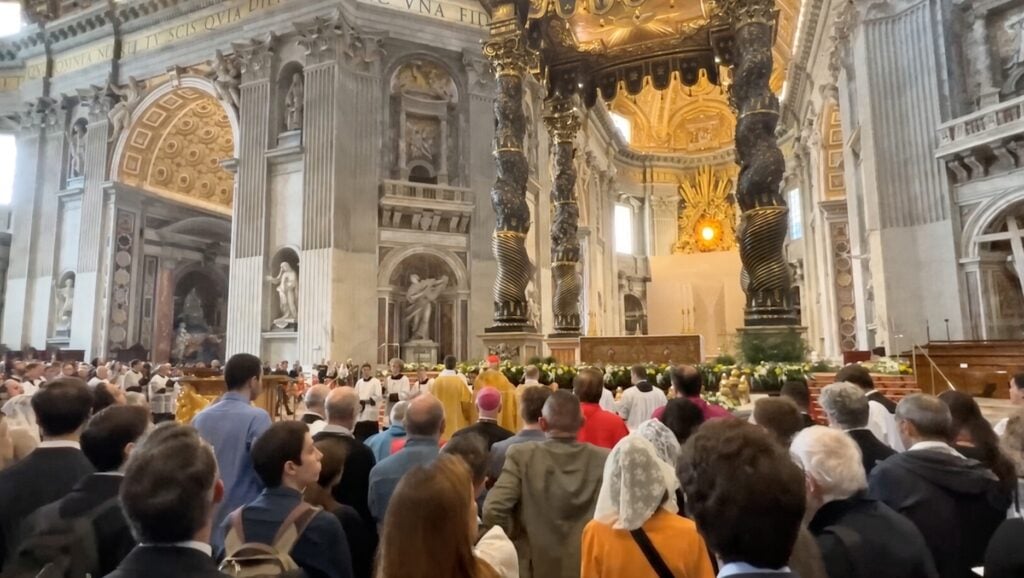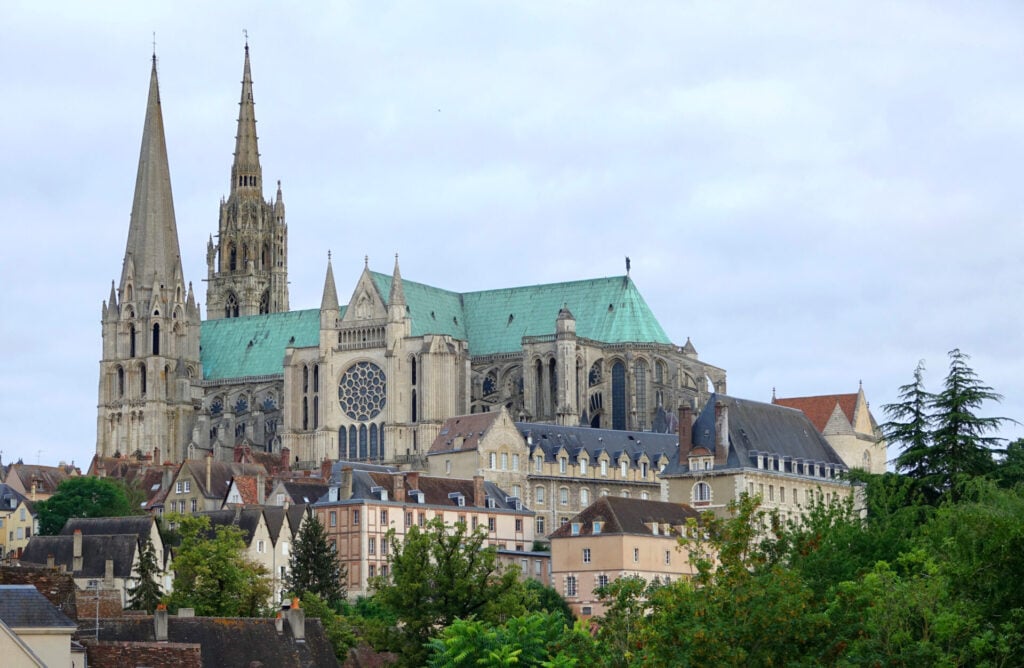
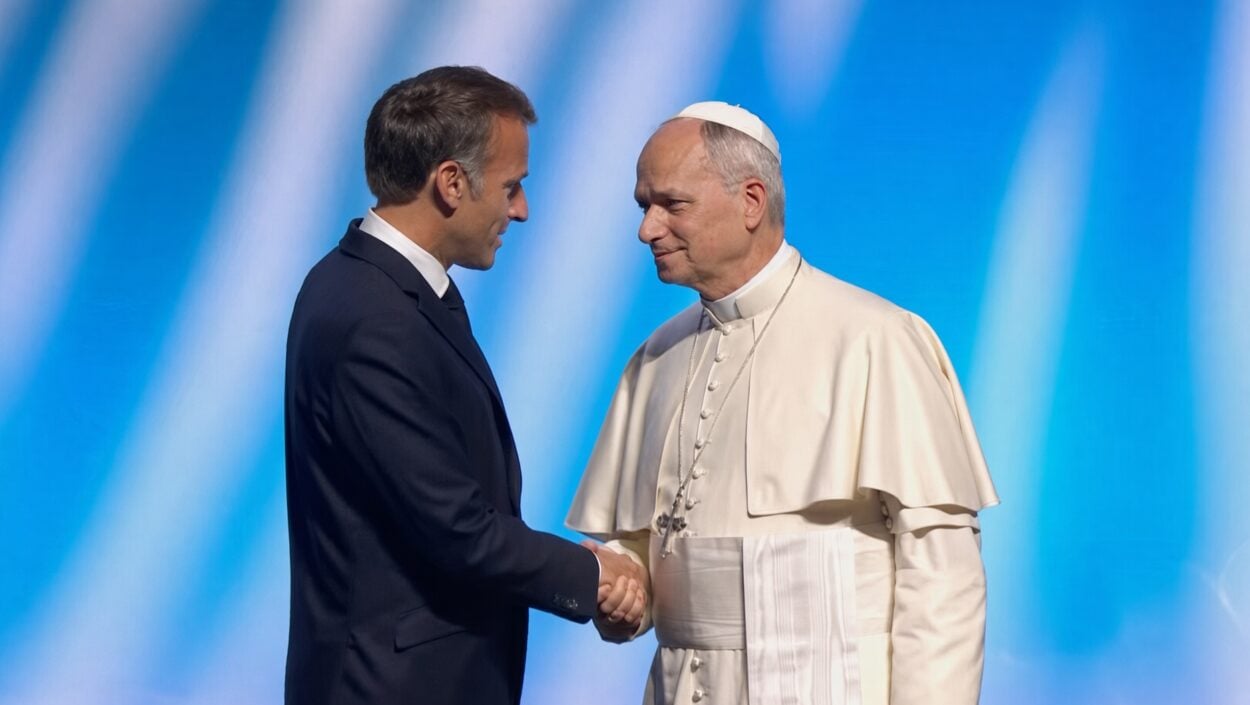
While Leo XIV’s visit to France was met with great fanfare, it offered a painful reminder of how starved the lay faithful actually are for even the smallest signs of Catholicism — and how desperate the Catholic media seems to be to find any trace of it in the man who currently wears the white papal vestments.
During his trip, Leo prayed in some of the holiest places of France. He also spoke out in defense of life, encouraged priestly vocations, and recalled the nation’s Christian inheritance. However, his gestures were undermined by his repeated endorsements of concepts historically associated with the country’s 1789 Revolution, and the post-conciliar Church’s accommodation to the modern world.
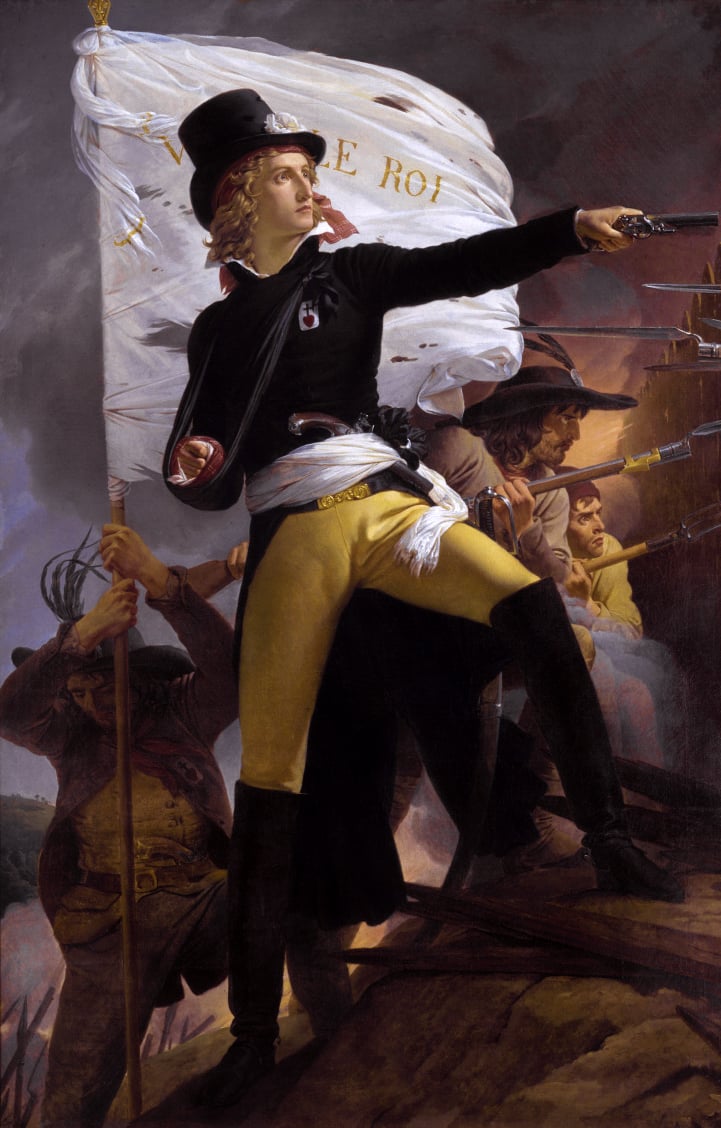
One of the most glaring examples of this contradiction came at the Institut Catholique de Paris, where Leo entered Saint-Joseph-des-Carmes and walked the route taken by over 100 priests and bishops who were massacred there on September 2, 1792 for refusing to take the oath of the Civil Constitution of the Clergy. Yet, on the previous day, while addressing President Emmanuel Macron and France’s political establishment at the Élysée Palace, Leo appeared to be moved by the Masonic spirit that infests the country, speaking with lyrical praise of the diabolical principles that inspired the upheaval against King Louis XVI.
“So it was that humanism flourished in sixteenth century France, as a means of uniting the heritage of classical Greece and Rome with the Christian faith,” he began. “With the great thinkers of the Renaissance, and later of the Grand Siècle, succeeded by those of the Enlightenment, France was responsible for significant advances in our world, including the recognition of human rights grounded in the nature of the human person, particularly religious freedom.”
“This constant focus on the dignity inherent in every person is echoed in your national motto,” he continued. “Liberty, equality, and fraternity are not simply words emblazoned on the front of your public buildings; they refer to universal ethical imperatives that also find in the Gospel message an inexhaustible source of inspiration and fulfillment.”
Not to be outdone, Leo then praised the United Nations’ 1948 Universal Declaration of Human Rights, referring to it as document that helped create a “general awareness of the inalienable dignity of the human person.”
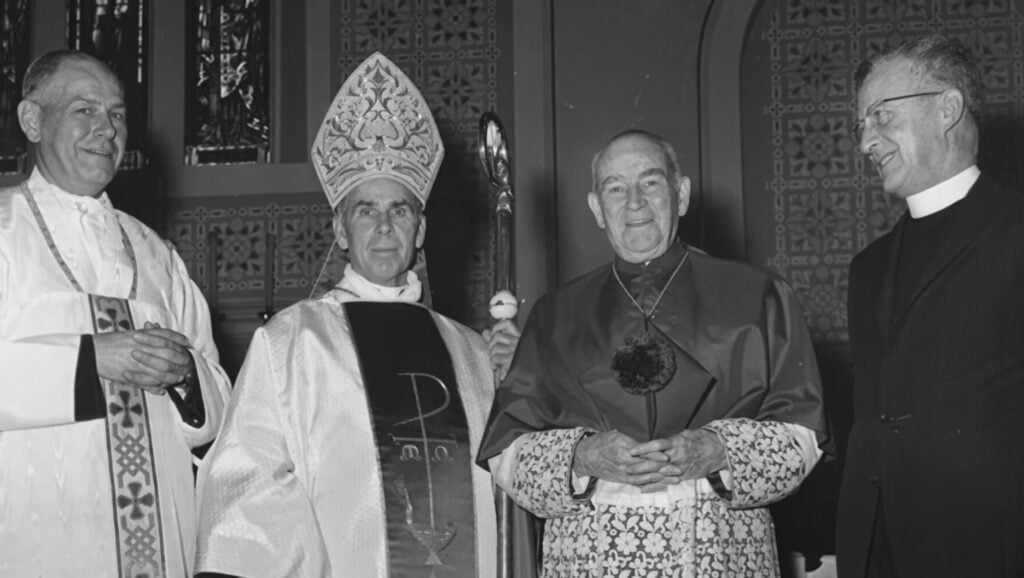
Now, a true Catholic would never say such a thing. The rationalist and Liberal principles that guided the thinking of so-called Enlightenment era philosophers is completely at odds with the principles of Christendom. Of course, Leo is simply regurgitating what his post-conciliar predecessors have said since Vatican II. As Archbishop Marcel Lefebvre explained in An Open Letter to Confused Catholics, the Second Vatican Council was where “the Masonic and anti-Catholic principles of the French Revolution have taken two hundred years to enter tonsured and mitred heads … it is by means of its slogan that the Revolution has penetrated the Church” through religious liberty, collegiality, and ecumenism.
Leo’s obsession with humanism and exaggerated notions of human dignity continued elsewhere in his speech. He told Macron and the politicians present that “the question of respect for human dignity and the fundamental rights and freedoms that derive from human nature arises in every era.” He also declared that “authentic secularity … consists not in excluding religion from the public sphere or from education, but in striving to ensure that the State and religious institutions maintain dialogue and join forces in the service of the common good.”
While it is correct to say that the true religion helps improve the common good, and that it cannot be excluded from political life in any way lest harm be done to the civil sphere, the so-called “authentic pluralism” pluralism Leo is speaking of is merely the false integral humanism promoted by French philosopher Jacques Maritain (1882–1973), a political outlook that has failed to prevent the growth of an aggressive anti-Catholic secularism anywhere on the planet since the Conciliar Church adopted it after Vatican II.
A just society without the prince of peace?
In another address, Leo told young people that Catholics “can combine missionary zeal with the spirit of fraternity toward those who do not believe in God or who belong to other religious traditions. This fraternity is built on listening and mutual respect, and is rooted in the unity of the human family.” He then added: “The principles of equality and fraternity that inspire your society find their foundation here.”
The Dispatch
Where is Leo’s talk about the true “religious tradition,” the Catholic faith? Does not his invocation of religious traditions — plural — downplay the objectively sinister character of false cults, which are an affront to God and His Divinely revealed religion? At minimum, this sort of language is dangerous as it encourages laity to strive to create a syncretistic movement that combines Catholicism with non-Catholic religions and ideas instead of political life rooted in Christ alone who gives peace to nations.
Leo’s commitment to the Synodal religion’s humanist goals were also on display during his visit to UNESCO, where he spoke of “the project of building a just world together.” While warning about the evils of assisted suicide, as any nominally conservative politician would also do in the same situation, Leo unsurprisingly spoke of the need to protect “the immense dignity of every human person,” as if human dignity and not Jesus Christ is the cornerstone for an upright social order.
Archbishop Carlo Mario Viganò did not fail to notice the true nature of Leo’s remarks. In an X post, he warned how his comments are at variance with not just Gregory XVI’s Mirari Vos, but also Pius IX’s Syllabus of Errors and other pre-conciliar papal teachings all the way up to Pope Pius XII.
“Prevost signs in the blood of the Martyrs of the Revolution the charter of man without God,” he exclaimed.
In Leo, we see a man who is supposed to embody Catholic truth appearing in an aggressively secularized France in the papal vestments but unable to bring himself to share with country the light of truth it needs. Instead, he borrowed the language of modern pluralist democracies — liberty, equality, fraternity, human rights, religious liberty, pluralism, dialogue, and synodality. Tragically, Leo did so at the cost of leaving largely unstated the older Catholic critique of religious indifferentism, secular liberalism, and the exclusion of Christ’s claims from public life.
Support independent Traditional Catholic media: Donate to Integrity Magazine today!
While memorable videos and magnificent photos of enthralled crowds will continue to be promoted on social media in the coming days, Leo’s visit to France should really be remembered for his betrayal of the great popes who condemned and the marytrs of that country who died to oppose the principles he spoke so highly of.
To speak of France and Europe’s Christian “roots” cannot merely be a relic preserved in the museum of Western Civilization, because Christ is presently King and will be forever. What France desperately needed was to be reminded that Catholicism cannot be merely one of many “contributors” in the public square, but that Christ’s Kingship extends over individuals, societies, and rulers.
Neither France nor Europe needs a more humane technological policy, ethical artificial intelligence, multilateral diplomacy, or a compassionate approach to the dying. It is in desperate need of radical conversion to the true faith.
Sadly, the few good things Leo did say were outweighed by his intoxication with the Spirit of the Revolution and by his failure to utilize a golden opportunity not only to speak of France’s Catholic roots, but to call her back to them.